
A 700C wheel, a drop bar, and a frame sized to your inseam change the ride more than any accessory. Commuters need steady braking and gear range for hills, while weekend riders want lighter frames and cleaner airflow. The seven options below split those needs across aluminum, steel, carbon, hybrid, and trail builds. Frame size and tire width deserve attention before drivetrain details.
A Side-By-Side Look

Road Bike 700C City Commuter Bicycle 16 Speed (Silver)

LUKSTR 700C Road Bike for Adults, Shimano 14-Speed

SAVADECK A7L Carbon Road Bike, T800 Carbon Frame

Pipleo Road Bike, 700C City Commuter Bicycle, 21 Speeds

SAVADECK Full Carbon Racing Bike A7L Pro 2026
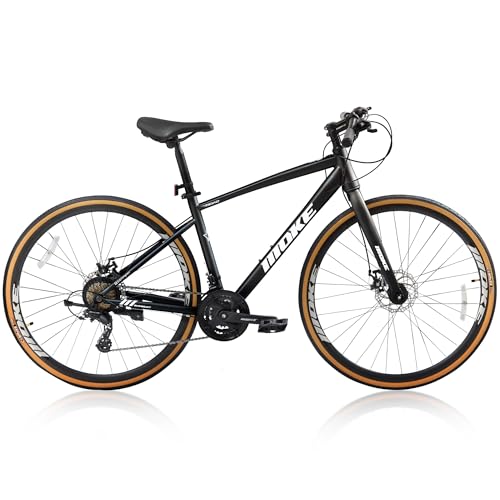
DEYGIA Hybrid Bike, 24-Speed 700C Wheel Hybrid Bicycle

WEIZE Mountain Bike, 18-Speed Dual Full Suspension
More On The Choices That Made The List
A drop bar, meaning handlebars that curve downward for an aerodynamic posture, puts this silver model squarely in road territory rather than upright city riding. Aluminum construction keeps weight at 37.5 pounds, and disc brakes front and rear suit stop-start traffic. Height range from 5’6″ to 6’3″ narrows the fit, so taller riders get the clearest match.
The 16-speed chain drive and gear indicator on the shifter lever help manage hills without hunting for a gear. Hidden brake lines keep the frame lines clean, and assembly is listed at about 85% complete with a tool kit included. In our view, that mix suits a daily commute where potholes and short climbs matter more than race geometry.
What It Does Well
- Aluminum frame keeps the build light for carrying upstairs
- Disc brakes give consistent stopping in wet city traffic
- 700x28C tires roll efficiently on paved roads
- Gear indicator makes shifting easier for newer riders
- Adjustable seat supports riders from 5’6″ to 6’3″
Things To Consider
- No suspension, so rough pavement reaches the rider directly
- Narrow height range excludes shorter riders
- Drop-bar posture suits speed more than relaxed sightseeing
Steel construction and two frame sizes give this LUKSTR model a wider fit window than the silver aluminum bike above. Medium at 49cm covers 5’1″ to 5’8″, while Large at 53cm covers 5’6″ to 6’3″. That overlap helps riders near the middle choose based on arm length and riding posture. Your inseam and torso length still deserve a check before selecting a size.
Shimano shifting, a 50/34T crankset, and dual disc brakes support commuting and weekend training in one package. Brown-sidewall 700x28C tires and double-wall rims add a classic look without changing the road-focused setup. Assembly follows four steps covering handlebar, seat, front wheel, and pedals.
The Value In It
- Two frame sizes cover a broader height range
- Seat adjusts horizontally and vertically for fit
- Dual disc brakes suit traffic and longer descents
- Kickstand included for parking at stops
Worth Noting
- High-carbon steel frame weighs more than aluminum options
- Rigid fork offers no cushioning on broken pavement
Who It Suits Best
Commuters and newer sport riders between 5’1″ and 6’3″ who want a named drivetrain and disc brakes.
Where Another Pick Suits Better
Pipleo Road Bike, 700C City Commuter Bicycle, 21 Speeds suits riders who want more gears and an aluminum frame.
Carbon construction changes the equation here, with a T800 frame, fork, seatpost, and rims bringing total weight to 8.9 kg. Shimano 105 R7100 components provide 24 speeds, and hydraulic disc brakes replace the mechanical discs on the earlier picks. You’ll feel the weight difference most on climbs and when lifting the bike onto a rack.
Fully internal cable routing and a tapered head tube, meaning a wider top section for steering stiffness, support cleaner airflow and steadier handling. Tires are 700x25C, narrower than the 28C sizes elsewhere, which favors smooth pavement over rough surfaces. Assembly is listed at 85% complete, with handlebar, seatpost, front wheel, and pedals to fit.
A Favorable Mix
- Carbon frame and fork cut weight sharply versus steel
- Hydraulic disc brakes give strong, controlled stopping
- 24-speed Shimano 105 groupset suits hills and sprints
- Internal routing creates a clean, aerodynamic profile
Minor Gripes
- 25C tires feel harsher on cracked or gravel roads
- Carbon build calls for careful handling during transport
Aluminum framing returns here, paired with a 21-speed Shimano drivetrain that sits between the 16-speed and 24-speed options. Two frame sizes cover riders from 5’4″ to 6’1″, which gives shorter riders a better chance than the first pick. You get internal cable routing and double-wall rims for a tidy look and steadier wheel structure.
700x28C tires and dual disc brakes aim at mixed city streets rather than smooth race roads. The seat adjusts without tools, a practical touch for riders sharing the bike or fine-tuning fit mid-week. Setup is listed at 95% prebuilt, leaving handlebar, wheel, seat, and pedals to attach.
Advantages To Know
- 21 speeds cover hills, flats, and headwinds
- Tool-free seat adjustment speeds up fit changes
- 28C tires handle potholes better than 25C tires
- Dual disc brakes suit wet urban streets
- Aluminum frame keeps weight manageable
Points To Note
- Heavier and less refined than the carbon SAVADECK models
- Frame size choice still matters for reach and comfort
Full carbon construction extends beyond the frame to fork, wheelset, handlebar, and seatpost, with total weight at 8.8 kg. Shimano R7120 levers pair with R7170 calipers for hydraulic braking, while R7100 derailleurs handle the 2×12-speed shifting. Compared with the A7L above, the Pro trim adds carbon wheels and a slightly higher preassembly rate at 90%.
Internal cable routing and a tapered head tube keep the front end stiff and the profile clean. That setup suits long rides and climbs where low weight and steady shifting carry the day. Setup time is listed at about 15 minutes, with clipless pedals included in the package.
The Case For It
- Full carbon build at 8.8 kg aids climbing
- Hydraulic brakes deliver strong control on descents
- 24-speed drivetrain shifts smoothly under pressure
- 90% preassembly shortens setup time
Softer Spots
- Race-oriented geometry demands more flexibility
- Carbon wheels need care with impacts and storage
Hybrid geometry shifts the focus from speed to an upright position that reduces fatigue on longer, relaxed rides. A carbon steel frame, internal wiring, and trigger shifters keep the cockpit simple. Your posture stays taller here than on any drop-bar model in this list, which helps with visibility in traffic.
Size Small at 50cm fits 5’1″ to 5’7″, while Medium at 52cm fits 5’7″ to 6’1″. Tires measure 700x32C, wider than the 28C road tires elsewhere, and dual disc brakes cover front and rear. Assembly is listed at 90% prebuilt with tools included, taking about 25 to 30 minutes.
Useful Highlights
- Upright position eases neck and back strain
- Wider 32C tires suit gravel paths and parks
- 24 speeds cover climbs and fast stretches
Small Caveats
- Hybrid posture gives up some speed versus drop bars
- Two sizes leave taller riders without a larger option
Made For
Casual riders and commuters between 5’1″ and 6’1″ who prefer an upright seat over a racing posture.
Consider Something Else When
SAVADECK A7L Carbon Road Bike, T800 Carbon Frame suits riders chasing lower weight and faster road pace.
Dual suspension sets this WEIZE apart from every road-focused pick above, with a front fork and rear coil shock smoothing bumps. High-carbon steel framing and 18-speed twist shifters keep the controls simple for trail use. You trade pavement efficiency for traction and cushioning on dirt paths.
Tires are listed at 26 inches for all-terrain use, fitting riders from 5’2″ to 6’2″. Linear pull brakes, also called V-brakes, provide braking at front and rear instead of discs. Assembly arrives partially built with tools included, listed at about 20 minutes.
Where It Excels
- Front and rear suspension smooth rough trails
- All-terrain tires grip loose surfaces
- Twist shifters are easy to learn
- Adjustable seat fits a wide height range
Areas To Watch
- V-brakes offer less wet-weather control than discs
- 26-inch wheels roll less efficiently on pavement
- Suspension adds weight versus rigid road frames
What Matters Most Before Choosing Road Bikes
Frame Size and Rider Height
Frame size controls reach, saddle height, and steering feel. Check the stated height range against inseam and torso length, since brands measure sizes differently. A bike that fits at the saddle but stretches the arms will tire the rider quickly.
Tire Width and Road Surface
Tire width, meaning the tread width measured in millimeters, shapes comfort and grip. Narrow 25C tires favor smooth pavement, while 28C and 32C sizes handle cracks and light gravel with less punishment. Match the tire to the roads used most often, not the roads used once.
Brakes and Drivetrain
Disc brakes, which clamp a rotor attached to the wheel hub, give stronger control in rain and traffic than rim brakes. Gear count matters less than range, so check the lowest gear for steep hills. Hydraulic discs feel stronger than mechanical discs, while Shimano groupsets across this list use familiar shift patterns.
Weight and Storage
Weight affects stairs, car racks, and long climbs. Carbon builds near 9 kg lift and climb far easier than steel frames, though they need careful transport. Measure storage space and rack clearance before ordering a larger frame.
Key Considerations Across These Picks
Common Shopping Slip Ups
Size charts get skipped, then the saddle height forces a compromise. Gear counts get compared without checking the lowest gear for local hills. Tire width gets ignored until rough pavement makes every ride feel harsh.
What The Higher Tier Buys
Carbon frames, carbon wheels, and hydraulic brakes cost more because materials and components weigh less and shift more precisely. The payoff shows up on climbs, long rides, and frequent lifting. Casual short commutes gain less from that spend.
Frequently Asked Questions
What size road bike fits most adults?
Frame size depends on height and inseam, with charts in this list ranging from 49cm to 53cm for road models. Check the stated rider height range and compare saddle height before choosing.
Are disc brakes better than rim brakes?
Disc brakes generally give stronger stopping in wet conditions and traffic. Rim brakes, sold here as linear pull brakes on the mountain bike, remain simpler and lighter.
Carbon or aluminum for a first road bike?
Aluminum suits commuting and mixed pavement with lower weight than steel. Carbon suits climbing and long rides where weight savings matter most.
What tire width suits city riding?
28C tires balance speed and comfort on potholes and cracked pavement. Wider 32C tires suit gravel paths and park routes better.
How long does assembly take?
Most models here arrive 85% to 95% preassembled, with setup listed from about 15 to 30 minutes. Tools are included on several models, though brake adjustment may need a shop check.
Final Verdict
For daily commuting, the Pipleo and the first silver road model offer the strongest mix of fit, brakes, and gear range. Carbon seekers should focus on the two SAVADECK builds, while the DEYGIA hybrid suits upright comfort. Trails call for the WEIZE instead, so match the bike to the surface used most.