
A folding frame, a fat tire, or a tall 29-inch wheel changes how a bike fits your space and your route. Commuters in tight apartments need a frame that folds, trail riders need suspension that soaks up rough ground, and taller riders need wheel size matched to leg length. The six choices below cover those different needs with 21-speed gears, disc brakes, and frame materials that affect weight and upkeep.
Your Options, Compared

Outroad 26 Inch Folding Mountain Bike 21 Speed High-Carbon Steel
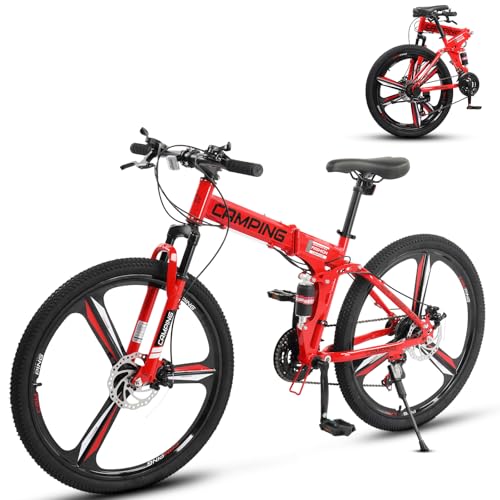
CamPingSurvivals 26 Foldable Bike 21 Speeds Full-Suspension

AVASTA Thrax MTB Mountain Bike 24 26 27.5 Inch

EUROBIKE 29 Mountain Bike Lightweight Aluminum Frame

Schwinn High Timber Mountain Bike 24 to 29-Inch Wheels

Outroad Mountain Bike Fat Tire 26 Inch 21 Speed
More On The Choices That Made The List
Storage in a closet or car trunk drives the appeal of this folding 26-inch model, and the 17-inch frame folds down for transport between rides. Dual suspension and a 21-speed trigger shifter give a wider gear range than a basic single-speed folder, which helps on climbs. Riders between 5’3″ and 6’0″ and up to 300 pounds match the stated fit range.
Disc brakes at front and rear provide stopping control on descents, and quick-release wheels simplify removal for folding. At 39 pounds, lifting it onto a rack or up apartment stairs takes effort, and the handlebar height stays fixed while the seat adjusts. That fixed bar height matters for taller riders who prefer a more upright position.
Strengths Worth Knowing
- Folds for storage in small spaces
- 21 speeds for hills and flat paths
- Dual disc brakes for controlled stops
- Dual suspension softens trail bumps
- Pedals and seat included in package
Things To Consider
- 39-pound weight complicates lifting
- Handlebar height cannot be adjusted
- Assembly required for final setup
A soft-tail frame sets this folding model apart from the Outroad 26 Inch Folding Mountain Bike 21 Speed High-Carbon Steel, adding rear suspension movement for rough paths. Double-walled rims support the tires, and the 21-speed system handles steep sections without constant gear hunting. Quick-release parts and a quick-adjust seat post make setup and folding faster.
Lightweight aluminum alloy wheels reduce rotating weight compared with heavier steel setups, though full suspension adds mechanical complexity. Arrival at 85% pre-assembled means handlebars, seat, front wheel, and pedals still need fitting, followed by brake and gear adjustments. For most riders, that setup time is a fair trade for a folding trail-capable frame.
Why It Works Well
- Full suspension absorbs trail vibration
- Double-walled rims add tire support
- Dual disc brakes work in wet conditions
- Quick-adjust seat post aids fit changes
Worth Noting
- Full suspension needs more upkeep checks
- Final assembly still required
Who It Suits Best
Adults riding forest trails and paved paths who need a folding frame for storage.
Where Another Pick Suits Better
AVASTA Thrax MTB Mountain Bike 24 26 27.5 Inch suits riders who want a choice of wheel sizes.
Wheel size choice is the headline here, with 24, 26, and 27.5-inch options using quick-release wheels for different heights. A high carbon steel frame and premium suspension fork handle uneven ground, while a 21-speed derailleur keeps gear changes precise. Unlike the folding models, this frame stays fixed for simpler storage in a garage or shed.
Disc brakes support controlled stopping, and 75% pre-assembly shortens setup, with an installation video available on the product page. You’ll want to match wheel size to height before ordering, since a larger wheel rolls faster but feels less nimble on tight trails. The honest read is that size choice matters more than color or styling.
Key Advantages
- Three wheel sizes for height fit
- 21-speed derailleur for varied terrain
- Disc brakes for reliable stopping
- Suspension fork improves trail comfort
- 75% pre-assembled for quicker setup
Trade Offs
- Fixed frame needs full storage space
- Wheel size must be selected carefully
A 19-inch aluminum alloy frame with a 29-inch wheel gives taller riders a longer stride over rough ground and pavement. Shimano shifters paired with a rear Shimano derailleur create a 3 by 7 system, meaning three chainring choices up front and seven at the rear. Front suspension and front and rear mechanical disc brakes cover bumps and stopping needs on mixed routes.
Compared with the AVASTA Thrax MTB Mountain Bike 24 26 27.5 Inch, this setup leans toward taller riders and daily commuting, with rack and kickstand mounts for carrying loads. Your daily route length matters here, since a 29-inch wheel rolls efficiently on longer paths but feels bulky in tight indoor storage. Magnesium alloy wheels add a distinct look without changing the core trail focus.
Everyday Wins
- Lightweight aluminum frame eases lifting
- 29-inch wheels suit taller riders
- Shimano 21-speed shifting stays smooth
- Rack mounts support daily carrying
Minor Gripes
- Large wheel needs more storage length
- 85% assembly requires front fork fitting
- Front suspension only, no rear shock
Simplicity defines this Schwinn line, with twist shifters and a rear derailleur that make gear changes intuitive for newer riders. A 16.5-inch aluminum mountain frame with 26-inch wheels fits riders from 5’3″ to 5’8″, and wide knobby tires grip loose surfaces. Front suspension handles neighborhood bumps without the complexity of full suspension.
Options include 7 or 21 speeds and aluminum or steel frames across 24 to 29-inch wheels, so sizing and gear count need checking before ordering. Arrival at 80% assembled requires a Phillips head screwdriver, Allen wrenches, an adjustable wrench, and pliers with cable cutters. That tool list is a practical ownership detail for anyone setting up a bike at home.
Useful Highlights
- Twist shifters simplify gear changes
- Alloy crank needs minimal maintenance
- Knobby tires grip varied surfaces
- Quick-release seat post aids adjustments
Room For Improvement
- Frame and speed options vary by listing
- Tool list needed for assembly
Made For
Newer riders and youth sizing needs on neighborhood paths and light trails.
Consider Something Else When
EUROBIKE 29 Mountain Bike Lightweight Aluminum Frame suits taller riders needing a larger wheel.
Tire width is the defining feature, with 4-inch tires on 26-inch wheels for sand, snow, and loose trails where standard tires struggle. A high carbon steel frame and shock-absorbing front fork support off-road use, and dual disc brakes handle stops on varied ground. The 21-speed drivetrain helps with climbs compared with a 7-speed setup.
You gain grip and flotation from the fat tires, and the trade-off shows up in weight and rolling effort on pavement. Setup takes about 20 to 40 minutes with included tools and an installation video, which is straightforward for a fat-tire model. Nothing flashy here, just a focused build for rough surfaces.
What Helps Most
- 4-inch tires grip loose terrain
- Front suspension absorbs shocks
- 21 speeds aid uphill effort
- Dual disc brakes for control
Points To Note
- Fat tires add rolling resistance on pavement
- High carbon steel frame adds weight
- Assembly takes 20 to 40 minutes
Frame, Fit, and Terrain: What Matters Most
Frame Material and Suspension
Aluminum frames keep weight lower for lifting and commuting, while high carbon steel frames appear across several trail models here. Front suspension suits light trails, and full suspension adds rear comfort at the cost of extra parts to check. Match suspension to terrain rather than choosing it for appearance alone.
Wheel Size and Rider Height
Larger wheels roll over obstacles more easily, and smaller wheels feel more agile in tight spaces. Rider height should guide the choice, since frame size and wheel size work together for fit. A 29-inch wheel suits taller riders, while 24-inch options suit shorter riders and younger cyclists.
Gears and Brakes for Real Routes
Twenty-one speeds give more options for hills, and disc brakes provide steadier stopping than rim brakes on descents. Twist shifters feel simple for beginners, and trigger shifters allow quicker changes at the fingertips. Check the shifter type and brake style against the routes planned most often.
Key Considerations Across These Picks
Common Shopping Slip Ups
Ordering a wheel size without checking height fit leads to an awkward riding position. Skipping the assembly percentage check also causes surprises at setup, since 75% and 85% pre-assembled still leave key parts to fit.
What The Higher Tier Buys
Aluminum frames, Shimano shifting components, and full suspension systems add cost through materials and parts complexity. Those upgrades pay off for frequent trail use, while simpler front-suspension models cover neighborhood riding well.
Frequently Asked Questions
What wheel size suits most adult riders?
Twenty-six and 27.5-inch wheels cover many adult heights, with 29-inch wheels favoring taller riders. Height and inseam should guide the final choice.
Does a folding bike work for trail riding?
Models here combine folding frames with 21 speeds and dual suspension for light trails. Storage benefits come with added weight and setup steps.
Are disc brakes better for mountain riding?
Disc brakes at front and rear give controlled stopping on descents and wet ground. Mechanical disc systems also simplify basic maintenance.
What assembly should be expected?
Most models arrive 75% to 85% assembled, with pedals, wheels, seats, and handlebars to fit. Tools are included on several listings, and videos help with setup.
When does a fat tire make sense?
Four-inch tires help on sand, snow, and loose trails where grip matters most. Pavement riding takes more effort with wide tires, so terrain should drive the decision.
Final Thoughts
For compact storage, the folding Outroad and CamPingSurvivals models stand out, while the EUROBIKE suits taller riders on longer routes. Fat-tire and multi-size options cover loose terrain and varied heights. Match frame, wheel, and suspension to the routes planned most often, and the right choice becomes clear.