
Power data from pedals helps road riders see effort without adding a crank spider. Your legs produce uneven power, and dual-sided readings show that split clearly. Single-sided options estimate total output from one leg, which suits steady training. You can move pedal systems between bikes, making them practical for riders with more than one frame.
A Closer Look At The Lineup

Favero Assioma Duo Power Meter Pedal

Favero Assioma Uno Power Meter Pedal

Magene P715 S Power Meter Pedals

Favero Assioma PRO MX-1 Power Meter Pedals
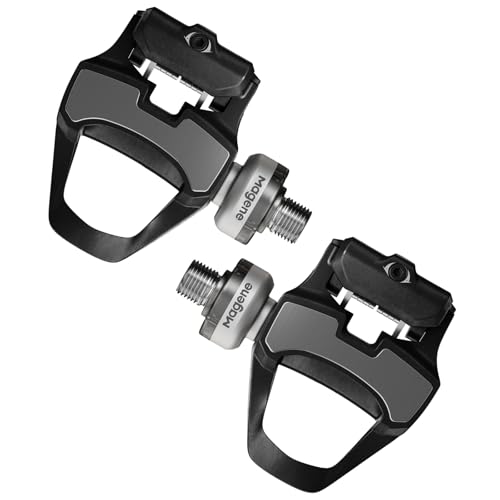
Magene P715 Dual-Sensing Power Meter Pedals

Favero Assioma PRO RL-1 Power Meter Pedals

Favero Assioma PRO RL-1 Power Meter Pedals Keo
Meet The Standout Selections
Dual measurement makes this Favero set a clear starting point for riders who care about left and right balance. You get separate readings from each pedal, so uneven effort shows up during climbs and intervals. That detail matters on long road rides where fatigue often changes pedaling style.
IAV calculation uses instantaneous angular velocity, meaning the system tracks pedal position through the stroke rather than averaging over a full revolution. Your bike computer receives data through Bluetooth or ANT+, the two common wireless standards for cycling devices. The rechargeable battery is rated to 50 hours, which suits regular training weeks between charges.
Practical Advantages
- Measures each leg independently for balance checks
- Moves between bikes without crank changes
- Built-in cadence sensor removes need for extra sensor
- Gyroscope supports IAV power calculation
- Connects to computers and apps through two protocols
Things To Consider
- 50-hour battery needs more frequent charging than longer-life options
- Dual pedals add weight compared with single-sided sets
Unlike the Duo model, this Uno version senses power on the left pedal only and doubles that value for total power. You gain core power and cadence data at a simpler setup, which suits riders building structured training habits. In our view, that trade-off works well for steady road training.
IAV Power Phase and Rider Position add detail about where force falls during the pedal stroke. Those metrics help riders link position changes to output, especially during interval sessions on familiar routes. Bluetooth and ANT+ keep connection options broad across computers and training apps.
Everyday Wins
- Left-side sensing keeps setup straightforward
- IAV metrics add technique detail beyond total watts
- Built-in cadence sensor simplifies device pairing
- Pedal format allows easy bike-to-bike swaps
Worth Noting
- Total power is estimated from one leg, so balance remains unknown
- Leg imbalance can affect total power accuracy in real riding
Who It Suits Best
Road riders starting structured power training who prioritize simple installation.
Where Another Pick Suits Better
Favero Assioma Duo Power Meter Pedal suits riders who need left and right balance data.
Long battery life sets this Magene pair apart from the Favero Duo, with a 120-hour rating for extended training blocks. Your long rides and multi-day trips face fewer charging stops with that capacity. Each pedal weighs 157 grams, keeping rotating weight modest for road use.
Seven training functions include power, cadence, left and right balance, torque effectiveness, pedaling smoothness, power phase, and riding position. Torque effectiveness describes how much of the pedal force contributes to forward motion, while smoothness describes consistency through the stroke. IPX7 waterproofing covers immersion up to one meter for 30 minutes under the rating definition.
Useful Strengths
- 120-hour battery supports long training periods
- Dual sensing provides balance and smoothness data
- Automatic and manual calibration options included
- 1-minute installation claim suits quick bike swaps
- IPX7 rating adds wet-weather protection
Small Caveats
- 13mm stack height on the S version affects pedal-to-shoe spacing
- Compatibility depends on matching pedal system and cleats
Single-sided sensing keeps this PRO MX-1 focused on total power without balance data. You want a pedal that integrates with existing computers and training apps, and Bluetooth plus ANT+ covers that pairing. For most riders, steady FTP work needs total power more than leg split.
Standard pedal system compatibility simplifies installation on road bikes already set up with matching cleats. Depending on your cleat setup, checking pedal body compatibility before ordering prevents a mismatch. Durable construction suits regular road use across varied conditions.
The Helpful Details
- Single-sided design keeps the system straightforward
- Bluetooth and ANT+ support computers and apps
- Standard pedal compatibility eases installation
- Lightweight design suits road cycling efficiency
Points To Note
- Left-pedal measurement cannot show right-leg contribution
- Cleat compatibility needs confirmation before purchase
Silver finish aside, this dual-sensing P715 focuses on independent left and right measurement at ±1% accuracy. You already use SPD-SL cleats, and this version keeps that system while adding power data. That compatibility avoids changing shoes or cleats for training.
120-hour battery life matches the P715 S model, giving long intervals between charges for riders training several days each week. One-minute installation suits riders moving pedals between a road bike and a second frame. Bluetooth and ANT+ connect to computers, apps, and indoor trainers.
Where It Helps
- Dual sensing shows balance during training
- SPD-SL compatibility preserves existing cleats
- 120-hour battery suits frequent training
- Quick installation supports bike swaps
- Dual connectivity covers computers and trainers
Honest Caveats
- SPD-SL fit limits use with other cleat systems
- Silver finish is a style choice, not a performance factor
Made For
SPD-SL riders who want dual-sided data without changing cleats.
Consider Something Else When
Favero Assioma PRO RL-1 Power Meter Pedals suits Look Keo riders seeking a lighter pedal.
Carbon-fiber-reinforced techno-polymer and needle roller bearings shape this lighter Favero design at 130 grams per pedal. Your Look Keo cleats work directly with this system, which keeps fit familiar on road bikes. Modular pedal bodies allow switching between road and mountain bike setups.
IAV power at ±1% accuracy supports metrics including cadence, platform center offset, power phase, rider position, smoothness, and torque effectiveness. Platform center offset shows where force lands on the pedal surface. Auto-calibration removes manual adjustment before rides, and battery life reaches 160 hours.
Real Benefits
- 130g pedal weight reduces rotating mass
- 160-hour battery extends charging intervals
- Auto-calibration simplifies pre-ride setup
- Up to three Bluetooth connections support multiple devices
- Modular bodies allow road and MTB swaps
- Advanced metrics support technique analysis
Points To Keep In Mind
- Look Keo compatibility restricts use with other cleat types
- Single-sided sensing estimates total power from left pedal
Multiple cleat angles distinguish this RL-1 package from the previous Favero set, with 0°, 5°, and 9° options included. You ride with Look Keo and want to adjust float, and having three pairs in the box removes separate purchases. Float describes how much the shoe can rotate while clipped in.
Left-pedal sensing with IAV technology delivers ±1% accuracy and metrics including platform center offset, power phase, smoothness, and torque effectiveness. IP67 protection covers dust and temporary immersion, while 10.5mm stack height keeps shoe position low. Battery life reaches 160 hours with up to three Bluetooth connections.
What Helps Most
- Three cleat float angles support fit adjustments
- 160-hour battery suits long training blocks
- IP67 protection covers dust and water exposure
- 10.5mm stack height keeps pedal profile low
- USB Type-C two-way charging cable included
Trade Offs
- Single-sided sensing cannot measure right-leg power directly
- Look Keo system limits compatibility with other cleats
What Matters Most Before Choosing Power Pedals
Single Or Dual Sensing
Dual sensing measures each leg and shows balance, while single-sided sensing estimates total power from one pedal. Riders focused on technique benefit from balance data, and riders focused on FTP benefit from total power. You check cleat compatibility first, since SPD-SL and Look Keo systems do not interchange.
Battery And Connectivity
Battery ratings range from 50 hours to 160 hours across these options, which changes charging routines for frequent riders. Bluetooth and ANT+ support covers most computers and apps, and multiple Bluetooth connections help riders using a phone and computer together. Your crank arm type also matters, because pedal installation still needs correct threading and washer use.
Metrics And Fit
Advanced metrics such as power phase and platform center offset help riders analyze technique, while basic power and cadence suit structured intervals. Stack height affects shoe position and knee comfort, so low-profile pedals suit riders sensitive to fit changes. Weight matters on climbing routes, where lighter pedals reduce rotating mass.
Key Considerations Across These Picks
Common Shopping Slip Ups
Many riders overlook cleat system compatibility and order pedals that do not match existing shoes. Others focus on accuracy alone and skip battery life, which affects daily charging habits. Checking stack height and pedal weight before ordering prevents fit surprises.
What The Higher Tier Buys
Higher-tier models add lighter materials, longer battery life, and modular pedal bodies for switching setups. Those features suit riders training across multiple bikes or seasons. Basic single-sided models still deliver core power data for intervals and FTP work.
Frequently Asked Questions
Do pedal power meters work with any bike computer?
Most models here support Bluetooth and ANT+, which covers mainstream cycling computers and training apps. You can pair a compatible computer or phone to view power and cadence during rides.
What does single-sided measurement mean?
Single-sided pedals measure one leg and double that value to estimate total power. That approach suits steady training, though it cannot show left and right balance.
How often do rechargeable pedal batteries need charging?
Battery ratings range from 50 hours to 160 hours depending on the model. Longer ratings suit riders who train several days each week between charges.
Can pedals move between different bikes?
Pedal systems move between bikes with compatible crank arms and cleat systems. Quick installation claims on some models suit riders with road and second frames.
Why does stack height matter?
Stack height sets the distance from pedal axle to shoe sole. Lower stack heights keep shoe position closer to the original pedal setup.
Final Verdict
Dual-sided options suit riders who want balance data, while single-sided options suit riders focused on total power. Look Keo riders should consider the RL-1 models, and SPD-SL riders should consider the Magene P715 range. You want the pedal system that matches existing cleats and training goals.