
A humming fridge, a space heater left on in a spare room, a fiber run that needs checking before a wall closes up, each scenario calls for a different kind of meter. This list mixes plug-in watt meters for household appliances with a handheld optical tester and a whole-home panel monitor. You get a clear split between measuring electricity at the outlet, measuring light through fiber, and measuring a full home circuit panel.
A Snapshot Of The Selections

D YEDEMC OPM-VFL-1 Fiber Optic Cable Tester Power Meter

2 Pack Upgraded Watt Meter Power Meter Plug Electricity Usage Monitor

KETOTEK Watt Meter Plug Power Meter Backlight Electricity Usage Monitor
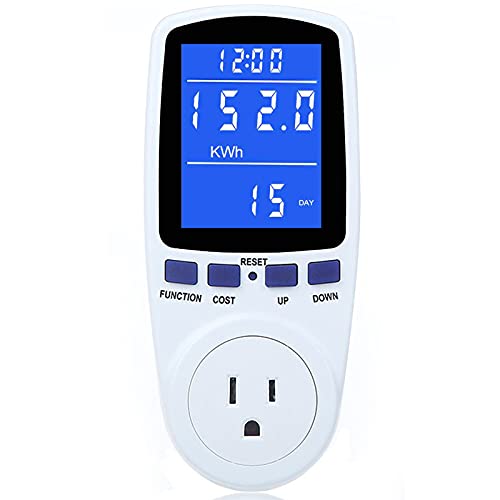
Upgraded Watt Power Meter Plug Home Electrical Usage Monitor Backlight

Upgraded Watt Meter Power Meter Plug Home Energy Monitor Backlight

Upgraded Watt Meter Watt Usage Meter Plug Home Energy Monitor Backlight

Emporia Vue 3 Home Energy Monitor Smart Home Automation Module
Inside Each Recommended Option
Field work with fiber calls for more than a single reading, and this handheld combines three jobs that often travel separately. Optical power measurement, a visual fault locator, and RJ45 cable testing sit in one portable unit. That combination suits installers who move between patch panels and network drops during a single visit.
Power is expressed in dBm, a logarithmic scale for optical signal strength, alongside linear milliwatts for a second view of the same reading. Eight wavelengths from 850 to 1650 nm cover common fiber bands, and the range runs from -70 dBm to +6 dBm. You can carry it in a tool bag, and wavelength memory plus user calibration help keep repeat checks consistent.
Standout Benefits
- Three functions reduce separate tools in a kit
- FC, SC, and ST connectors fit common fiber ends
- Backlight selection helps reading in dark cabinets
- Automatic shutdown conserves AA battery charge
Things To Consider
- AA batteries are not included in the package
- Optical focus differs sharply from household watt meters
Two plugs change the way a household audit works, because a fridge in the kitchen and a heater in a bedroom can be tracked at the same time. Each unit shows watts, kilowatt-hours, volts, amps, hertz, power factor, and cumulative cost across eight display modes. Power factor, a ratio describing how effectively AC power converts to useful work, adds context for motor loads.
Unlike the fiber tester above, this pick measures household electricity at a standard US outlet. Overload protection flashes the display and sounds a buzzer past a set threshold, with a default at 3680 W and adjustment down to 0 W. A kilowatt-hour alarm adds a second alert for cumulative use, likely to matter for a space heater running overnight.
The Value In It
- Two units allow side by side appliance comparison
- Cost display links energy use to billing
- Data memory retains settings after power loss
- Adjustable backlight timing suits night reading
- PC housing resists heat and drops in daily handling
Worth Noting
- Overload threshold needs manual setting before use
- Two units add setup steps across two outlets
- Instant values such as current are not retained in memory
A display stuck behind a refrigerator or under a counter is hard to read, and the split design here solves that placement problem. The measuring plug stays at the outlet while the LCD connects by a 2.9-meter cable, so the screen can sit at eye level. That layout suits laundry and kitchen appliances tucked into tight corners.
Five buttons cycle through watts, kilowatt-hours, voltage, current, frequency, power factor, cost, minimum and maximum power, plus cumulative time. Data saves during an outage, and historical data can be cleared while keeping settings for a move to another appliance. You can shift the same meter from a washer to a dryer without losing the setup.
The Practical Payoff
- Cable linked display improves access in cabinets
- Wide viewing angle eases reading from standing height
- Cost alarm adds a billing focused alert
- CR2032 battery included for the display unit
Trade Offs
- Cable routing needs space along a counter or wall
- Backlight timing is adjustable but starts at 10 minutes
Who It Suits Best
Households monitoring washers, dryers, dishwashers, or refrigerators in enclosed spaces benefit most.
Where Another Pick Suits Better
The 2 Pack Upgraded Watt Meter suits households wanting two simultaneous readings in separate rooms.
Reading a small plug meter often means crouching to outlet height, and the large 2.36 by 1.85 inch screen with 180 degree viewing angle changes that routine. Seven display modes cover watts, energy, volts, amps, hertz, power factor, cost, and minimum and maximum power. A wide angle helps in a busy kitchen where a clear counter view is limited.
Backlight timing offers five choices from 10 minutes to always on, compared with the KETOTEK model where timing is adjustable from a 10 minute start. Overload protection locks buttons past the set threshold until load drops, and memory retains cumulative data after removal or a sudden outage.
Everyday Wins
- Large screen reduces bending for reading
- Wide angle suits outlets behind furniture
- Memory preserves cumulative totals between uses
Minor Gripes
- Threshold guidance suggests setting near 1800 W before use
- Single unit covers one appliance at a time
- Button lock during overload needs load reduction to clear
Simple controls matter for a first plug meter, and a five second press on the M button resets cumulative data and settings without a tool. Eight display modes show watts, kilowatt-hours, voltage, frequency, current, power factor, unit price, and total cost. That set mirrors the 2 Pack model, though this single unit keeps the routine focused on one appliance.
The ABS housing is described as fireproof and anti-drop, with a standard US plug for common appliances. Overload flashing starts past a default 1800 W threshold here, a lower starting point than the 3680 W default on several other plug meters. Memory retains settings, energy quantity, cost, and unit price after removal or power failure.
Useful Touches
- Tool free reset clears totals for a new appliance
- Unit price input enables total cost tracking
- ABS housing suits standard US outlets
- Backlight turns off manually with the UP button
Room For Improvement
- Lower default overload threshold needs checking for high wattage loads
- Instant current and voltage values are not retained in memory
Alert features separate this single plug from the simpler reset focused model above. A kilowatt-hour alarm flashes the display and sounds a buzzer at a set cumulative level, alongside overload protection with flashing and sound. Eight modes show watts, energy, volts, amps, hertz, power factor, cost, minimum and maximum power, plus cumulative days and time.
The PC housing resists heat and drops, and the standard US socket fits common appliances. Backlight timing spans 10 minutes to always on across five settings, and memory keeps settings, energy, cost, unit price, and time after removal. You can set an alarm for a heater or pump that runs for long stretches.
Points In Its Favor
- Kilowatt-hour alarm supports cumulative use limits
- Overload buzzer adds audible warning
- Memory retains cost and time data between sessions
- PC housing suits frequent plug in handling
Points To Note
- Alarm and overload settings require setup before monitoring
- Single unit limits simultaneous appliance tracking
Made For
Households tracking a single high use appliance with cumulative alerts benefit most.
Consider Something Else When
The KETOTEK Watt Meter Plug suits households needing a display placed away from the outlet.
Whole home monitoring starts at the circuit panel rather than at a single outlet, and clamp-on sensors attach inside most home panels. Sixteen branch sensors cover major loads such as air conditioning, furnace, water heater, washer, dryer, and range. That approach reveals patterns across circuits that a plug meter on one appliance cannot show.
Real time data flows through an app over 2.4 GHz Wi-Fi, with one second data available in the app while open and retained for three hours. Minute data stays in the cloud for seven days and hourly data stays indefinitely, with export available in the app. Solar and net metering support plus automation settings suit households with time of use rates.
What Earns Its Place
- Sixteen sensors map major home circuits
- Cloud history supports longer term pattern checks
- Solar and net metering views included
- App automation supports time based energy management
Softer Spots
- Panel installation needs access to circuit panel space
- Some system types need an additional sensor sold separately
- Wi-Fi and internet connection are required for monitoring
What Matters Most Before Choosing Power Meters
Match The Meter To The Load
Plug meters suit single appliances such as heaters, fridges, and washers, with overload thresholds matched to each load. Panel monitors suit whole home patterns across many circuits. Fiber testers suit optical signal checks and do not measure household electricity.
Check Display Placement And Controls
A wide angle screen helps at outlet height, while a cable linked display helps in cabinets and behind appliances. Simple reset controls suit first time use, and alarm settings suit long running loads. You should confirm backlight timing and button layout before placing a unit behind furniture.
Confirm Installation And Connectivity
Plug meters need only a standard US outlet and a clear space around the socket. Panel systems need circuit panel access, sensor space, and 2.4 GHz Wi-Fi. Fiber work needs the right connector style, so FC, SC, and ST fit should be confirmed for the cable ends in hand.
Key Considerations Across These Picks
Common Shopping Slip Ups
Mixing a fiber optical meter with household watt meters leads to mismatched expectations. Setting an overload threshold without checking appliance wattage also creates false alarms. Confirm load type and threshold before the first monitoring run.
What The Higher Tier Buys
Panel based systems add circuit level sensors, app history, and automation that plug meters do not provide. That added hardware and data handling explain the step up in complexity. Households focused on one appliance usually gain enough from a plug meter.
Frequently Asked Questions
What does a plug in watt meter measure?
A plug in watt meter measures watts, kilowatt-hours, voltage, current, frequency, power factor, and cumulative cost. Display modes let a household switch among those values during appliance use.
What does an optical power meter measure?
An optical power meter measures light strength in fiber through dBm and milliwatts across set wavelengths. A visual fault locator and RJ45 tester add fault finding and network cable checks in some handheld models.
What does a whole home energy monitor measure?
A whole home monitor measures energy across multiple circuits through clamp-on sensors inside a circuit panel. App data then shows real time use and longer term patterns by circuit.
What should be set before using overload protection?
Overload protection needs a threshold matched to the appliance load before monitoring starts. A lower threshold suits smaller loads, while high wattage appliances need a higher setting.
What connectivity does a panel monitor need?
A panel monitor needs 2.4 GHz Wi-Fi and an internet connection for app and cloud monitoring. One second data is available in the app while open, with minute and hourly data retained in the cloud.
Closing Remarks
For a single appliance, a plug meter with the right display placement and alarm settings covers daily checks well. For fiber work, the handheld optical tester covers a separate set of needs. For whole home patterns, panel sensors provide circuit level data that plug meters cannot match.