Pedal strikes, trail debris, and bike contact can turn a normal ride into a sore shin in seconds. Riders who switch between trail, enduro, and downhill terrain need protection that stays put without feeling bulky. This roundup compares soft compression sleeves, strap-on guards, and hinged knee-shin combinations, so you can match coverage to your riding style and calf size.
A Closer Look At The Lineup

HiRui Soccer Shin Guards Calf Compression Sleeve Small
MediCaptain Mini Shin Guards Soccer Maxi Black
2 Pairs Soccer Shin Guards Kids Youth Adult Honeycomb

Triple Eight Exoskin Shin and Whip Guard Pads

MUZUP Offedge Mountain Bike Knee Pads S
Fox Racing Launch Knee/Shin Guard

Troy Lee Designs Triad Knee Shin Guards XL/XXL
The Picks, Examined More Closely
Soft compression sleeves suit riders who want light shin coverage without a rigid shell. The HiRui option uses honeycomb EVA, a lightweight foam that spreads impact across small cells, inside a spandex and nylon sleeve. You get calf compression and a low-profile feel for trail rides and mixed sports.
Sizing runs from XS at 5.5 to 7.8 inches through XXL at 16.9 to 20.9 inches, measured 2 inches below the kneecap. Silicone strips at the top and flatlock seams help hold position during pedaling. Care calls for hand washing, which adds a small ownership step compared with strap-on guards.
Strong Points
- Flexible honeycomb foam bends with pedaling motion
- Compression sleeve stays low profile under clothing
- Wide size range covers youth through larger calves
- Silicone grip helps limit slipping during movement
Things To Consider
- Soft foam offers moderate coverage, not rigid shell protection
- Hand washing required to preserve shape and elasticity
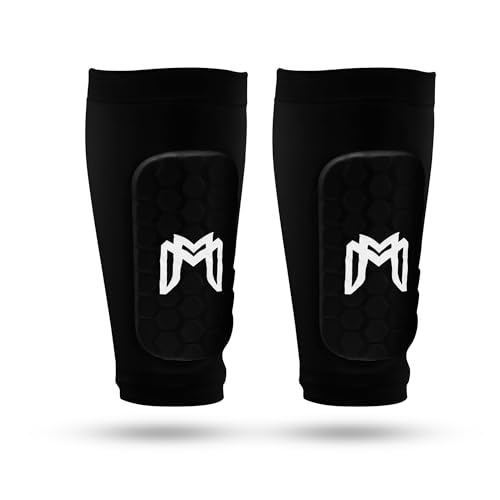
Mini pads take a different approach from full-length guards. The MediCaptain Maxi version builds a 5.5 by 2.8 inch pad directly into the sleeve, so positioning separate pieces disappears. That slim profile suits riders who dislike bulky coverage around the shin.
Unlike the HiRui sleeve, coverage here is intentionally small and focused. The trade-off is clear: less area protected, but also less interference with movement. In our view, that makes this option a niche choice rather than a general trail guard.
Features That Help
- Built-in pad removes separate positioning steps
- Slim sleeve profile limits bulk during pedaling
- Honeycomb EVA cushions the central shin area
Worth Noting
- Mini coverage leaves much of the shin exposed
- Maxi size still smaller than regular guards
Who It Suits Best
Riders who prefer minimal shin coverage and a lightweight sleeve feel.
Where Another Pick Suits Better
Triple Eight Exoskin Shin and Whip Guard Pads suit riders who need broader rigid coverage.
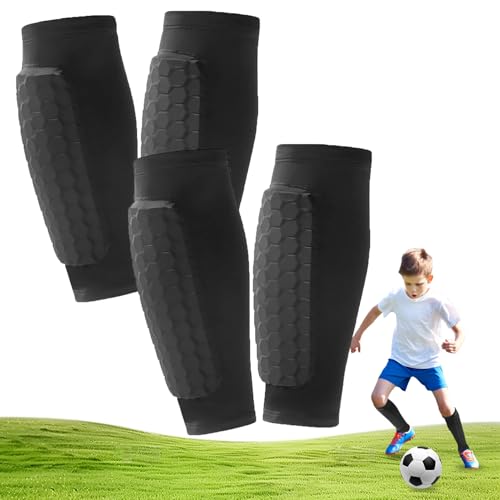
Two pairs in one package changes the ownership math for households with several riders. This set uses honeycomb padding inside elastic nylon sleeves, with silicone at the cuff to limit twisting. Rotation becomes easier because one pair can dry while another stays ready.
Compared with the single-pair HiRui sleeve, this option adds convenience through quantity rather than a different protection concept. Sizing guidance suggests choosing the smaller size between measurements for a snug hold. Hand washing with cold water keeps maintenance simple.
What Stands Out
- Two pairs support rotation between rides
- Elastic nylon fabric allows airflow during effort
- Silicone cuff helps sleeves stay positioned
- Family sizing covers youth and adult use
Trade Offs
- Soft foam coverage remains moderate, not rigid
- Snug sizing between sizes needs careful measurement
- Multiple pairs require storage space for the set
Made For
Households where several riders share similar sizing needs.
Consider Something Else When
Fox Racing Launch Knee/Shin Guard suits riders who also want knee coverage.
Rigid protection enters the picture here. High-density PE, a molded plastic used for splints, sits over EVA foam inside a perforated neoprene body. You get a firmer barrier against bike contact than soft sleeves provide. Four Velcro straps adjust the fit around the calf.
Removable splints simplify cleaning after muddy rides, while reinforced outer panels address abrasion. Sizes span Small at 28 to 36cm through Large at 33 to 40.6cm. The bulkier build suits BMX and mountain biking more than casual cycling.
Useful Touches
- Removable splints make cleaning more straightforward
- Perforated neoprene supports airflow during rides
- Four straps allow a customized calf fit
Minor Gripes
- Rigid splints feel bulkier than compression sleeves
- Strap setup takes longer than slip-on sleeves
Knee coverage joins shin coverage in this design. A removable M-KN1 insert sits inside ballistic nylon with four-way stretch, meaning the fabric extends in multiple directions. Extended coverage reaches toward the upper shin for trail, enduro, and downhill use.
Mesh panels and neoprene keep airflow moving during climbs. Silicone grip bands help prevent shifting while pedaling. Your sizing step matters here because the ergonomic shape relies on a close fit around the knee and calf.
The Case For It
- Removable insert simplifies washing and care
- Extended lower coverage reaches upper shin area
- Ballistic nylon resists abrasion on trails
- Mesh vents support airflow during climbs
- Silicone bands help keep pads positioned
Room For Improvement
- Close fit requires accurate sizing before ordering
- Knee-shin length adds bulk compared with shin-only sleeves
Ventilation shapes this knee-shin guard. ARIAPRENE, a breathable synthetic fabric, pairs with mesh to move air during pedaling. Extended EVA panels cover the lower shin, while contoured side panels add knee coverage during a fall. You get slip-on ease with hook and loop adjusters for tightening.
A silicone print band at the thigh helps limit movement while riding. An abrasion-resistant front panel addresses trail wear. One thing worth considering is sizing, because a snug slip-on shape leaves less room for adjustment than full strap systems.
Where It Helps
- Slip-on construction speeds up getting ready
- Mesh and ARIAPRENE support ventilation
- Hook and loop adjusters refine the fit
Points To Note
- Tight slip-on fit may suit narrower leg shapes
- Adjusters offer less range than four-strap guards
- Extended panels add length for storage
Full coverage defines this hinged design. A hard plastic shell with Gridguard pattern sits over a D3O liner, a foam material that absorbs impact energy. A biaxial hinge, meaning movement in two directions, allows the knee to bend naturally while the shell stays aligned.
Hook and loop straps and quick release clips create a custom feel. Your larger size option here is XL/XXL, which suits bigger riders seeking downhill protection. Compared with the Fox Racing Launch, this guard trades lighter ventilation for a more structured shell.
Everyday Perks
- Hinged shell follows knee movement during pedaling
- Hard outer layer covers knee and shin together
- Adjustable straps refine fit around the leg
- Medial flange supports knee joint alignment
Softer Spots
- Hard shell adds bulk for casual trail rides
- XL/XXL sizing limits options for smaller riders
What To Check Before Picking MTB Shin Protection
Coverage Type
Soft sleeves suit light trail contact, while rigid splints and hard shells suit heavier bike contact. Knee-shin combinations add coverage for riders who fall forward often. Match the structure to terrain rather than choosing by appearance alone.
Fit and Sizing
Calf circumference at the thickest point determines strap and sleeve fit. Slip-on guards need accurate sizing because adjusters offer limited range. Measure before ordering and compare the result with each size chart.
Ventilation and Care
Mesh, perforated neoprene, and breathable knits help during long climbs. Removable inserts and splints simplify cleaning after muddy rides. Hand-wash sleeves need drying time, so rotation matters for frequent riders.
Key Considerations Across These Picks
Common Shopping Slip Ups
Guessing calf size causes most fit problems in this category. Mini pads also surprise riders who expect full-length coverage, so check pad dimensions before ordering. A quick measurement prevents most returns.
What The Higher Tier Buys
Hinged shells, removable inserts, and structured splints add materials and hardware that simpler sleeves lack. Those features pay off for downhill riders who need firm coverage. Light trail riders often get enough from foam sleeves.
Frequently Asked Questions
Do soft sleeves protect enough for mountain biking?
Soft sleeves suit light trail contact and pedaling strikes. Riders facing heavier bike contact benefit from rigid splints or hard shells.
How should calf size be measured for these guards?
Measure around the thickest part of the calf muscle. Compare that number with the size chart for the specific guard before ordering.
Can knee-shin guards be worn under pants?
Some slim designs fit under pants, including perforated neoprene models. Bulkier hinged shells usually sit over clothing during rides.
Are removable inserts easier to clean?
Removable inserts and splints allow separate washing of hard parts. Sleeve bodies still need washing and drying time between rides.
Which option suits beginners on trails?
Beginners often start with lightweight sleeves for comfort and mobility. Your riding terrain should guide a move toward strap-on or hinged guards later.
Final Verdict
Soft sleeves from HiRui and the two-pair set suit light trail use, while Triple Eight and Troy Lee Designs cover heavier contact. MUZUP and Fox Racing bridge the gap with knee coverage and ventilation. Match coverage to terrain, measure calf size carefully, and pick the structure that fits your riding style.