
A sore seat can cut a trail ride short long before legs give out. Width, padding depth, and rail shape decide how weight spreads on rough ground. You need a saddle that matches sit bone width and riding posture, not just softness on day one. The six options below split that job in different ways for commuting, trail work, and longer road stretches.
An Overview Of The Picks

ROCKBROS Bike Seat Waterproof Ergonomic Bicycle Saddle

WTB Volt Bike Seat Medium Padding Saddle
ROCKBROS Comfort Bike Seat Wave Ergonomic Saddle

Moocci Comfortable MTB Gel Seat Mountain Bike Saddle
Wittkop Bike Seat I Waterproof 5-Zone Saddle
ROCKBROS Bike Seat Road Saddle Breathable Ergonomic
More On The Choices That Made The List
You get a light, waterproof option built for road, MTB, and folding bikes without a bulky profile. The tapered shape runs narrow at the front and wider at the rear, a layout that limits inner thigh rubbing during pedal strokes. For most commuters, that shape matters more than extra padding.
A central slot channel lets air move through the middle, which helps heat and moisture escape on warm rides. Matte PU over dense foam adds grip under shorts, while marked rails make fore and aft adjustment clearer during setup. The honest read is simple: softness here comes from foam density, not a gel layer.
What Works In Its Favor
- 262g weight keeps the bike feeling light on climbs
- Waterproof PU surface wipes clean after rain
- Airflow channel reduces stuffiness on longer rides
- Marked rails simplify saddle position checks
- 220 lb capacity covers most riders and gear
Things To Consider
- Dense foam feels firmer than gel options on rough trails
- Single width means sit bone fit needs a quick check first
You can choose width around sit bone spacing, with narrow, medium, and wide versions in the range. That sizing choice changes power transfer more than a softer cover does, because support lands under the pelvis instead of squeezing soft tissue. Riders who switch between trail and road benefit from that precision.
Medium padding sits between firm race saddles and plush comfort models, a balance for easier paced riding. A contoured rear cradles the pelvis, and a central relief channel runs toward the nose to ease pressure. Unlike the ROCKBROS Bike Seat Waterproof Ergonomic Bicycle Saddle, width selection here drives the recommendation.
Useful Strengths
- Three widths match different sit bone measurements
- Contoured rear stabilizes the pelvis on uneven trails
- Central relief channel eases soft tissue pressure
- Medium padding balances cushion and firm support
Worth Noting
- Correct width selection takes a measurement before ordering
- Three rail options mean the exact variant needs confirmation
- Medium padding feels firmer than gel cushioned picks
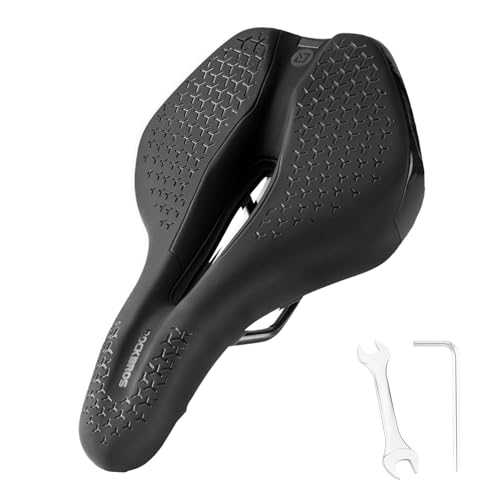
The wave profile dips at the front, a shape aimed at easing crotch compression during longer rides. High-density foam inside absorbs vibration, which helps on chip seal and light gravel. For most trail riders, that front dip changes comfort more than surface texture alone.
Carbon steel rails resist deformation, and side markings help with precise placement. A straight slot channel keeps air moving through the center, while textured PU adds grip. Compared with the first ROCKBROS model, weight rises to about 340g, a small trade for the wave shaping and rail material.
Where It Helps
- Downward front wave reduces pressure on longer rides
- High-density foam absorbs road vibration
- Carbon steel rails hold shape under load
- Textured PU surface improves grip in shorts
- Airflow slot limits heat buildup through the center
Trade Offs
- 340g weight exceeds the lighter ROCKBROS saddle above
- Wave shape suits upright posture better than aggressive drops
Who It Suits Best
Riders logging longer mixed surface rides who want pressure relief without a wide cruiser shape.
Where Another Pick Suits Better
WTB Volt Bike Seat Medium Padding Saddle suits riders who need exact sit bone width sizing.
You get thick gel padding over high elasticity foam, a combination aimed at shock absorption on rough paths. Waterproof PVC leather covers the top, and a hollow center adds airflow. Casual riders on mountain, road, city, and stationary bikes all share the same standard rail clamp size here.
Dual stainless steel rails under the shell carry load and add spring. A reflective stripe at the rear helps visibility at night, a practical detail for commuters. The trade-off shows up in weight: at 1 pound, this saddle adds mass compared with the 262g ROCKBROS option.
Advantages To Know
- Gel plus foam padding softens bumps on rough paths
- Waterproof PVC leather resists rain and dirt
- Reflective stripe aids night visibility
Minor Gripes
- 1 pound weight feels heavy on weight conscious builds
- Thick padding narrows the fit for aggressive riding positions
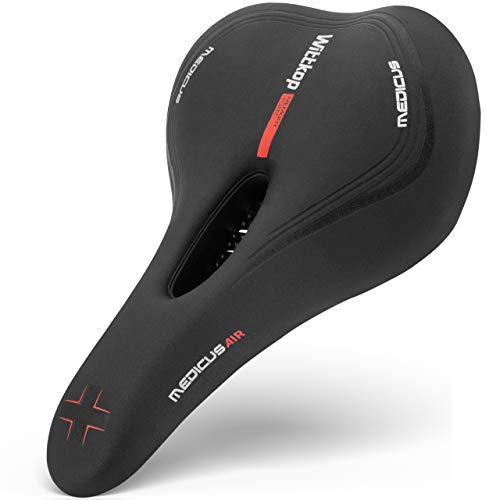
The 5-Zone-Concept splits support into distinct areas across the saddle surface. That layout spreads load instead of concentrating it under sit bones, a different approach from the single foam blocks in earlier picks. Waterproof construction suits BMX, MTB, and road use across seasons.
Zone shaping can help riders who shift position often during a ride. For most commuters, the benefit appears on mixed routes where posture changes between climbs and flats. Nothing flashy here, just a structured surface intended to balance pressure zones.
The Helpful Details
- Five zones distribute pressure across the surface
- Waterproof build suits wet weather riding
- Works across BMX, MTB, and road bike types
- Structured zones suit riders who shift position
Points To Note
- Zone layout may feel unfamiliar after foam-only saddles
- Width and rail details need checking against the current seatpost
- Less padding depth than the gel Moocci option
Made For
Riders moving between bike types who want a structured, waterproof surface.
Consider Something Else When
Moocci Comfortable MTB Gel Seat Mountain Bike Saddle suits riders who want thicker gel cushioning.
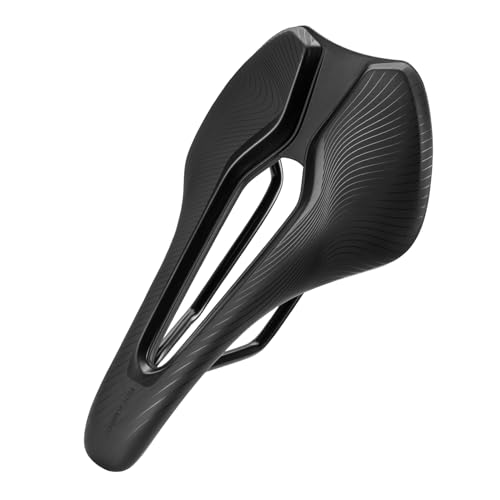
You get a streamlined saddle with a narrow front and wide rear, plus an enlarged hollow channel in the middle. That channel relieves pressure and promotes air circulation during long distance rides. PVC eco-leather on top resists rain and dirt, and foam padding underneath stays flexible.
Chromium-molybdenum steel rails add impact toughness, while the nylon shell with 20% fiberglass resists deformation. Self-scaled markings on the seat bow help with position adjustment, and mounting holes at the rear accept tail light accessories. Compared with the wave ROCKBROS model, the shell construction here leans more structural.
What Helps Most
- Enlarged hollow channel improves airflow and pressure relief
- Fiberglass reinforced shell resists deformation under load
- Rear mounting holes accept tail light accessories
- Scaled markings simplify fore and aft adjustment
Small Caveats
- Structural shell feels firmer than thick gel padding
- Tail light mounting needs a compatible accessory
What Matters Most Before Choosing Mtb Saddle For Men
Sit Bone Width First
Width decides where support lands under the pelvis. Measure sit bone spacing before ordering, then match narrow, medium, or wide options to that measurement. A saddle too narrow concentrates load, while a saddle too wide can rub inner thighs.
Padding Type And Riding Posture
Gel padding absorbs shock on rough, upright rides. Dense foam holds shape better for longer efforts and aggressive positions. Upright commuters often prefer thicker cushioning, while riders in a dropped posture benefit from firmer support.
Rails, Shell, And Compatibility
Rail material and shell construction affect durability and weight. Check clamp diameter and rail type against the current seatpost before ordering. Marked rails and scaled markings make repeat adjustments easier after the first setup.
Airflow And Weather Resistance
A central channel or hollow cutout helps heat escape on warm days. Waterproof covers resist rain and simplify cleaning after muddy rides. Both details matter more on daily routes than on short weekend loops.
Key Considerations Across These Picks
Common Shopping Slip Ups
Softness alone rarely predicts comfort after the first week. Width, rail compatibility, and posture fit deserve a check before padding depth. A quick sit bone measurement prevents most mismatches.
What The Higher Tier Buys
Higher tier models often add width options, reinforced shells, and specific rail materials. Those changes help riders who log long distances or carry extra gear. Casual short rides gain less from structural upgrades.
Frequently Asked Questions
How does sit bone width affect saddle choice?
Sit bone width determines which saddle width supports the pelvis correctly. Matching width spreads load and reduces pressure on soft tissue.
What is the difference between gel and foam padding?
Gel padding absorbs shock through a softer layer over foam. Dense foam holds shape longer and suits longer, more aggressive rides.
Which saddle suits daily commuting?
A waterproof saddle with airflow channel suits daily routes in mixed weather. Marked rails help keep position consistent after adjustments.
What should be checked before ordering a replacement saddle?
Clamp diameter and rail type should match the current seatpost. Width and padding depth should match riding posture and distance.
Why does a central channel matter?
A central channel allows air circulation and relieves pressure. That design helps reduce heat buildup during longer rides.
Final Thoughts
For precise fit, the WTB Volt stands out through its three width options. For light daily use, the first ROCKBROS saddle keeps weight low. Match width and posture first, then padding type will follow naturally for the route ahead.