
A mountain bike left leaning against a wall turns routine chain care and brake checks into a back-bending job. A dedicated stand lifts the bike to a workable height, keeps the wheels still, and frees both hands for tools. Your choice comes down to two jobs: repair work at waist height, or upright storage in a tight garage. The picks below split cleanly along that line.
The Shortlist At A Glance
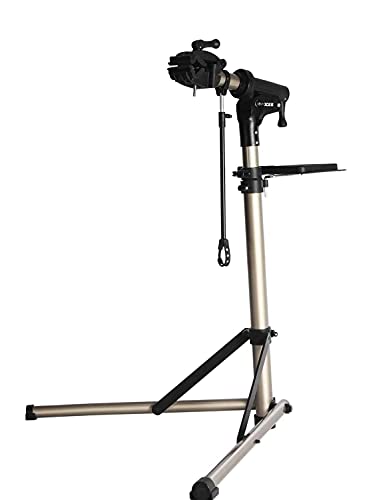
CXWXC RS100 Bike Repair Stand (Champagne)
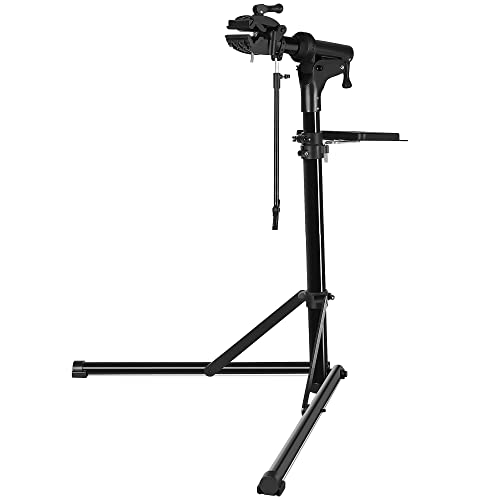
CXWXC RS100 Bike Repair Stand (Black)

RAD Cycle Products Pro Bicycle Repair Stand 66 Pounds
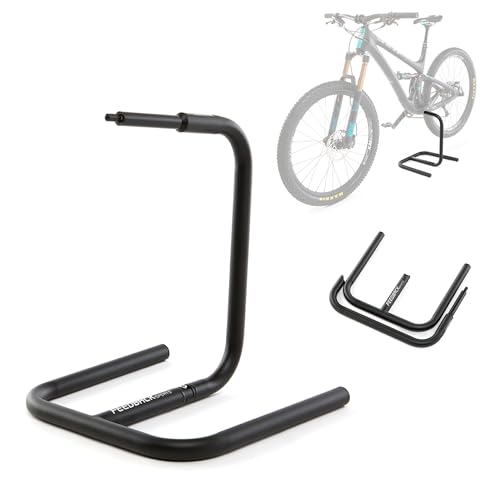
Feedback Sports Scorpion Moto-Style Portable Bike Stand 2 Piece Black

Vertical Bike Stand Freestanding Garage Rack 24-29

Bike Floor Stand Rack Indoor Garage 20-29 Mountain Road Bikes

BEISHI Bike Floor Stand Adjustable Rack 16-29 Wheel
The Details Behind The Selections
Home maintenance starts here for many riders, and this champagne RS100 covers the core job without fuss. The clamp rotates a full circle, so a bike can turn from drivetrain side to brake side without lifting it off the stand. Height adjusts between 102 and 161 cm, which puts pedals and wheels near waist level during chain and gear work.
An alloy post keeps weight down at 5.9 kg, and the tripod folds for a car boot or a corner of the garage. The included rod steadies the front wheel, a detail that matters during fork and headset tasks. Depending on frame shape, seatpost clamping may suit some riders better than top tube clamping.
Notable Gains
- 360 degree clamp rotation for access to every side
- Height range suits standing work without bending
- Front wheel rod stops swivel during adjustments
- Rubber feet grip smooth floors and protect surfaces
Things To Consider
- 60 pound limit excludes heavier electric mountain bikes
- Clamp fits tubes from 25 to 50 mm diameter only
The black RS100 mirrors the champagne version in structure, then adds a tool tray with a magnetic strip. That tray changes the feel of a job, because small bolts and spacers stay in one place instead of rolling across the floor. The same 360 degree clamp and height adjustment carry over, so the upgrade is practical rather than cosmetic.
Compare that tray against the first pick, and the difference shows up mid-repair, with hands busy and parts in play. Assuming standard frame tubing, the clamp range matches the earlier model exactly. Color becomes the main remaining choice, and the tray tips the balance for riders who lose small hardware often.
What Helps Most
- Magnetic tray keeps screws and nuts within reach
- Rotating clamp reaches drivetrain, brakes, and wheels
- Alloy post folds down for storage and transport
- Front wheel rod stabilizes the bike during work
- Tripod base with rubber feet resists sliding
Worth Noting
- 60 pound capacity still rules out heavy electric bikes
- Tray adds bulk compared with the tray-free version
- Clamp range limited to 25 to 50 mm tubes
Who It Suits Best
Home mechanics who drop small bolts during adjustments and want a tray within arm reach.
Where Another Pick Suits Better
RAD Cycle Products Pro Bicycle Repair Stand 66 Pounds suits riders with bikes over 60 pounds or taller work heights.
Heavier mountain bikes and shop work push past the 60 pound ceiling of the CXWXC models, and this RAD stand answers with a 66 pound rating. The telescoping post stretches from 41 to 75 inches, a wider span that helps taller riders and larger frames. Clamps rotate 360 degrees and are shaped to grip without marking paint.
Pre-drilled feet allow anchoring to a bench or floor, a shop-friendly touch absent from the folding tripods above. Legs fold for storage, and a hex key is included for setup. In our view, the trade-off is a heavier, more permanent feel in a small home garage.
Notable Upsides
- 66 pound capacity handles heavier mountain bikes
- 41 to 75 inch height range covers tall riders
- Clamps grip 1 to 1.5 inch tubing without finish damage
- Handlebar rod steadies the front wheel
Trade Offs
- Anchoring requires drilling into a bench or floor
- Frame fit limited to 1 to 1.5 inch tubing
Storage and light maintenance take a different shape with this two-piece Scorpion stand. A spindle inserts into a hollow crank, lifting the rear wheel off the ground while the bike stays upright. That setup suits washing, chain checks, and display at events, with the stand breaking down flat around a single bolt.
Compatibility hinges on crank design, because only hollow spindle cranks in 10, 13, 18, or 20 mm sizes fit. Powder-coated steel construction and a 60 pound limit cover road, mountain, and many electric bikes. Depending on crank design, checking the spindle opening first prevents a mismatch.
The Helpful Details
- Rear wheel elevation aids washing and light maintenance
- Two-piece design packs flat for travel
- Adapters cover 10 to 20 mm hollow spindles
Minor Gripes
- Requires a hollow spindle crank for fit
- Not suited to full repair work at waist height
Daily parking in a small garage calls for a different tool, and this vertical stand keeps a bike upright without wall drilling. Four lockable casters let the whole unit roll between rooms, then lock in place. An adjustable lifting rod and V-shaped brackets adapt to 24 to 29 inch bikes, with tires up to 4 inches wide.
Velcro straps hold the front wheel and seatpost, while the triangular frame keeps the stance planted. The 55 pound limit fits road, city, hybrid, and standard mountain bikes. Your floor space matters here, because a rolling upright rack needs a clear path to move.
What Makes Sense
- Lockable casters move storage between rooms easily
- No drilling needed for renters or shared garages
- Adjustable rod fits 24 to 29 inch bikes
- Velcro straps stabilize wheel and seatpost
- Powder-coated steel suits indoor and garage use
Points To Note
- 55 pound limit excludes heavier electric bikes
- Rolling design needs smooth, clear floor space
Roll-in parking suits riders who lift a bike several times a week, and this floor rack removes the lift entirely. A wheel tray accepts the front or rear wheel, with adjustable sliders locking the tire at three points. The wide base and four rubberized feet keep the rack planted on polished floors.
Fit covers 20 to 29 inch road, cyclocross, mountain, and hybrid bikes, with tires up to 2.4 inches. That tire ceiling separates it from the vertical rack above, which accepts up to 4 inches. Heavy electric bikes fall outside the intended use here.
Useful Highlights
- Roll-in design avoids lifting the bike into storage
- Adjustable sliders fit 20 to 29 inch wheels
- Three contact points stabilize the wheel
Softer Spots
- Tire width limited to 2.4 inches
- Heavy electric bikes not recommended
Made For
Apartment and garage riders who park a standard mountain or road bike daily and want roll-in access.
Consider Something Else When
Vertical Bike Stand Freestanding Garage Rack 24-29 suits wider tires up to 4 inches and taller upright storage.
Mixed households often hold a kids bike beside a full-size mountain bike, and this rack spans both. The tire slot accepts 16 to 29 inch wheels, including 650C and 700C road sizes, with tires up to 3.55 inches wide. An adjustable frame lets the front or rear wheel slot in, depending on space and habit.
Heavy-duty metal construction and pop-out wheel stabilizers keep the bike upright in garages, sheds, and basements. Assembly uses included instructions and screws. For households with varied wheel sizes, that range beats the narrower CHEPARK slot above.
Noteworthy Benefits
- Wheel range from 16 to 29 inches in one rack
- Tire slot accepts up to 3.55 inches wide
- Front or rear wheel parking adds flexibility
- Adjustable stabilizers secure different wheel sizes
Small Caveats
- Single bike capacity per rack
- Assembly required with included screws
- Floor position needs pressing down after setup
What To Check Before Picking an Mtb Stand
Repair Height Versus Storage Height
Repair stands hold a bike at waist height for chain, gear, and brake work. Storage racks keep a bike upright at floor level for daily parking. You need to match the stand type to the main job, because a floor slot cannot replace a rotating clamp.
Weight and Clamp Fit
Your bike weight must stay under the stated limit, with electric mountain bikes often pushing past 60 pounds. Clamp diameter or tire width limits matter just as much, since a stand that cannot grip the frame or slot cannot do its job. Check those numbers against the actual bike before choosing.
Crank and Wheel Compatibility
Spindle stands depend on hollow crank openings, while floor racks depend on wheel size and tire width. Measuring the crank opening or tire width takes minutes and prevents a return. That check separates a smooth setup from a rack that sits unused.
Key Considerations Across These Picks
Common Shopping Slip Ups
Shoppers often match a stand to brand loyalty instead of weight and fit. A repair stand rated for 60 pounds will not suit a heavier electric bike, regardless of color or finish. Measuring weight, tubing, and tire width first avoids that mismatch.
What The Higher Tier Buys
Higher-tier stands add capacity, taller posts, and anchoring options for shop or heavy bike use. The extra spend pays off when bike weight or work height exceeds standard ranges. For lighter bikes and occasional maintenance, a simpler stand usually covers the job.
Frequently Asked Questions
Can a repair stand hold an electric mountain bike?
Some models can, depending on total weight. The RAD stand rates to 66 pounds, while several others stop at 60 pounds or 55 pounds.
What size tubing does a clamp need to fit?
Clamp fit varies by model. CXWXC clamps fit 25 to 50 mm tubes, while RAD clamps fit 1 to 1.5 inch tubing.
Do floor racks work for kids bikes?
Yes, with the right slot size. The BEISHI rack accepts 16 inch wheels, while other floor racks start at 20 or 24 inches.
Can a stand be used without drilling into a wall?
Yes, most options here avoid drilling. Tripod repair stands, floor slots, and rolling vertical racks all stand on the floor.
Which stand suits washing a bike?
The Scorpion spindle stand elevates the rear wheel for washing. That design suits light maintenance, not full repair work at height.
Final Verdict
For home repairs, the CXWXC RS100 Bike Repair Stand (Black) pairs a rotating clamp with a magnetic tray at a sensible weight limit. For daily parking, the BEISHI rack covers the widest wheel range. Match the type to the job, and the choice becomes clear.