
Dust kicked up from a loose descent, branches overhead, and sun flashing through trees create a mix that regular sunglasses handle poorly. A wraparound shield, a lens tint matched to changing light, and a fit that stays put under a helmet matter more than styling on the trail. You need coverage at the edges, not just dark lenses in front of the eyes. Lens choice, frame weight, and grip during sweat decide whether a pair works for technical trails or long gravel routes.
A Fast Comparison Of The Options

Oakley OO9406 Sutro Sunglasses Matte Black Prizm Road
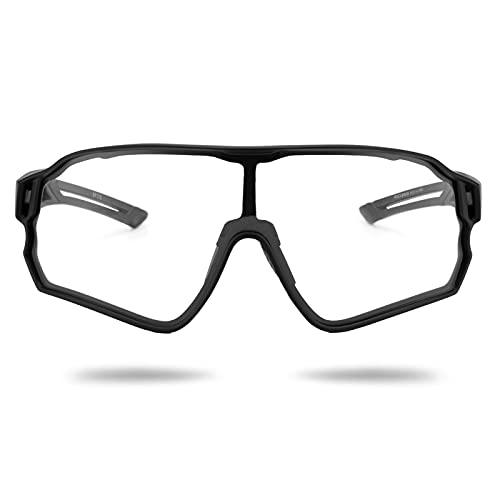
ROCKBROS Photochromic Sports Sunglasses UV400 Goggles

X-TIGER Polarized Cycling Glasses 5 Interchangeable Lenses
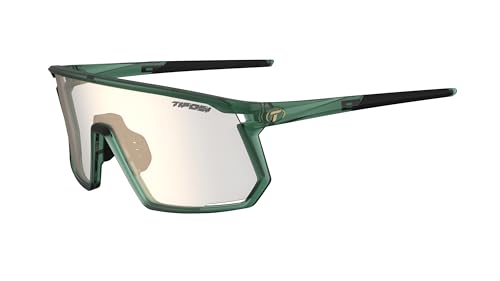
Tifosi Optics Moab Sunglasses Forest Vapor Clarion Gold
SCVCN Photochromic Cycling Glasses UV400 Black 501

SMITH Shift Split MAG Sunglasses Matte Bone ChromaPop

ROCKBROS Photochromic Sports Sunglasses Myopia Frame UV400
The Details Behind The Selections
Extra width defines this shield, and that suits riders who feel smaller frames leave gaps at the sides. The high-wrap O-Matter frame keeps the lens close during fast road sections, while Prizm Road tint at 20% light transmission targets medium to bright conditions. You get a fixed tint here, so tree shade on a bright day will feel darker than with an adaptive lens.
Plutonite lens material covers UVA, UVB, UVC, and blue light to 400nm, with impact resistance for debris. Unobtainium nose pads grip more as sweat builds, and the three-point fit holds alignment without pressure across the temples. On dusty descents, the tall shield helps, though a vented frame like the Tifosi Moab handles fogging differently.
Real Benefits
- XX-Large 211mm hinge width covers wide faces fully
- Prizm Road tint highlights road texture in bright light
- Sweat-activated nose grip keeps frame stable on climbs
- Microbag doubles as cleaning and storage pouch
Things To Consider
- Fixed 20% transmission suits bright days, not low light
- XX-Large sizing can overwhelm smaller faces
Photochromic means the lens changes tint with sunlight intensity, shifting from 83% transmission indoors to 21% in bright sun. That range covers forest shade and open ridge lines without swapping lenses mid-ride. You can start a ride in shade and keep the same pair as the trail opens up.
The rimless wraparound design claims a 180-degree field of view, which helps with peripheral checks on busy trails. Polycarbonate lenses block rays to 400nm and resist scratches and impacts, while the frame weighs 26 grams. Unlike the Oakley Sutro with a fixed tint, this pair trades precise road contrast for flexibility across light levels.
Strong Points
- Adaptive tint moves from clear to dark automatically
- 26 gram weight reduces pressure during long rides
- Polycarbonate lens resists scratches and debris impact
Worth Noting
- Photochromic shift takes time when moving between shade and sun
- Non-polarized lens leaves some reflected glare on wet surfaces
Who It Suits Best
Riders who move between shaded singletrack and exposed fire roads during one outing.
Where Another Pick Suits Better
The X-TIGER Polarized Cycling Glasses 5 Interchangeable Lenses suits riders who prefer manual lens swaps for night and polarized glare control.
Five lenses cover distinct conditions, from yellow for night riding to a clear HD lens for cloudy, low light. A polarized black lens cuts reflected light, and two Revo lenses reduce overall intensity. That kit approach suits riders who start before sunrise and finish in full sun.
The TR90 frame resists stress, and the soft rubber nose pad adjusts to nose shape. A removable lower frame can turn the design into a half-frame, and the package includes an EVA case, headband, myopia frame, and non-slip ear hooks. You’ll need to carry and swap lenses to match conditions, which adds kit bulk compared with the photochromic ROCKBROS pair.
Points In Its Favor
- Five lenses cover night, cloudy, and bright conditions
- Polarized lens reduces strong reflected light
- Removable lower rim changes frame style and weight
- EVA case and headband support transport and fit
- Adjustable nose pad fits varied nose shapes
Trade Offs
- Multiple lenses require carrying spares in a pack
- Lens swaps interrupt a ride on changing trails
Fototec is the adaptive system here, adjusting Clarion Gold tint across roughly 27% to 75% visible light transmission. That narrower range than the ROCKBROS pair keeps the lens darker at its lightest point, which suits bright gravel routes. You get full UVA and UVB coverage for long sunny rides.
Vents in the shield increase airflow on climbs and stops, a practical detail on humid days. At 31 grams, the Grilamid TR-90 frame sits lightly under a helmet, and hydrophilic rubber at the nose, ears, and brow grips harder as sweat builds. Adjustable ear pieces help dial in a fit for rough trails, in our view a useful touch for riders who adjust gear often.
What Works In Its Favor
- Vented shield reduces fogging during slow climbs
- 31 gram frame works well under a helmet
- Hydrophilic pads grip more as sweat increases
- Clarion coating sheds water, sweat, and spray
Points To Note
- Medium-large fit may feel large on smaller faces
- Adaptive range stays darker than clear lenses in shade
Photochromic lenses shift from clear to grey as outdoor light changes, removing the need to carry a second pair. UV400 coating blocks 99.99% of UVA and UVB rays, and the lens also shields against sand and wind on exposed sections. The design targets multi-sport use, from mountain biking to running and driving.
Hydrophilic rubber nose pads stay grippy when wet, and non-slip temples use an ergonomic shape for stability during hard efforts. Compared with the Tifosi Moab, this pair lacks a stated vented shield and a specified transmission range, so fogging behavior on climbs is less clear from the details. A tight fit is noted in the listing details, which makes checking temple width before a long ride a sensible step.
Practical Advantages
- Clear-to-grey shift covers shade and sun in one pair
- Wet-weather nose grip helps in rain and sweat
- Non-slip temples support running and cycling movement
Small Caveats
- Tight fit noted, so temple width needs a check
- No stated transmission range for low-light planning
- No venting detail for humid climbs
Made For
Casual riders who want one adaptive pair for biking, running, and driving.
Consider Something Else When
The Tifosi Optics Moab Sunglasses Forest Vapor Clarion Gold suits riders who need venting and a stated adaptive range for humid climbs.
The split-frame design removes the top bar, giving an open view of road and trail ahead. That layout suits fast descents where sight lines matter, and the flatter frame profile helps under a helmet at speed. You get a bright-light ChromaPop lens installed, plus a clear lens for low light, so swapping covers exposed trails and wooded jumps.
ChromaPop lens technology aims to enhance definition, contrast, and natural color, with smudge and moisture-resistant coatings for easier cleaning. TR90 and TPU construction pairs with adjustable Megol nose pads and non-slip temples. Unlike the X-TIGER kit with five lenses, this system keeps the choice to two lenses, which simplifies carrying gear on technical trails.
A Favorable Mix
- Split frame provides an unobstructed upper view
- Second clear lens handles low-light sections
- Adjustable nose pads tune fit for rough trails
- Moisture-resistant coating eases cleaning after spray
Areas To Watch
- Two-lens system offers less variety than five-lens kits
- Rimless shield leaves lower edges more exposed to debris
A built-in myopia frame sets this pair apart, since it can hold prescription lenses for nearsighted riders. That insert is recommended for myopia below 400 degrees and astigmatism below 200 degrees, and prescription lenses are not included. You can keep correction in place instead of switching to contact lenses on the trail.
The photochromic lens shifts from 83% transmission indoors to 16% in bright conditions, a darker endpoint than the earlier ROCKBROS model at 21%. Polycarbonate lens material blocks rays to 400nm and resists impacts and scratches. The set includes a hard case, pouch, cleaning cloth, polarization test card, and certificate, which supports storage after dusty rides.
Useful Highlights
- Myopia frame supports prescription lens use
- Adaptive tint reaches 16% in bright sun
- Hard case protects lenses during transport
- Large wraparound lens covers side vision
Honest Caveats
- Prescription lenses are not included in the set
- Insert range limits use for stronger prescriptions
What Matters Most Before Choosing Mtb Glasses
Coverage And Fit Under A Helmet
Wraparound coverage blocks wind and debris from the sides, which matters on loose descents. Frame width and temple shape decide comfort with a helmet, so hinge measurements and adjustable nose pads deserve attention. You should check whether a medium-large or XX-Large shield matches face width before committing.
Lens Tint For Trail Light
Fixed tints such as 20% transmission suit bright, open routes and keep road texture clear. Photochromic lenses handle shade-to-sun changes without swaps, though the shift takes time in transitions. Interchangeable kits give manual control for night and polarized glare, at the cost of carrying extra lenses.
Grip, Venting, And Weight
Hydrophilic rubber grips harder as sweat builds, which helps on climbs and rough sections. Vented shields reduce fogging during slow efforts, while a 26 to 31 gram frame reduces pressure over long rides. Those details separate a pair that works for humid forest trails from one aimed at dry, high-speed road routes.
Key Considerations Across These Picks
Common Shopping Slip Ups
Many shoppers match tint to style instead of trail light, then struggle in shade or glare. Others ignore frame width, leading to gaps or pressure under a helmet. Checking transmission range, hinge width, and whether a myopia insert is needed prevents most mismatches.
What The Higher Tier Buys
Higher-tier models often add split-frame design, a second clear lens, and coatings that shed moisture and smudges. Those features help on technical trails where light and spray change quickly. The upgrade pays off for frequent riders, while casual riders gain enough from a single adaptive lens.
Frequently Asked Questions
Do photochromic lenses work well for mountain biking?
Photochromic lenses suit trails that alternate between shade and sun without lens swaps. The tint change takes time, so sudden transitions can leave the lens darker or lighter than ideal for a short stretch.
What frame size should wide faces choose?
Extra large frames with hinge widths near 211mm provide wider coverage for wide faces. Checking that measurement against current eyewear helps avoid side gaps on dusty descents.
Are interchangeable lenses better than adaptive lenses?
Interchangeable lenses give exact tint control for night, cloudy, and bright conditions. Adaptive lenses remove swapping, though manual kits offer more specific options such as polarized and yellow lenses.
Can nearsighted riders use wraparound sports glasses?
Some models include a myopia insert frame that holds prescription lenses inside the shield. Prescription lenses are separate, and insert guidance limits use to myopia below 400 degrees and astigmatism below 200 degrees.
What helps prevent fogging on climbs?
Vented shields increase airflow during slow climbs and stops, which reduces fogging compared with sealed designs. Hydrophilic nose and temple pads also help keep the frame stable as sweat builds.
Final Verdict
For bright, open routes, the Oakley Sutro offers wide coverage and road-focused tint. For shifting light, the Tifosi Moab balances venting, weight, and adaptive tint for gravel and trails. Match lens behavior and frame width to the trails ahead, and the right pair becomes easy to spot.