
A mountain bike setup often comes down to small parts that make trail days smoother, from a bottle that stays put on rough descents to a repair kit that fits inside a frame bag. Your ride can feel more sorted with gear matched to tubeless valves, tapered head tubes, and standard bottle mounts. The seven choices below cover carrying, storing, lighting, and tracking, with clear fit checks for each.
The Leading Options At A Glance

Granite Juicy Nipple Presta Valve Caps (Oil Slick)

ROCKBROS Bike Water Bottle Holder Ultralight Cage
Elevation Lab AirTag Mountain Bike Fork Mount

NDakter Bike Frame Bag with Repair Kit and Pump

Lamicall Bike Phone Holder Motorcycle Mount
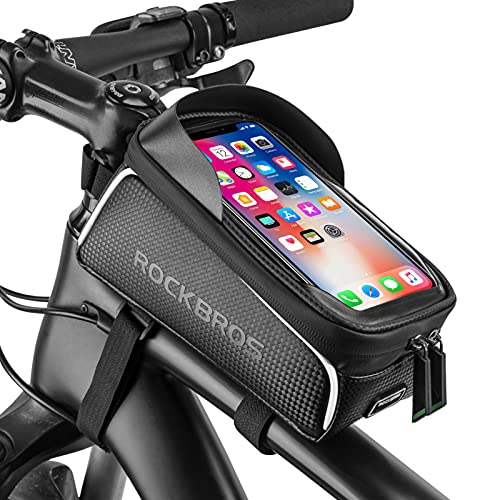
ROCKBROS Bike Phone Front Frame Bag Waterproof

Ascher USB Rechargeable Bike Light Set Front and Rear
Meet The Standout Selections
A Presta valve core, the removable inner part of a Presta valve, can stick during a sealant top-up on the trail. This pair from Granite puts a remover inside the dust cap, so a core can come out without hunting for a separate tool. Riders running tubeless setups get the most from that detail.
The caps use 6061 alloy, a common aluminium alloy chosen for low weight with decent strength, and an anodized finish. Knurling, the crosshatched grip pattern on the edge, gives fingers purchase in muddy conditions. At 2.5 grams for the pair, the weight penalty stays negligible for most trail days.
Where It Delivers
- Remover built into the cap for trailside sealant work
- Knurled edge helps grip with gloves or wet hands
- 6061 alloy construction keeps weight very low
- Pair format covers both wheels on one bike
Things To Consider
- Presta valves only, so Schrader valves need a different cap
- Small size means a dropped cap can be hard to spot in dirt
Unlike the Granite caps, which solve a tiny maintenance problem, this cage handles a daily carrying task. The PC, or polycarbonate, body weighs about 35 grams in the listing description and wraps around a bottle with side arms. That shape suits bumpy fire roads where a loose bottle can rattle or bounce out.
Installation uses two screws and a 3 mm Allen wrench included in the package. Threaded holes in the frame are required, so checking the down tube before ordering matters. The cage accepts standard bottles around 20 to 21 ounces, plus many disposable bottles, which gives flexibility across rides.
The Good Stuff
- Light PC body reduces added weight on the frame
- Wrapping arms hold a full bottle more securely on rough trails
- Included wrench and screws simplify mounting
- Wide bottle compatibility covers standard and disposable sizes
- Finish resists marking the bottle surface
Minor Gripes
- Frames without threaded bottle bosses cannot use this cage
- Plastic construction may feel less rigid than metal cages on hard hits
An expensive mountain bike parked at a trailhead creates a different kind of worry than a flat tire. This mount hides an Apple AirTag inside the fork steerer tube, the hollow tube that runs through the head tube. That placement keeps the tracker out of sight during a coffee stop or shuttle day.
Fit is narrow by design. The mount suits tapered head tubes with inside diameters from 32 to 34.4 mm, and it does not fit straight head tubes or triple crown forks. Measuring the opening first prevents a return, and the AirTag itself is not part of the mount.
What Earns Its Place
- Hidden placement inside the fork steerer tube
- Quick mounting for a tracker already owned
- Water resistant construction for trail use
Points To Note
- Only tapered head tubes in the stated diameter range fit
- AirTag must be added separately for tracking to work
Who It Suits Best
Owners of modern tapered forks who already carry an AirTag and park the bike in shared spaces will get the most from this mount.
Where Another Pick Suits Better
NDakter Bike Frame Bag with Repair Kit and Pump suits riders who need trailside repair gear more than hidden tracking.
A flat tire miles from the car turns a good ride into a long walk. This triangle frame bag bundles a 120 PSI mini pump, a 16-in-1 multitool, tire levers, a rasp, and six self-adhesive patches. The 2 liter interior also holds a phone, keys, and wallet, so the bag replaces a pocket load.
The multitool covers hex keys from 2 to 6 mm, socket wrenches at 8, 9, and 10 mm, flat wrenches, a spoke tool, and drivers. The pump supports Presta and Schrader valves, which helps mixed groups. For most backcountry loops, carrying this kit means a puncture stays a short stop instead of a ride-ending problem.
Notable Gains
- Complete flat repair set in one frame bag
- 16-in-1 tool covers common trailside adjustments
- Pump works with Presta and Schrader valves
- 2 liter space for phone, keys, and small items
- Glueless patches speed up a puncture repair
Softer Spots
- Frame bag size depends on triangle dimensions on the bike
- Full kit adds bulk compared with a single multitool
- Carbon fiber texture fabric is water resistant, not fully sealed
Navigation on an unfamiliar trail gets easier with a phone visible on the bars. This holder grips the four corners of a phone and locks with a red switch on the back. One-hand operation lets a rider mount or remove a phone without tools at the trailhead.
Silicone pads cushion contact and reduce vibration, while the clamp fits handlebars from 15 to 40 mm in diameter. Phones from 4.7 to 6.8 inches, up to 15 mm thick including a case, are supported. Opening the top arm is the correct way to load a phone, since pulling the side arms can jam the internal gears.
Useful Strengths
- Corner grip plus rear lock keeps a phone in place
- Silicone pads reduce scratches and vibration
- Horizontal or vertical orientation for maps or music
- Tool-free mounting with adjustable silicone pads
Small Caveats
- Handlebar diameter must fall within 15 to 40 mm
- Phones thicker than 15 mm with a case exceed the limit
- Open mount offers no weather protection for the phone
Compared with the open Lamicall holder, this bag keeps a phone enclosed and protected. A TPU film window, a flexible plastic sheet that allows touch input, lets maps show through the cover. Three straps secure the bag to the top tube and head tube, and the design stays put on rough ground.
Space inside fits a phone under 7 inches with a slim case, plus gels, keys, a wallet, or a small pump. Reflective tape on both sides helps visibility at night, and a hidden earphone hole supports music or calls. Thick cases crowd the window area, so a slim case works better here.
Positive Points
- Enclosed bag shields a phone from spray and dust
- Touch-sensitive window for maps while riding
- Three-strap mounting resists movement on rough roads
- Reflective tape aids night visibility
Honest Caveats
- Touch ID does not work through the cover
- Large e-bikes and oversized top tubes may not fit
- Thick phone cases make the window area tight
Made For
Commuters and trail riders who want maps visible without exposing a phone to weather will find this bag a close match.
Consider Something Else When
Lamicall Bike Phone Holder Motorcycle Mount suits riders who prefer an open, one-hand mount instead of a closed bag.
Evening rides on forest roads need light ahead and a visible red light behind. This set pairs a front headlight with a rear taillight, both rechargeable through USB. A single button cycles through full brightness, half brightness, slow flashing, and fast flashing modes.
The front light carries a 2000 mAh battery rated from 5 to 12 hours depending on mode, while the rear light uses 330 mAh for 9 to 16 hours. Silicone straps with four openings fit most handlebars and seat posts without tools. An IPX4 rating means splashes from rain or mud are handled, though full submersion is outside that rating.
Bright Spots
- Front and rear lights in one set for visibility both ways
- Four modes adapt to trails or city traffic
- USB rechargeable batteries remove disposable cells
- Tool-free silicone straps for quick mounting
- IPX4 rating covers rain and mud splashes
Points To Keep In Mind
- Runtime drops on full brightness compared with flashing modes
- Front light rotates 360 degrees, rear light adjusts 45 degrees up or down
What To Check Before Adding Trail Gear
Frame Fit And Mounting Points
Threaded bottle bosses, top tube size, and head tube diameter decide whether a cage, bag, or fork mount fits at all. Measuring those points first saves a return and keeps gear from shifting on rough trails. A quick check during a shop visit or at home takes minutes.
Valve Type And Repair Needs
Presta and Schrader valves need different caps, pumps, and tools, so matching the kit to the bike matters. Riders on tubeless setups benefit from a core remover, while mixed groups need a pump that handles both valve types. Listing the tools carried on a typical ride helps narrow the choice.
Phone Size And Weather Exposure
Phone dimensions, case thickness, and handlebar diameter set hard limits for holders and bags. Open mounts suit dry days and quick access, while enclosed bags suit rain and dust. Those limits are worth confirming before ordering, especially with larger phones.
Two Buying Angles Worth A Second Look
Common Shopping Slip Ups
Ordering a fork mount without measuring the head tube is a frequent mistake. Skipping a handlebar measurement for a phone holder causes the same problem. A tape measure and a quick look at valve type prevent most fit issues.
The Upgrade Payoff
Higher tier options often add sealed storage, included tools, or hidden mounting that basic versions lack. Paying more makes sense when a kit replaces several separate items. A single-purpose item remains the smarter spend when the need is narrow.
Frequently Asked Questions
Do the Granite caps fit Schrader valves?
No, those caps are made for Presta valves only. Schrader valves need a different cap style for a proper seal.
Does the ROCKBROS bottle cage need threaded holes?
Yes, the cage uses screws that require threaded holes in the frame. Checking the down tube before ordering avoids a fit problem.
Will the Elevation Lab mount fit a triple crown fork?
No, triple crown forks are not compatible with this mount. Tapered head tubes in the 32 to 34.4 mm range are the stated fit.
Can the Lamicall holder fit a thick phone case?
Phones up to 15 mm thick including a case are supported. Thicker cases exceed the stated limit and may not clamp securely.
How long do the Ascher lights run?
The front light is rated from 5 to 12 hours depending on mode. The rear light is rated from 9 to 16 hours depending on mode.
Final Verdict
For a trail-ready setup, start with the NDakter repair kit for flats, add the Ascher lights for low light, and match the remaining choices to frame fit and phone size. You can build a practical kit piece by piece, starting with the gear that solves the most common problem on the route.