
A loose strap or an overheated head can ruin a ride faster than a rough climb. You want coverage that stays put on descents, breathes on climbs, and fits without pressure points. Your size check matters more than color, because a dial that adjusts across several centimetres behaves very differently from a fixed shell. The seven options below split between open-face trail helmets and one full-face choice, so match the format to the terrain first.
A Closer Look At The Lineup

Favoto Mountain Bike Helmet Dark Green L (59-61 cm)
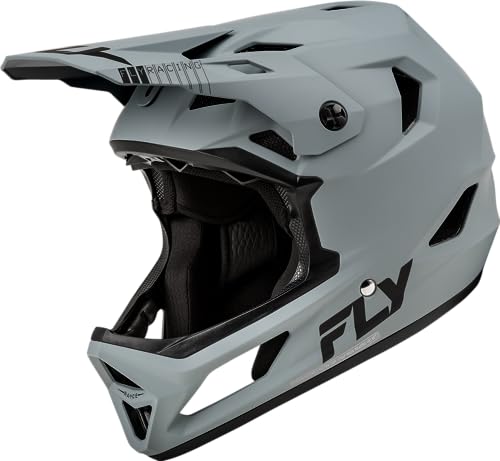
Fly Racing Rayce MTB/BMX Helmet Matte Grey Large

DMFXNBLM Mountain Bike Helmet Camouflage Black Medium

BATFOX Mountain Bike Helmet with Visor Adjustable 54-63cm

ANYPASS Mountain Bike Helmet Adjustable Fit Removable Visor

Exclusky Bike Helmet Mountain Bike Helmet Adults Adjustable Visor

Giro Fixture MIPS Bike Helmet Matte Black/Grey Universal
A Deeper Look At The Lineup
The Favoto suits riders who switch between trail and street, because the shell, visor, and buckle all aim at quick daily use. EPS means expanded polystyrene foam, the impact-absorbing layer inside the shell. You get one-handed fastening from the magnetic buckle, which helps with gloves on cold mornings.
A dual-layer polycarbonate shell spreads impact force across two surfaces instead of one, in our view a sensible structure for branch strikes and low-speed falls. Fourteen vents and a removable liner keep airflow moving on climbs, while a rear elastic cord holds sunglasses when shade returns. For most commuters, that cord is a small but daily-useful touch.
Advantages To Know
- Magnetic buckle locks and releases with one hand, even with gloves
- Removable washable liner refreshes easily after sweaty rides
- Rear cord keeps sunglasses stored behind the helmet
- Detachable visor blocks sun and light rain on demand
- 335g weight keeps long rides lighter on the neck
Things To Consider
- Large size covers 59-61 cm, so measure before ordering
- Screw-on visor needs a few minutes to remove or refit
Unlike the open-face Favoto, the Rayce covers the chin and jaw for gravity riding. A poly-alloy shell and EPS liner meet ASTM F1952-15 for downhill, plus CPSC 1203 and CE EN1078. That full-face format changes the ride completely, and your face stays covered on steep, rocky descents.
At about 930g in size M, the weight is honest for a full-face design, and the TFV system, meaning True Functional Ventilation with intake and exhaust ports, helps move warm air out. The removable liner and cheek pads wash between bike-park days. In our view, the D-ring strap gives a secure, race-style hold.
A Favorable Mix
- Full-face coverage for downhill, BMX, and bike-park laps
- Adjustable visor with aluminum hardware for positioning
- Removable washable liner simplifies cleaning between sessions
- Multiple intake and exhaust ports support warm-weather airflow
Worth Noting
- 930g feels heavier than open-face helmets on long climbs
- Full-face shape suits gravity riding, not casual commuting
- Large sizing needs a head measurement before ordering
The DMFXNBLM targets riders who want a light open-face helmet without a long feature list. A polycarbonate shell fused to EPS foam through in-mold construction, meaning the shell and foam form one piece, meets CPSC and EN1078 standards. You can dial the rear fit system to tighten the helmet over rough sections.
At 330g, the shell stays light for marathon-style rides, and 18 vents channel air across the head in hot weather. Compare that vent count to the Favoto’s 14, and the DMFXNBLM leans harder into cooling. One thing worth considering: the medium size covers 55-58cm, so smaller heads need the other size.
Everyday Wins
- 330g weight reduces neck fatigue on longer rides
- 18 vents support airflow during hot-weather efforts
- Rear dial plus adjustable straps fine-tune stability
- Aerodynamic shape suits road, trail, and commute use
Trade Offs
- Medium size range is narrow at 55-58cm
- Chin buckle is a standard clip, not magnetic
Size range sets the BATFOX apart, with M, L, and XL options spanning 54-63cm across youth and adults. A polycarbonate shell and EPS liner meet CPSC, ASTM F1447, and CE standards. You can size up for a growing teen or down for a smaller adult, which makes household sharing simpler.
Eighteen vents with internal channels move air through the shell, and removable padding plus a chin pad wash after muddy rides. The large visor blocks sun, rain, and debris on fire roads. For most families, the wide range matters more than any single vent count.
The Good Stuff
- Three sizes cover 54-63cm for youth and adults
- Washable padding and chin pad refresh after dirty rides
- Large visor shields sun, rain, and trail debris
- Dial adjustment fine-tunes fit without tools
Minor Gripes
- Full-coverage shell prioritizes protection over minimal weight
- Choosing among three sizes takes an accurate measurement
Who It Suits Best
Households with riders of different ages who need one helmet style in multiple sizes.
Where Another Pick Suits Better
Fly Racing Rayce MTB/BMX Helmet Matte Grey Large suits gravity riders who need full-face coverage.
The ANYPASS leans into comfort details, starting with a 330g shell and deeper coverage at the back and sides. A PC shell and high-density EPS core meet CPSC standards in a one-piece in-mold build. Your head circumference decides the size, with M at 54-58cm and L at 57-61cm.
Seventeen vents with internal channeling push air through the helmet on commutes and trail climbs. A detachable visor blocks glare, and moisture-wicking pads come out for washing. Compared with the DMFXNBLM, the ANYPASS trades one vent for deeper rear coverage and a thickened chin pad.
Bright Spots
- 330g weight supports all-day wear without pressure buildup
- Removable washable pads handle sweat and odor after rides
- Detachable visor adapts to glare or open-sky riding
- Deeper back and side coverage adds trail protection
- Rear dial creates a personalized, stable fit
Small Caveats
- Size ranges overlap, so measurement prevents a loose fit
- 17 vents offer slightly less airflow than 18-vent models
The Exclusky keeps things straightforward for casual riding, with a lightweight shell and breathable inner padding. PVC and PC materials pair with EPS foam to absorb impact. You move between road, trail, and skateboard use with one unisex helmet, which simplifies a multi-sport household.
A single-hand dial retention system adjusts fit quickly, and the large visor flips upward for a wider view. Aerodynamic shaping and ventilation design help air pass through during commutes. Nothing flashy here, and for most casual riders, that simplicity is the point.
Positive Takeaways
- Single-hand dial makes fit adjustment quick and simple
- Large visor lifts upward for broader sight lines
- Breathable padding supports comfortable casual rides
Points To Note
- Vent count and exact weight are not detailed in the listing
- Dial fit still needs a size check for a stable hold
Exclusky Bike Helmet Mountain Bike Helmet Adults Adjustable Visor
Made For
Casual riders who want one adjustable helmet for commuting, recreation, and skateboarding.
Consider Something Else When
Giro Fixture MIPS Bike Helmet Matte Black/Grey Universal suits riders who want a MIPS layer and reflective details.
The Giro Fixture MIPS II brings a different safety layer to the list. MIPS means a slip plane inside the helmet designed to reduce rotational forces during certain impacts. You switch between off-road trails and relaxed spins with quick-dry padding and reflective rear decals for low-light visibility.
The Roc Loc Sport fit system adjusts with one hand across a 7cm range, and universal sizing covers 54-61cm. A fused shell and foam construction keeps the build lighter and improves airflow compared with traditional shells. In our view, the MIPS integration is the main reason to choose this over the ANYPASS.
Why It Works Well
- Integrated MIPS layer addresses rotational forces in certain impacts
- One-handed Roc Loc Sport adjustment spans 7cm
- Reflective details improve low-light visibility
- Quick-dry padding refreshes after sweaty rides
Honest Caveats
- Universal sizing still needs a fit check at the edges
- MIPS adds a layer some riders may not prioritize
What To Check Before Choosing a Trail Helmet
Fit and Size Range
Measure head circumference in centimetres and compare it with the stated range before ordering. A dial system fine-tunes within that range, and your usual trails determine whether a snug or relaxed setting works better. Riders between sizes should check the dial travel first.
Coverage and Format
Open-face helmets suit trail, road, and commuter use, while full-face models suit downhill and bike-park riding. Deeper rear coverage helps on steep terrain, and a visor helps with sun and debris. Match the format to the terrain instead of buying coverage for rides that never happen.
Ventilation and Weight
Vent counts from 14 to 18, plus internal channeling, affect airflow on climbs. Weight near 330g feels lighter over hours than a 930g full-face shell. Hot-weather riders gain more from vents, while gravity riders gain more from chin coverage.
Buckles, Pads, and Visibility
Magnetic buckles speed up gloved use, D-ring straps give a race-style hold, and washable pads simplify cleaning. Reflective decals help in low light, and a glasses cord keeps eyewear stored. Those small details shape daily habits more than color choices.
Key Considerations Across These Picks
Common Shopping Slip Ups
Skipping a head measurement causes most fit problems, especially where size ranges overlap. You skip that step and a dial cannot rescue a shell that is too small. Check the range, then check the buckle type for gloved use.
What The Higher Tier Buys
Higher-tier designs add MIPS layers, broader dial ranges, and reflective details. Those additions help specific riders, not every rider. Paying more pays off when rotational-force protection or low-light visibility matches the riding pattern.
Frequently Asked Questions
How do you choose the right size?
Measure head circumference and match it to the stated range for each helmet. A dial system then fine-tunes the fit within that range.
What does MIPS do in a helmet?
MIPS adds a slip plane inside the shell. The layer is designed to reduce rotational forces during certain impacts.
Are full-face helmets better for mountain biking?
Full-face helmets cover the chin and jaw for downhill and bike-park riding. Open-face helmets suit trail, road, and commuter use with less weight.
How many vents matter for hot weather?
Vent count plus internal channeling shapes airflow on climbs. Models here range from 14 to 18 vents, with channeling helping air move through.
Can a visor be removed on these helmets?
Some models use a screw-on visor, while others use a detachable design. Removal depends on the specific helmet, so check the listing for that version.
Closing Remarks
Match format to terrain first, then size, then ventilation. You pick the Favoto for magnetic-buckle convenience, the Fly Racing Rayce for full-face gravity riding, or the Giro Fixture MIPS for its MIPS layer. Each choice answers a different riding need, and the right one depends on the trails ahead.