
A sudden downpour halfway along a ridge can turn a good ride into a cold, miserable slog. A packable shell that actually sheds rain while letting heat escape makes the difference between cutting a ride short and finishing it dry. The picks below focus on waterproof ratings, ventilation, packability, and fit for trail and road use.
An Overview Of The Picks

baleaf Men’s Waterproof Rain Jacket Packable Windbreaker Yellow L

33,000ft Men’s Packable Rain Jacket Waterproof Raincoat Hood

Fox Racing Ranger 2.5L Water Mountain Bike Jacket

baleaf Men’s Cycling Rain Jacket Waterproof Packable Blue L

CASTELLI Men’s Squall Shell Jacket Electric Lime/Black Large

Bikewa Men’s Cycling Rain Jacket Waterproof Packable Hooded
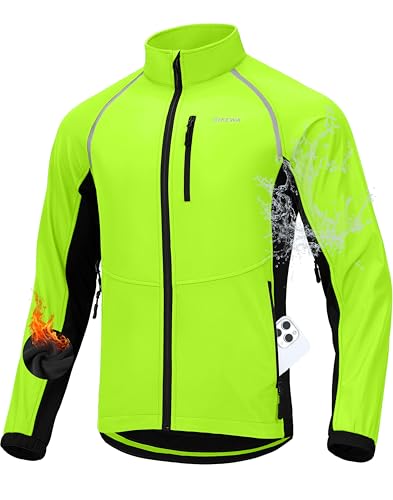
Bikewa Men’s Winter Cycling Jacket Thermal Windproof
More On The Choices That Made The List
For riders who want one shell for commuting, trail days, and travel, this baleaf jacket earns its place through simple packability. It folds into its own back pocket, a practical detail for anyone carrying a small bag on a long ride. The polyester shell uses a laminated TPU membrane, where TPU means thermoplastic polyurethane, a thin waterproof layer bonded inside the fabric.
The listed ratings are 5000mm waterproofing and 3000g/m2/24hr breathability, with rear ventilation to move trapped heat outward. That combination suits moderate rain better than sustained downpours, in our view, and the reflective stripes help on dim roads. Six pockets in total give room for a phone, keys, and cards without a separate pouch.
Where It Excels
- Packs into its own back pocket for easy storage
- Six pockets spread essentials across the jacket
- Reflective stripes and logo aid low-light visibility
- Drawcord hem and elastic cuffs block wind and spray
- Rear ventilation supports airflow on climbs
Things To Consider
- 5000mm rating sits below the 10000mm shells in this list
- Attached hood adds coverage but takes more pack space
baleaf Men’s Waterproof Rain Jacket Packable Windbreaker Yellow L
Stronger numbers define this 33,000ft shell compared with the baleaf pick above. Fully heat seam-sealed construction pairs with a 10000mm waterproof level, a clear step up for riders who regularly face driving rain. A mesh lining adds a softer feel against skin during longer rides.
Breathability reaches 10000g/m2/24hr, and underarm vents open a direct path for warm air to leave. For most riders, that vent placement matters more on steep climbs than on flat commutes. Water-resistant exterior zippers help keep pocket contents drier, while a drawcord hood, hem, and hook-and-loop cuffs allow a closer seal.
A Few Strong Suits
- 10000mm waterproof level with sealed seams
- Underarm vents plus mesh lining for airflow
- Chest, hand, and inner zippered pockets
- Adjustable hood, hem, and cuffs for wind protection
Worth Noting
- Mesh lining adds comfort but also bulk when packed
- Higher ratings suit heavy rain more than casual showers
- Adjustable hood needs checking over a helmet before ordering
33,000ft Men’s Packable Rain Jacket Waterproof Raincoat Hood
Trail focus sets the Fox Racing Ranger apart from the general-purpose shells above. A helmet-compatible hood fits over most helmets, a detail that matters on exposed descents in shifting weather. The relaxed fit leaves room for a mid-layer underneath on cooler days.
Construction uses a lightweight 10K/3K 2.5-layer fabric, where 10K and 3K refer to waterproof and breathability ratings in thousands. A DWR finish, meaning durable water repellent coating, sheds moisture, dirt, and debris from the surface. Two zippered hand pockets keep essentials reachable on the trail.
Positive Takeaways
- Helmet-compatible hood for mountain biking
- 10K/3K 2.5-layer waterproof breathable fabric
- DWR finish sheds moisture and trail debris
- Relaxed fit layers over a mid-layer
Trade Offs
- Two pockets only, fewer than multi-pocket rivals
- Relaxed fit feels less aerodynamic on road rides
Who It Suits Best
Mountain bikers riding exposed trails in changeable weather benefit most from the helmet-compatible hood.
Where Another Pick Suits Better
Road riders needing a close aerodynamic fit will find the CASTELLI Squall Shell Jacket a closer match.
Commuters and touring riders get a stronger spec sheet here than with the first baleaf jacket. The rating reaches 10000mm waterproof with 5000g breathability, balancing rain protection with heat release. A carry loop on the rear pocket makes clipping the packed jacket to a bag or bike frame straightforward.
Underarm ventilation and large multi-angle reflective prints address two common riding concerns in one design. On longer climbs, that airflow helps limit clamminess, while the reflective placement aids visibility from several angles. Five functional pockets keep riding essentials separated, and an adjustable drawcord hem helps stop the jacket riding up.
A Few Highlights
- 10000mm waterproof rating for heavier rain
- Rear pocket carry loop for bags and bikes
- Multi-angle reflective prints for low light
- Underarm ventilation for long climbs
- Five functional pockets for essentials
Minor Gripes
- Breathability rating trails the 33,000ft shell
- Packing into the rear pocket needs a moment of care
Road and gravel riders who prioritize low weight will notice the 3.3-ounce weight immediately. A stretch two-layer fabric with a waterproof membrane keeps the shell close to the body without feeling rigid. Taped seams support use in a rain shower or road spray, and the design stashes easily in a jersey pocket.
The close-to-the-body fit is deliberate, aimed at aerodynamics on fast descents. Windproofing on the front and back, a high collar, and elastic at the waist and wrists help block cold air. A reflective stripe on the back adds visibility, and the stated temperature range is 4 to 18 C, or 39 to 64 F.
The Helpful Details
- Only 3.3 ounces, easy to carry in a jersey pocket
- Stretch two-layer fabric moves with the rider
- Windproof front and back for fast descents
- High collar and elastic seals block cold air
Room For Improvement
- Close fit may feel compressive for some riders
- Single reflective stripe limits visibility coverage
- Temperature range suits cool rides, not deep winter
Versatility is the draw with this Bikewa shell, covering cycling, running, hiking, and travel in one hooded design. A DWR finish helps water bead off the surface, while a laminated TPU membrane inside carries a 5000mm waterproof rating and 3000g/m2/24hr breathability. That pairing matches the first baleaf jacket on paper, with different pocket layout.
Underarm zips and back vents give heat a clear exit during workouts, and reflective elements on the front, back, and hood spread visibility across several angles. Three waterproof front zips, two inner pockets, and a large back zip pocket provide generous storage, with the back pocket doubling as a pack pouch.
Everyday Wins
- Underarm zips and back vents aid airflow
- Reflective elements on front, back, and hood
- Back pocket doubles as a storage pouch
- Adjustable elastic drawcord at the hem
Points To Note
- 5000mm rating suits moderate rain over downpours
- Multiple pockets add bulk when fully loaded
Made For
Riders mixing cycling with running, hiking, and travel benefit from the broad activity fit and venting.
Consider Something Else When
Heavy downpour riding calls for the 33,000ft Men’s Packable Rain Jacket with its higher ratings.
Cold weather changes the brief entirely, and this Bikewa jacket answers with warmth rather than pure rain protection. A three-layer build places a windproof outer surface over a breathable membrane and a soft fleece inner layer. That structure suits winter rides where wind chill matters as much as moisture.
Storage is generous, with eight pockets including two side zips, a chest zip, two inner pockets, and three rear pockets sized for gloves or a bottle. Underarm zips release sweat heat, a high collar blocks wind, and a silicone waist grip helps seal against gusts. Reflective elements on the front and back support low-light visibility.
What Makes Sense
- Three-layer construction with fleece inner layer
- Eight pockets including three rear pockets
- Underarm vents release sweat heat
- High collar and silicone waist grip block wind
- DWR finish resists water, dirt, and oil
Softer Spots
- Water resistant rather than fully waterproof
- Thermal build feels bulky for warm weather
What Matters Most Before Choosing a Rain Shell
Waterproof Rating and Seams
Waterproof ratings in millimeters indicate resistance to water pressure, with higher numbers suited to heavier rain. Seam sealing matters just as much, since unsealed stitching can leak even with a strong fabric. Riders facing regular downpours gain more from a 10000mm sealed shell than from extra pockets.
Ventilation and Fit
Breathability ratings describe how much moisture vapor passes through the fabric over 24 hours, and vents add a direct escape route for heat. A close fit reduces flapping at speed, while a relaxed fit layers over insulation. Your typical ride intensity should guide that choice, since long climbs generate far more heat than short commutes.
Packability and Storage
Packing into a rear pocket or jersey pocket determines whether a shell stays in the bag or gets left behind. Pocket count and placement affect access to a phone or keys mid-ride. Check hood compatibility with a helmet early, because that detail shapes comfort on exposed trails.
Key Considerations Across These Picks
Common Shopping Slip Ups
Matching a high waterproof rating with weak breathability leads to clammy rides on climbs. Checking hood fit over a helmet and confirming pocket access while wearing gloves prevents frustration later.
What The Higher Tier Buys
Higher tier shells often deliver lower weight, stretch fabric, and a closer aerodynamic fit. Those gains pay off for road and gravel riders logging long distances in cool conditions.
Frequently Asked Questions
What waterproof rating suits mountain biking in heavy rain?
A 10000mm rating with sealed seams suits sustained heavy rain better than a 5000mm shell. Riders in moderate showers can manage with the lower rating and good ventilation.
Does a helmet-compatible hood matter on the trail?
A hood that fits over a helmet adds coverage on exposed descents. Riders who mostly ride sheltered routes may prefer a collar-only design for better airflow.
How important are underarm vents?
Underarm vents release heat quickly during climbs and fast efforts. That airflow reduces clamminess when breathability alone cannot keep pace.
Can one jacket handle cycling, running, and hiking?
Versatile shells with adjustable hems and cuffs handle all three activities reasonably well. A fitted road shell sacrifices some hiking comfort for lower weight and less flap.
When is a thermal jacket a better choice than a rain shell?
A thermal fleece-lined jacket suits winter riding where wind chill is the main threat. A lightweight rain shell remains the better pick for warmer months and packability.
Wrap Up
Heavy rain riders should lean toward the 33,000ft shell, trail riders toward the Fox Racing Ranger, and road riders toward the CASTELLI Squall. For mixed use, the baleaf and Bikewa shells cover most needs. Pick the rating and fit that match the weather you actually ride in.