
A cassette is the stack of sprockets on the rear wheel, and the size spread decides how steep a climb feels and how fast a descent can go. Road riders usually want close steps for steady cadence, while mountain riders need a much wider spread for steep, loose terrain. Matching the cassette to the derailleur, chain, and freehub on the bike matters more than chasing a larger number on the largest sprocket. Your choice should start with the terrain and the drivetrain already fitted.
A Side-By-Side Look

Shimano 105 CS-R7000 Cassette 11-30T

Shimano 105 CS-HG700 Cassette 11-34T

Shimano CS-M5100 Cassette 11-51T
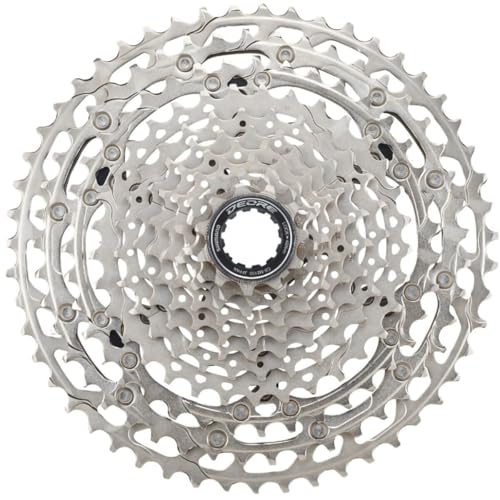
Shimano CS-M5100 Cassette 11-42T

Relwears Bike Cassette 11-52T 11 Speed

Shimano R8101 Ultegra Cassette 12-Speed 11-34T

BUCKLOS 11 Speed Cassette 11-32T
The Picks, Examined More Closely
Road riders who hold a steady pace on rolling terrain get the most from this 11-30T spread. Hyperglide EV sprockets, meaning shaped teeth and ramps that guide the chain, keep shifts clean under load, and the 304 gram weight for this size keeps rotating mass modest.
The steps stay close through the middle cogs, which helps maintain cadence on group rides. That spacing differs from the wider Shimano 105 CS-HG700 Cassette 11-34T, which trades some closeness for climbing range.
Strengths Worth Knowing
- Close middle steps suit steady road cadence
- Hyperglide EV shaping supports smooth loaded shifts
- 304 grams for 11-30T keeps weight manageable
- Spider arm design supports rigidity on larger cogs
Things To Consider
- 30T low gear limits steep gravel climbs
- Needs an 11-speed chain and matching derailleur
Your gravel or touring setup gains useful climbing range here, with a 34T low gear that eases steep fire roads. The cassette pairs with RD-R7000-GS and RD-R8000-GS rear derailleurs, where GS denotes a longer cage for wider range.
Compared with the CS-R7000 11-30T, this version gives up a little top-end closeness for more low-end support. Nickel-plated steel resists corrosion, and larger sprockets sit on an alloy carrier to limit weight.
Useful Highlights
- 34T low gear helps loaded gravel climbs
- Alloy carrier on large sprockets cuts weight
- Nickel plating resists corrosion in wet rides
Worth Noting
- Compatibility limited to listed GS derailleurs
- Wider steps feel larger on flatter roads
- Package weight listed at 0.52 kg
Who It Suits Best
Riders on gravel or touring bikes who need a lower gear without changing wheelsets.
Where Another Pick Suits Better
Shimano 105 CS-R7000 Cassette 11-30T suits road riders who prefer closer gear steps on paved routes.
Steep switchbacks and loose climbs call for a 51T low gear, and this Deore cassette delivers that spread for mountain bikes. Steel cogs handle trail wear, while an aluminum carrier keeps the large sprockets lighter.
You get an 11T top cog for descents back to the trailhead, plus a lockring in the box. Step sizes grow toward the low end, which is normal for wide range designs, and that trade-off shows up on long tempo climbs.
Points In Its Favor
- 51T low gear eases very steep climbs
- Steel cogs suit regular trail use
- Aluminum carrier reduces weight on large cogs
- Shimano HG freehub fit is straightforward
- Lockring included for installation
Trade Offs
- Large jumps between low gears
- Needs a wide-range derailleur and chain
Your trail bike may not need a 51T cog, and this 42T version keeps the same Deore construction with a tighter overall spread. Steel cogs and an aluminum carrier mirror the 11-51T sibling, so the difference is mainly gearing, not build approach.
The 11-42T progression runs 11, 13, 15, 17, 19, 21, 24, 28, 32, 37, 42, giving closer steps than the wider option. That can feel steadier on rolling terrain, though very steep pitches still demand strong legs.
What Pays Off
- Tighter steps than the 11-51T version
- Steel cogs for trail durability
- Aluminum carrier limits weight
Minor Gripes
- 42T low gear may fall short on steep climbs
- Wide-range derailleur still required
- Item weight listed at 1.64 pounds
Made For
Trail riders on moderate terrain who want steadier steps than a 51T cassette gives.
Consider Something Else When
Shimano CS-M5100 Cassette 11-51T suits riders facing steep, technical climbs on a regular basis.
A single chainring setup gets a very low 52T gear for steep climbs, with steps from 11 to 52T across 11 cogs. The 11T to 24T section stays close for flat road sections, then jumps widen from 28T upward.
Compatibility needs care, since the design calls for a wide-range rear derailleur with 41T tooth capacity and a chain made for wide-range cassettes. That requirement is stricter than the Shimano CS-M5100 options, which list Shimano HG freehub fit directly.
Everyday Advantages
- 52T low gear for steep climbing
- Close steps from 11T to 24T
- Works with 32T or 34T single chainring
- Removes need for a front derailleur
Room For Improvement
- Large jumps above 28T
- Chainring needs positive and negative teeth
- Derailleur capacity must match 41T
Older road wheels get a second life with this 11-34T cassette, since it fits 10-speed native road freehubs and includes a spacer for 11-speed spaced bodies. That hub fit also covers 9 to 11-speed mountain freehubs, which helps with touring or gravel builds.
Nickel-plated steel cogs resist corrosion, and Hyperglide tooth shaping carries over from higher Shimano groups. The stated weight is 379 grams, and a medium or long cage derailleur is required, since a short cage will not shift this range properly.
Everyday Perks
- Fits 10-speed road freehubs with spacer
- 11-34T range covers road, gravel, and touring
- Nickel-plated steel resists corrosion
- 379 gram weight is manageable
- Hyperglide shaping supports smooth shifts
Points To Note
- Short cage derailleurs are not suitable
- Spacer use depends on hub spacing

Right Fit For
Riders repurposing older wheelsets for touring, gravel, or cross use.
Not Your Match When
Shimano 105 CS-R7000 Cassette 11-30T suits riders with modern 11-speed road freehubs and a road-focused route.
This one steps outside 11-speed drivetrains, with 12 speeds from 11T to 34T for road bikes already set up for that count. Hyperglide+ shaping, meaning a newer tooth profile for faster shifts under load, is the headline feature here.
Nickel-plated steel cogs and larger drive cogs support durability and power transfer, and the design fits both 12-speed and 11-speed freehub bodies. That hub flexibility is useful, though the cassette still needs a 12-speed chain and shifter to use all 12 positions.
What Works In Its Favor
- 12 speeds give finer gear steps
- Hyperglide+ supports shifts under load
- Fits 12-speed and 11-speed freehub bodies
- Nickel-plated cogs resist corrosion
Softer Spots
- Not an 11-speed cassette despite the list
- Requires 12-speed drivetrain parts
- 11-34T range is road focused
Multiple range sizes across the BUCKLOS line give options from 11-25T up to 11-52T, with this 11-speed version listed at 11-32T. The progression runs 11, 13, 14, 15, 17, 19, 21, 23, 25, 28, 32, which suits road and light trail use.
High-strength steel with nickel plating resists corrosion, and the weight is listed at 0.471 kg. Compatibility covers Shimano, SRAM, and HG hub drivers, which broadens fit compared with brand-specific road cassettes.
Standout Benefits
- Many range sizes across the line
- Nickel-plated steel resists corrosion
- Shimano, SRAM, and HG hub compatibility
- 0.471 kg weight for 11-speed version
Small Caveats
- Exact range must be confirmed before ordering
- 32T low gear limits steep climbs
What Matters Most Before Choosing a Cassette
Range and Terrain Fit
The low gear decides steep climb comfort, while the top gear decides high-speed spinning. Road riders on flat routes often prefer 11-30T or 11-32T, and mountain riders on steep trails may need 42T, 51T, or 52T. Matching range to local terrain prevents both spinning out on descents and grinding on climbs.
Derailleur and Chain Match
Rear derailleur cage length and tooth capacity must cover the cassette range. A short cage can struggle with a 34T low gear, and a wide-range cassette needs a chain designed for that spread. Checking those two parts before ordering saves a second purchase.
Hub and Freehub Fit
Freehub type determines whether a cassette seats correctly on the wheel. Shimano HG, road 11-speed bodies, and older 10-speed bodies with a spacer all change the fit. Confirming hub spacing is a quick check that prevents installation problems.
Key Considerations Across These Picks
Common Shopping Slip Ups
Many shoppers focus only on the largest sprocket and overlook derailleur capacity. A wide cassette paired with a short cage can shift poorly or fail to reach the low gear. Confirming cage length, chain type, and freehub fit first avoids that mismatch.
What The Higher Tier Buys
Higher-tier cassettes often use lighter carriers, refined tooth shaping, and closer steps across the range. Those details can improve shift feel under load and reduce rotating weight. The upgrade makes sense for riders who shift often under power, while a mid-tier cassette can cover most regular riding well.
Frequently Asked Questions
How does cassette range affect climbing?
A larger low sprocket, such as 51T compared with 30T, lowers the gear for steep climbs. That lower gear lets riders spin at a steadier cadence on steep grades.
Can an 11-speed cassette fit a 10-speed freehub?
Some Shimano 105 models fit 10-speed road freehubs with a spacer. Hub spacing and derailleur compatibility still need confirmation before installation.
What does tooth capacity mean on a derailleur?
Tooth capacity is the largest sprocket size a derailleur can handle. A cassette beyond that capacity may not shift cleanly into the lowest gear.
Why do wide-range cassettes have large jumps?
Wide range spreads 11 gears across a large span, so steps grow larger at the low end. Close steps remain at the high end for flat road riding.
Is a 12-speed cassette an upgrade for an 11-speed bike?
A 12-speed cassette needs a 12-speed chain, shifter, and derailleur to work fully. Changing only the cassette will not convert an 11-speed drivetrain.
Final Verdict
Road riders who want close steps should lean toward the Shimano 105 CS-R7000 Cassette 11-30T, while trail riders facing steep climbs should consider the Shimano CS-M5100 Cassette 11-51T. Confirming derailleur capacity and freehub fit will narrow the choice quickly and keep the new cassette working as intended.