
A hybrid bike sits between road and trail models, with upright geometry for paved streets and enough gear range for short gravel paths. You need a frame size that matches your inseam and a brake type that suits wet pavement or loose dirt. The seven options below cover steel mountain frames, lightweight aluminum commuters, disc-braked city models, and a retro comfort cruiser, so frame material, wheel size, and gearing can be compared directly.
The Shortlist At A Glance

WEIZE 26 Inch Adult Mountain Bike 18-Speed Dual Suspension Black

DEYGIA Hybrid Bike 24-Speed 700C Light Silver

AVASTA 19 Inch Frame Hybrid Bike Gray
AVASTA 17 Inch Frame Hybrid Bike Gray

EOYOBIKE Hybrid Bike 29 Commuter Large 19 Frame
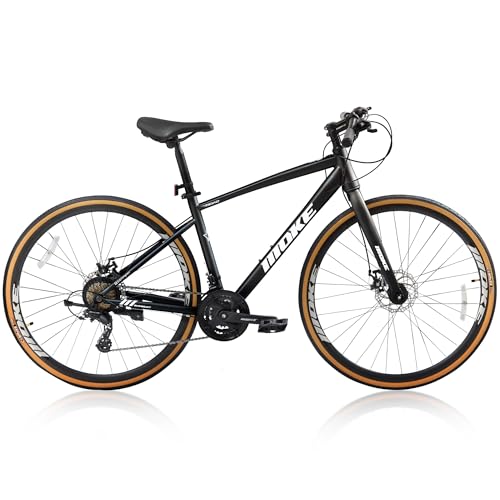
DEYGIA Hybrid Bike 24-Speed 700C Multiple Colors

Schwinn Wayfarer Hybrid Bike 700c 7-Speed
Why These Options Stand Out
The WEIZE model suits beginners who want suspension at both ends for uneven paths. A high-carbon steel frame pairs a front fork with a rear coil shock, which absorbs bumps differently from rigid commuter forks seen later in this list. That setup matters on dirt tracks, where smaller impacts otherwise travel straight to the saddle.
Twist shifters control 18 speeds across front and rear derailleurs, meaning the front and rear gear changers that move the chain between sprockets. Linear pull brakes, also called V-brakes, squeeze the wheel rim for stopping. Height fit runs 5’2″ to 6’2″, and the stated maximum rider weight is 275 pounds, so check your height against that range before ordering.
Why It Works Well
- Front and rear suspension smooths rough trails
- 18 speeds cover climbs and flatter stretches
- 85% pre-assembled format shortens setup
- Adjustable seat helps match rider height
- 26-inch all-terrain tires suit mixed surfaces
Things To Consider
- Steel frame adds weight compared with aluminum picks
- V-brakes need more hand force than disc brakes in wet conditions
City commuting is the clear focus here, with a carbon steel frame and internal wiring that keeps cables inside the tubes. Internal wiring means brake and gear cables run through the frame rather than along the outside, giving a cleaner profile. In our view, that design suits riders who park outdoors and want fewer exposed cables to catch on racks.
A 3 by 8 drivetrain provides 24 speeds through trigger shifters, which use short levers pushed with a finger. Dual disc brakes, meaning discs mounted at each wheel hub, handle front and rear stopping. Size S at 50 cm fits 5’1″ to 5’7″, while Size M at 52 cm fits 5’7″ to 6’1″.
Useful Highlights
- 700 x 32C wheels roll efficiently on pavement
- Trigger shifters change gears with a short flick
- Adjustable seat supports an upright position
- 90% pre-assembled with tools included
Worth Noting
- Carbon steel frame is heavier than aluminum options
- Two frame sizes limit fit choices for very tall riders
- Assembly takes about 25 to 30 minutes
Who It Suits Best
Commuters riding mostly on paved roads in Size S or M heights who want disc braking and many gears.
Where Another Pick Suits Better
AVASTA 19 Inch Frame Hybrid Bike Gray suits taller riders who prefer an aluminum frame and mounting points for racks.
Aluminum construction sets this AVASTA apart from the steel-framed DEYGIA models, offering a lighter step-over frame for carrying up stairs. You get a 19-inch frame with 700C wheels, the larger road-style wheel diameter common on city bikes. That combination favors longer paved stretches over tight trail turns.
Shimano EF500 shifting provides 21 speeds, and dual disc brakes sit at both wheels. Multiple mounting points allow a water bottle holder, mudguards, or a rear rack, which matters for commuters adding cargo gear. For most city routes, that flexibility outweighs the lack of suspension.
Everyday Advantages
- Lightweight aluminum alloy frame eases carrying
- Adjustable saddle and handlebars refine fit
- Mounting points support racks and mudguards
- Quick release seat aids height changes
Trade Offs
- Rigid fork transmits more vibration than suspended forks
- 19-inch frame may feel large for shorter riders
Frame size is the main difference from the 19-inch AVASTA version, with a 17-inch step-over frame aimed at shorter riders. The same aluminum alloy construction, 700C wheels, 21-speed Shimano EF500 system, and dual disc brakes carry over. Assuming a standard city route, the smaller frame changes fit more than performance.
Adjustable saddle and handlebars help dial in position, and mounting points accept a bottle holder, mudguards, or rear rack. Pearl paint finish adds scratch protection in the listing description. That finish is a cosmetic detail, so treat fit and gearing as the deciding factors.
Bright Spots
- Smaller 17-inch frame improves fit for shorter riders
- Aluminum frame keeps carrying manageable
- 21 speeds handle varied urban terrain
Minor Gripes
- Rigid fork offers less bump absorption on rough paths
- Same gearing as larger AVASTA, so size is the key choice
Made For
Shorter adult riders commuting on paved roads who need a step-over frame with disc brakes.
Consider Something Else When
WEIZE 26 Inch Adult Mountain Bike 18-Speed Dual Suspension Black suits riders who prioritize suspension for trails over a rigid commuter fork.
Weight is the headline here at 29.5 pounds, with an aluminum frame built for apartment stairs and transit racks. Your commute involving stairs or train transfers benefits from that lower carry weight compared with steel models. The Large size uses a 19-inch frame for riders 5’8″ to 6’0″.
An 8-speed system and rigid fork keep the drivetrain simple, while mechanical disc brakes handle front and rear stopping. A 285 by 170 mm saddle and quick release seat clamp allow tool-free height changes. Assembly is listed at 85% pre-assembled, with setup under 20 minutes in the listing.
Standout Benefits
- 29.5-pound aluminum frame eases stair carrying
- 700C wheels roll efficiently on paved roads
- Quick release seat clamp speeds adjustment
- 8 speeds suit mostly flat urban routes
- 85% pre-assembled format reduces setup time
Room For Improvement
- 8 speeds offer less range for steep climbs than 21 or 24-speed picks
- Rigid fork suits pavement more than rough trails
Color choice distinguishes this DEYGIA version from the Light Silver Size M model earlier in the list, while the core specification stays familiar. Carbon steel frame, internal wiring, 700 x 32C wheels, and dual disc brakes form the same commuter package. One thing worth considering is whether color availability matters more than the exact frame size offered.
Trigger shifting drives a 24-speed 3 by 8 drivetrain for climbs and descents. Size S fits 5’1″ to 5’7″ and Size M fits 5’7″ to 6’1″. The bike arrives 90% pre-assembled, with instructions and tools for assembly in about 25 to 30 minutes.
What Earns Its Place
- Multiple colors give more finish choices
- Internal wiring keeps the frame profile clean
- 24 speeds cover steep and flat sections
- Dual disc brakes add front and rear control
Points To Note
- Steel frame remains heavier than aluminum alternatives
- Size range stops at 6’1″ in the stated guide
- Assembly still requires about half an hour
Retro styling and upright comfort define the Wayfarer, with a swept-back handlebar that places the rider in a relaxed position. You ride 700c wheels in a frame listed for riders 5’5″ to 6’0″, with one description narrowing that to 5’5″ to 5’9″. That upright posture suits neighborhood cruising more than aggressive road pace.
A 7-speed twist shifter, where rotating the grip changes gears, pairs with front and rear linear pull brakes. Chrome fenders on both wheels reduce splashes, and a rear cargo rack carries bags. Assembly uses common household tools and the included guide.
Practical Pluses
- Fenders and rear rack add everyday utility
- Swept-back handlebar supports upright riding
- 7 speeds suit gentle hills and park paths
- Retro steel frame gives a classic look
Softer Spots
- 7 speeds provide less range than 21 or 24-speed models
- Steel frame is heavier for stair carrying
- Linear pull brakes differ from disc brake models in wet stopping feel
Frame Fit and Gearing Choices for City and Trail Riding
Matching Frame Size to Height
Frame size controls reach and standover clearance, so height guides in each listing matter more than color or finish. You should compare the stated height range with your own measurements before selecting Size S, Size M, 17-inch, or 19-inch frames. A frame that is too large can make starting and stopping awkward in traffic.
Choosing Brake and Suspension Types
Disc brakes mount at the wheel hub and generally give stronger stopping in wet conditions than rim-based V-brakes. Suspension forks and rear shocks absorb bumps on trails, while rigid forks transfer pedaling energy more directly on pavement. Match that choice to the surface used most often, not the surface used once.
Gear Range for Hills and Flats
More speeds help on steep climbs, yet 8 speeds can suit flat urban routes with fewer hills. Trigger shifters, twist shifters, and Shimano EF500 levers differ in hand movement, so consider familiarity and glove use. Mounting points for racks and mudguards also deserve a check for commuters carrying bags.
Two Buying Checks Worth Making
Common Shopping Slip Ups
Shoppers often pick a frame by finish and skip the height guide, then struggle with reach on longer rides. Another slip is choosing many gears for flat routes while ignoring weight for stairs. Checking height, weight, and brake type first avoids most returns.
What The Higher Tier Buys
Higher tier models in this group tend to add aluminum frames, disc brakes, and wider gear ranges. Those changes help with carrying, wet stopping, and climbs, yet they add cost and complexity. Paying more makes sense for daily commuting or hilly routes, less so for short park rides.
Frequently Asked Questions
Which wheel size suits paved roads best?
700C wheels suit paved roads because the larger diameter rolls over cracks and pavement seams with less effort. They also help maintain speed on longer commutes. Smaller 26-inch wheels suit trail maneuvering more than long road stretches.
Are disc brakes better than V-brakes for commuting?
Disc brakes give more consistent stopping in wet conditions because braking force acts at the hub rather than the rim. V-brakes remain simpler and lighter in some setups. Commuters riding in rain often prefer disc brakes for that reason.
How many speeds does a city hybrid need?
Eight speeds can handle mostly flat city routes with moderate hills. Twenty-one or twenty-four speeds give more options for steep climbs and varied terrain. Gear count should match the hills on the regular route.
What frame size should a shorter rider choose?
Shorter riders should look at the 17-inch AVASTA frame or Size S frames listed for 5’1″ to 5’7″. Adjustable saddles help, yet frame size sets the basic reach. Checking the height guide prevents a frame that feels too tall at stops.
Can a hybrid bike handle gravel paths?
Some hybrid models list gravel and trail use, especially those with wider tires or suspension. Rigid commuter models with narrow 700 x 32C tires suit pavement more than loose gravel. Tire width and fork type should be checked against the intended surface.
Final Verdict
For daily commuting, the DEYGIA 24-speed models and AVASTA aluminum frames offer the strongest mix of gears and disc braking. For trails, the WEIZE dual suspension model stands apart. For relaxed park riding, the Schwinn Wayfarer brings fenders and upright comfort. Match frame size first, then gear range and brake type to the route.