
A hardtail keeps things simple on pavement, gravel, and light dirt, with one suspension fork doing the work while the rear stays rigid for direct pedaling. That setup suits commuters who want trail-ready tires and riders who prefer a lighter, easier-to-maintain frame for weekend routes. Your choice comes down to wheel size, frame material, and brake style, because each one changes how the bike handles rough ground and steep climbs. Match those details to your usual terrain and you will narrow the list to a model that fits your height, storage space, and riding style.
The Choices Worth Comparing

Gravity Salire SJ-50 Dirt Jumper Bike 26 Inch
WEIZE Hardtail Mountain Bike 29 Inch Wheels

WEIZE Freestyle BMX Bike 20 inch

WEIZE Mountain Bike 27.5 Inch Adult Bike Trail

WEIZE Mountain Bike 24 26 27.5 inch Outdoor
26 Inch Aluminum Mountain Bike Shimano 21-Speed

26 Inch Mountain Bike Adults 21 Speed Hardtail
More Details On Our Top Picks
Dirt jumper geometry sets this one apart from the trail models later in the list, with a short rear end and a 100mm front fork built for pump tracks and jumps. The reinforced steel frame and double-walled 26 inch rims match that purpose, giving the wheels extra structure for repeated landings. Riders focused on BMX terrain get a clearer fit here than on a general mountain bike.
Mechanical disc brakes with a 160mm rotor provide stopping control in dusty conditions, and the 21-speed trigger setup keeps gear changes simple on mixed routes. The 760mm aluminum riser handlebar spreads leverage for steering through tight turns. Partial assembly and tuning are required before riding, so plan for setup time in the garage.
Real Benefits
- 100mm VAXA fork softens landings on jump lines
- Double-walled rims add strength for rough terrain
- Disc brakes hold up in wet and dusty riding
- Wide 2.35 inch tires grip loose dirt surfaces
Things To Consider
- Steel frame adds weight compared with aluminum options
- Dirt jumper shape suits tricks more than long climbs
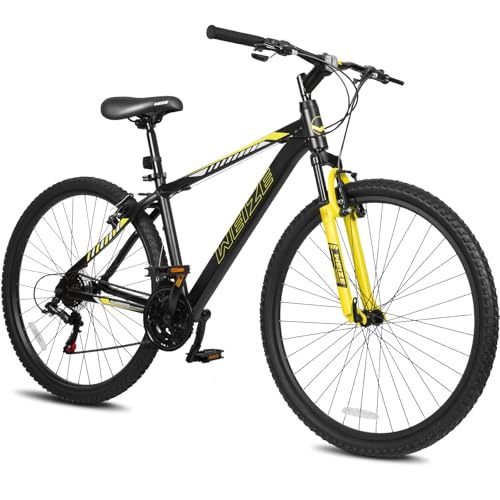
Unlike the dirt jumper above, this WEIZE model targets pavement, gravel paths, and light trails with 29 inch wheels that roll over bumps with less effort. The aluminum frame keeps the overall build lighter than steel hardtails, which helps on longer commutes. Your height and inseam matter more with larger wheels, so check saddle adjustment range before ordering.
Twenty-one speeds with trigger shifting give range for hills and flat roads, while the front suspension fork handles uneven surfaces. Wide knobby tires add grip off pavement, and aluminum V-brakes keep stopping simple to maintain. The adjustable comfort saddle supports longer rides without a separate upgrade.
Positive Takeaways
- Aluminum frame reduces weight for daily riding
- 29 inch wheels smooth bumps on gravel paths
- 21 speeds cover hills and flat commutes
- Front fork improves control on uneven ground
- Comfort saddle suits longer weekend rides
Worth Noting
- V-brakes need more hand force than disc brakes on steep descents
Who It Suits Best
Adults commuting on mixed surfaces who want one bike for fitness rides and light trails.
Where Another Pick Suits Better
WEIZE Mountain Bike 27.5 Inch Adult Bike Trail suits riders who prefer a more agile wheel size on tight trails.
Scale changes the whole conversation here, because 20 inch wheels and a single speed drivetrain place this bike in youth and freestyle territory rather than adult trail riding. The hi-ten steel frame handles neighborhood use, and the padded adjustable saddle helps with longer park sessions. Shorter riders in the 4 foot to 5 foot 8 inch range get the intended fit.
A 360 degree rotor lets the handlebar spin without twisting the brake cable, and four pegs support basic trick practice. The 32T front chainring with a 16T rear sprocket keeps the setup simple, with less shifting to learn. Wide 20 by 2.40 inch tires add cushioning on pavement and uneven ground.
What Helps Most
- Single speed drivetrain simplifies learning and upkeep
- Rotor allows full handlebar rotation for tricks
- Four pegs support early freestyle skills
- Wide tires cushion rough riding surfaces
Trade Offs
- 20 inch wheels suit younger riders, not adults
- Rear V-brake offers less stopping power than disc brakes
Compared with the 29 inch WEIZE model, this 27.5 inch version trades some rollover ease for quicker turning on tight trails. The lightweight aluminum frame keeps climbs manageable, and the 21-speed twist shifters cover a wide gear range. Your riding style matters here, because the smaller wheel feels more playful on winding paths.
Front and rear mechanical disc brakes give consistent stopping in wet or dusty conditions, a clear step up from V-brakes on steep routes. The front suspension fork absorbs shocks, and the ergonomic comfort saddle supports longer outings. Arrival at 85 percent pre-assembled with basic tools included shortens setup.
Notable Upsides
- 27.5 inch wheels turn quickly on tight trails
- Disc brakes perform in wet conditions
- Aluminum frame keeps climbs easier
Minor Gripes
- Twist shifters differ from trigger shifters on other picks
- Smaller wheels roll over roots with more effort than 29 inch
- Assembly still needs time and basic tools
Dual suspension separates this pick from the hardtails around it, with a front fork plus a rear coil shock smoothing bumps at both ends. That matters on rough neighborhood paths where a rigid rear can feel harsh. You get more cushioning, with steel construction adding weight in return.
Eighteen speeds with twist shifters and front and rear derailleurs help find a comfortable cadence on hills. Linear pull brakes provide straightforward stopping, and all-terrain tires suit mixed surfaces. The adjustable ergonomic seat and partial assembly with tools included keep setup manageable.
Everyday Wins
- Rear coil shock smooths bumps hardtails pass through
- 18 speeds help match cadence to hills
- Adjustable seat fits a wider height range
- All-terrain tires handle pavement and dirt
Room For Improvement
- Steel dual suspension frame weighs more than aluminum hardtails
- Linear pull brakes need more setup attention than disc brakes
Made For
Casual riders on bumpy paths who value cushioning over speed or light weight.
Consider Something Else When
26 Inch Aluminum Mountain Bike Shimano 21-Speed suits riders who want a lighter hardtail for climbing.
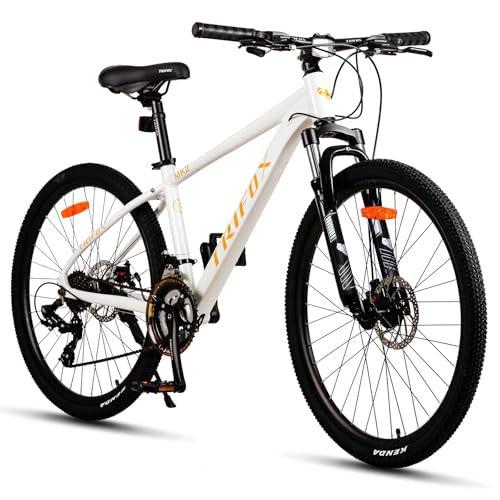
Internal cable routing gives this TRIFOX hardtail a cleaner frame profile than the externally routed WEIZE models, with less cable noise during riding. The aircraft-grade aluminum frame in a 15 or 17 inch size focuses on stiffness for climbs and singletrack. Your frame size choice shapes fit, so measure inseam and reach before deciding.
Shimano 21-speed shifting delivers quick, precise gear changes across varied terrain, and dual mechanical disc brakes provide strong emergency stopping. The front fork uses thicker materials for shock absorption, and 26 by 1.95 inch all-terrain tires grip dirt, gravel, and paved paths. Assembly is 85 percent complete with tools and pedals included.
Practical Pluses
- Internal cables reduce noise and clutter
- Shimano shifting changes gears precisely
- Dual disc brakes suit all weather
- Aluminum frame supports efficient climbing
- All-terrain tires grip varied surfaces
Points To Note
- 26 inch wheels need more effort over large obstacles than larger sizes
- Frame size selection is critical for comfort
- Mechanical discs need cable adjustment over time
Steel construction and an 80mm travel fork define this CYBIC hardtail, trading the aluminum lightness of earlier picks for a straightforward build. The ergonomic geometry aims for a comfortable fit across trail, commuting, and off-road routes. You get a familiar 26 inch platform that many riders find easy to manage in tight spaces.
Front and rear mechanical disc brakes provide reliable stopping in varied weather, and the 21-speed drivetrain handles hills with smooth, precise shifts. High-tensile steel frame construction supports daily use, with color choices in black, blue, or orange. The fork absorbs bumps on dirt paths and gravel trails.
Key Advantages
- Disc brakes front and rear for wet weather
- 80mm fork smooths dirt and gravel bumps
- 21 speeds cover hills and varied terrain
Small Caveats
- Steel frame weighs more than aluminum alternatives
- 26 inch wheels suit shorter riders better than tall riders
Frame, Wheels, and Brakes: What Matters Most
Wheel Size and Rider Height
Wheel diameter shapes turning, rollover, and fit. Larger 29 inch wheels roll over obstacles more easily, while 26 inch and 27.5 inch sizes turn faster on tight trails. Match wheel size to height and terrain, because a wheel that feels nimble on singletrack can feel less stable on rough descents.
Frame Material and Weight
Aluminum frames weigh less and climb with less effort, which helps on longer routes. Steel frames cost less to produce and handle impacts well, with extra weight as the trade-off. Storage space also matters, since a heavier frame is harder to lift onto a rack or carry up stairs.
Brakes and Shifting Range
Disc brakes maintain stopping power in wet and dusty conditions, while V-brakes and linear pull brakes keep maintenance simple. A 21-speed drivetrain gives broader range for steep hills than an 18-speed setup. Riders on flat commutes need fewer gears, while trail riders benefit from wider range.
Key Considerations Across These Picks
Common Shopping Slip Ups
Ignoring frame size and wheel fit leads to discomfort on longer rides. Skipping brake type checks also causes trouble on wet descents, where disc brakes provide stronger control. Measure height and check storage space before ordering.
What The Higher Tier Buys
Higher tier hardtails often use aluminum frames, internal cable routing, and branded drivetrains such as Shimano systems. Those details improve shifting precision and reduce cable noise. The upgrade pays off for frequent trail riders, while casual commuters find simpler setups sufficient.
Frequently Asked Questions
What terrain suits a hardtail bike best?
Light trails, gravel paths, and pavement suit hardtails well. The rigid rear keeps pedaling efficient, while the front fork handles bumps.
How does wheel size affect trail handling?
Larger wheels roll over obstacles more easily, and smaller wheels turn faster. Rider height and trail tightness should guide the choice.
Are disc brakes better than V-brakes for mountain bikes?
Disc brakes provide stronger stopping in wet and dusty conditions. V-brakes remain simpler to adjust and maintain for dry pavement riding.
What speed range do most adult hardtails need?
Twenty-one speeds cover hills and flat roads with wide range. Eighteen speeds work for gentler terrain and casual routes.
How much assembly do these bikes require?
Most arrive partially assembled with basic tools included. Setup time varies by model, with some listings noting 85 percent pre-assembly.
Final Verdict
Your best match depends on terrain, height, and storage space. The WEIZE 29 inch model suits mixed commuting, while the TRIFOX aluminum hardtail suits singletrack climbs. Match wheel size and brake type to regular routes, and the choice becomes clear.