
A steep driveway, a gravel path behind the park, and a commute that cuts across town all ask for different things from an electric mountain bike. Motor peak power, battery capacity in amp-hours (Ah, a measure of charge storage), tire width, and gear range change how a bike behaves on climbs, loose surfaces, and flat roads. You get a clearer shortlist by matching those details to terrain and distance first, then comparing weight and suspension. The seven options below cover commuters, trail riders, and fat-tire fans, with distinct trade-offs in range, gearing, and carrying capacity.
A Snapshot Of The Selections

Jasion EB5 Electric Bike 1000W Peak Motor 26-Inch Tire

ASKGO Electric Bike 1500W Peak Motor 26-Inch Mountain Ebike

1000W Peak Electric Bike 26-Inch 3-Speed Removable Battery Ebike

Funhang Electric Bike 1000W Peak 26-Inch Fat Tire Ebike
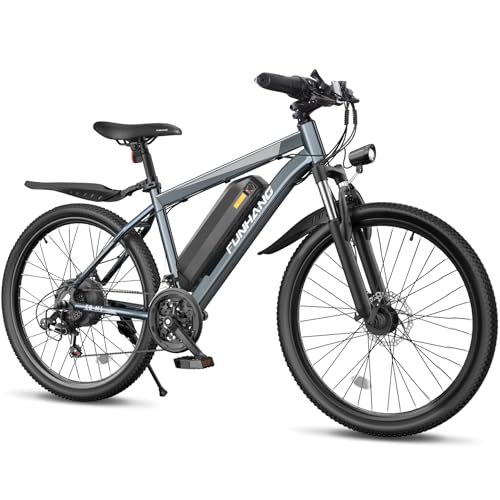
Funhang Electric Bike 1000W Peak 26-Inch Mountain Ebike Fenders

TST Electric Bike 1500W Peak Motor Fat Tire Dual Suspension

M200 Electric Bike 21-Speed 27.5-Inch Mountain E-Bike 1200W Peak
What Each Pick Brings To The Table
Commute-first design makes the Jasion EB5 a sensible starting point. A 1000W peak motor, meaning short bursts above the continuous rating, pairs with a 360Wh removable battery and a stated 25 to 40 miles per charge. At 49.6 pounds, the high-carbon steel frame stays lighter than several fat-tire options later in this list.
Four modes cover distinct needs. Pedal assist (PAS, motor help while pedaling) offers three levels, throttle gives direct power, plain pedaling works without motor help, and booster mode pushes the bike at walking pace on a hill. A 7-speed drivetrain, front suspension fork, dual lights, and mechanical disc brakes support mixed pavement and light trails. In our view, the 5-foot-4 to 6-foot-4 rider range matters more than the top speed for fit.
A Favorable Mix
- Removable battery allows charging at a desk or in a hallway
- Seven speeds give finer control than single-speed rivals
- LCD display shows speed, distance, and assist level
- Front fork suspension softens pavement cracks and gravel
Things To Consider
- Front-only suspension leaves rear bumps less damped than dual-suspension picks
- 26-inch tires suit pavement and light trails, not deep sand
Steep hills change the math, and the ASKGO answers with a 1500W peak motor and a 48V 10.4Ah battery rated for up to 45 miles. Front fork plus seat-post suspension, a form of rear cushioning under the saddle, spreads shock absorption across both ends. That setup differs from the Jasion EB5 front-only fork and helps on gravel and broken pavement.
Single-speed gearing keeps control simple, which suits riders who prefer motor help over shifting. A 400-lumen headlight, dual disc brakes, anti-slip tires, and an LCD display cover night riding and route tracking. On longer climbs, the trade-off shows up as less gear choice, so throttle and assist levels carry more of the work.
Reasons It Performs
- 1500W peak motor handles steep grades with less strain
- Dual suspension smooths bumps at front and seat
- 45-mile stated range supports weekend trail trips
- 400-lumen headlight improves visibility after dark
- 95% pre-assembled design shortens setup time
Worth Noting
- Single-speed drive offers less fine control on varied grades
- 6 to 8 hour recharge time calls for overnight charging
- Dual suspension adds weight for lifting and storage
Who It Suits Best
Riders tackling steep hills and mixed trail surfaces who prefer simple single-speed control.
Where Another Pick Suits Better
M200 Electric Bike 21-Speed 27.5-Inch Mountain E-Bike 1200W Peak suits riders who want many gear choices for climbing and descending.
Simplicity shapes this 1000W peak model, with a 48V 5.2Ah integrated battery rated for up to 45 miles and a 4 to 6 hour charge time. A 22 MPH top speed and brushless motor, a motor design with fewer moving wear parts, keep city riding straightforward. Thick 26 by 1.95 inch tires add traction on pavement, gravel, and light trails.
Three speeds cover flat cruising, moderate climbs, and faster descents without complex shifting. An LCD dashboard shows speed, mileage, and remaining charge, and 90% pre-assembly reduces setup steps. Compared with the ASKGO dual-suspension setup, this pick leans on tire thickness rather than extra suspension hardware.
Useful Strengths
- Integrated battery keeps the frame profile clean
- Three-speed system stays easy to learn for beginners
- Thicker tires improve grip on gravel and uneven paths
Trade Offs
- Three speeds limit fine tuning on long, steep climbs
- Smaller 5.2Ah battery means range depends heavily on assist level
Sand, snow, and beach paths punish narrow tires, and the 26 by 4.0 inch fat tires on this Funhang model spread contact across soft ground. A 48V 13Ah removable battery carries a stated 30 to 35 miles in pure electric mode and 55 to 60 miles with pedal assist. A rear rack rated for 60 pounds adds carrying capacity that commuter picks lack.
Seven speeds, five pedal assist levels, and five modes including cruise and booster give wide control over pace. Front suspension, a soft saddle, dual 180mm disc brakes, headlight, and taillight with turn signal support night and loaded rides. For riders between 5-foot-3 and 6-foot-2, with a 330 pound capacity, fit checks matter before ordering.
Positive Takeaways
- Fat tires maintain traction on sand, snow, and gravel
- Rear rack carries groceries or delivery loads up to 60 pounds
- 13Ah battery extends pedal-assist range beyond 50 miles stated
- Five modes allow switching between throttle and pedaling
- IPX5 water resistance rating suits wet-weather rides
Minor Gripes
- Fat-tire width needs wider storage space in a garage or hallway
- 6.5 hour charge time favors overnight charging
Wet pavement and muddy paths test a commuter bike quickly, and fenders on this Funhang EB-M1 model block spray that narrower picks pass through. A 48V 374.4Wh removable battery carries a stated 25 to 30 miles in full electric mode and 40 to 50 miles with pedal assist. Charging takes 4 to 5 hours, a shorter window than the fat-tire sibling.
Five modes, five assist levels, and a 7-speed system let pace match terrain, from throttle cruising to booster help on a hill. Front suspension, dual disc brakes, LED headlight, electric horn, and reflectors round out daily safety gear. Riders between 5-foot-3 and 6-foot-1, up to 300 pounds, should confirm saddle height and storage length first.
What Stands Out
- Fenders reduce mud and water spray on wet routes
- Removable, lockable battery charges on or off the bike
- Five assist levels give gradual power control
- 85% pre-assembly with tools included speeds setup
Points To Note
- Front-only suspension feels firmer than dual-suspension options on rough trails
- Standard 26-inch tires lack the soft-surface grip of fat tires
- Range drops in full electric mode compared with pedal assist
Funhang Electric Bike 1000W Peak 26-Inch Mountain Ebike Fenders
Made For
Commuters riding wet streets and light trails who want fenders and flexible assist levels.
Consider Something Else When
Funhang Electric Bike 1000W Peak 26-Inch Fat Tire Ebike suits riders facing sand, snow, or beach routes instead of pavement.
Long rides need range and cushioning together, and the TST pairs a 48V 15Ah removable battery with front and rear suspension. Stated range reaches up to 60 miles in pedal assist mode and about 40 miles on throttle, with a 6 to 7 hour charge time. A 750W motor with 1500W peak power supports commuting and off-road use, while 20 by 4 inch puncture-resistant tires add grip.
Seven speeds and three working modes adapt to city streets, mountains, and beaches. An LCD display tracks speed, distance, and battery level, and a bright front light aids night visibility. At 66 pounds with a 450 pound load capacity, storage and lifting need planning, a clear contrast with the lighter Jasion EB5.
Features That Help
- 15Ah battery gives the longest stated assist range in this list
- Front and rear suspension absorbs bumps on both ends
- Fat tires handle snow, sand, and rugged trails
- 450 pound capacity supports heavier riders and loads
Small Caveats
- 66 pound weight complicates lifting into a vehicle
- Fat-tire width requires extra clearance for storage
Gearing range separates trail riding from simple commuting, and the M200 brings a 21-speed system that other picks do not match. A 1200W peak brushless motor reaches up to 28 MPH, with manual, pedal-assist, throttle, and walk modes for different terrain. Larger 27.5 by 2.1 inch tires roll over obstacles more readily than 26-inch wheels.
A removable 48V 10.4Ah battery carries a stated 55 miles with pedal assist and 40 miles on throttle, charging in about 4 hours. Dual front suspension, a bright headlight, rear reflector, LCD display, and NFC card start add modern control and security. You can tap a card to start, which suits shared storage or a workplace bike area.
Noteworthy Benefits
- 21 speeds give precise control on climbs and descents
- 27.5-inch tires improve rollover on trail obstacles
- 4-hour charge time fits overnight or workday charging
- NFC card start adds keyless security and convenience
Areas To Watch
- 21-speed shifting needs more attention than 3-speed or single-speed setups
- Larger wheels and frame need more storage length
Factors To Consider When Choosing Ebike Mountain Bikes
Motor Peak Power and Battery Capacity
Peak power describes short bursts for hills, while continuous rating affects sustained climbing. Battery capacity in watt-hours (Wh) combines voltage and amp-hours to estimate stored energy. A 15Ah battery at 48V stores more energy than a 5.2Ah unit at the same voltage, which explains the longer stated range on the TST model. Range also shifts with rider weight, assist level, and terrain, so treat stated miles as a ceiling, not a promise.
Tires, Suspension, and Gearing
Fat tires at 4 inches wide spread load on sand and snow, while 1.95 inch tires suit pavement and gravel. Front suspension alone softens steering impacts, and dual suspension adds seat-post cushioning for rough trails. Gear count matters on long climbs. A 21-speed system gives smaller steps between gears, while single-speed and 3-speed setups rely more on motor assist.
Weight, Fit, and Storage
Weight ranges here from 49.6 pounds to 66 pounds, a gap that affects lifting into a car and carrying up stairs. Rider height ranges also differ, from 5-foot-3 to 6-foot-2 on the fat-tire Funhang to 5-foot-4 to 6-foot-4 on the Jasion EB5. Measure garage length and doorway width before ordering, especially with fat tires and larger 27.5-inch wheels. Removable batteries help here, since the battery can charge indoors while the frame stays in storage.
Key Considerations Across These Picks
Common Shopping Slip Ups
New riders often chase top speed and overlook gear range for hills. Another slip is ignoring charge time, since 6 to 8 hours suits overnight charging but not a quick turnaround. Check rider height, load capacity, and storage dimensions before comparing motors.
What The Higher Tier Buys
Higher-tier models in this group add dual suspension, larger batteries, and wider gear ranges. Those additions support longer rides and rougher terrain, not just higher top speeds. The upgrade pays off for regular trail use, while simple commuting gains less from extra hardware.
Frequently Asked Questions
How far can these bikes travel on one charge?
Stated ranges span 25 to 60 miles depending on model and assist mode. Pedal assist usually extends range beyond full throttle use, while hills and heavier loads reduce it.
What tire width suits sand and snow?
Fat tires around 4 inches wide provide more contact patch on soft surfaces. Standard mountain tires near 2 inches suit pavement, gravel, and light trails better.
How long does charging take?
Charge times in this list range from about 4 hours to 8 hours. Removable batteries allow charging away from the bike, which helps in apartments and shared storage.
What gear range matters for mountain riding?
Seven speeds cover many commutes and light trails, while 21 speeds give finer control on steep climbs. Single-speed and 3-speed setups depend more on motor assist for pace changes.
Which suspension setup feels smoother?
Dual suspension, with front fork and rear cushioning, absorbs more bumps than front-only forks. Tire width also affects smoothness, especially on gravel and uneven paths.
Final Verdict
For daily commuting and light trails, the Jasion EB5 Electric Bike 1000W Peak Motor 26-Inch Tire balances weight, gears, and modes. For sand and snow, the fat-tire Funhang and TST models offer wider contact and carrying options. Match terrain, distance, and storage space first, then motor and battery details will fall into place for your routes.