
A dark stretch of road, a quick evening errand, or a weekend trail can turn risky fast when visibility drops. Your front and rear lights need to recharge easily, survive rain, and stay mounted through bumps. This roundup compares six sets by brightness, modes, battery life, water resistance, and mounting, so your choice matches your route and routine.
The Main Contenders
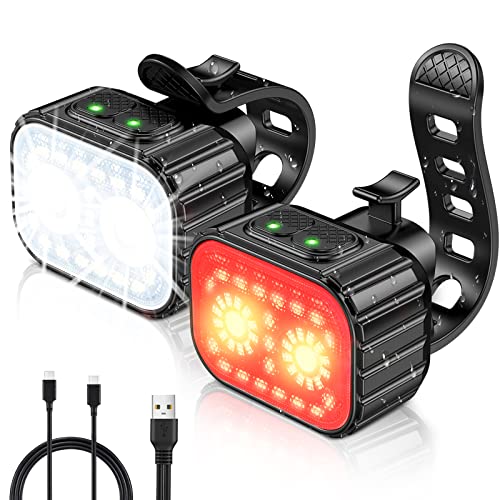
Cuvccn Bike Lights Super Bright Rechargeable Set

4PCS Wireless LED Strobe Lights with Remote Control

Suruid Super Bright LED Bike Light 5 Modes

Zewdov Bike Lights for Night Riding Rechargeable

Bike Lights Front and Back Set 9+9 Modes Rechargeable

Ascher Ultra Bright USB Rechargeable Bike Light Set
The Details Behind The Selections
The Cuvccn set suits riders who want separate control for front and rear beams. Each unit pairs two main LEDs with 19 auxiliary LEDs, and independent switches let each light run alone or together. That split matters on a commute where a steady front beam and a flashing rear beam serve different jobs.
Runtime in slow flash reaches 58 hours for the front light and 25 hours for the tail light, with a green flash below 20% charge. A silicone cover protects the USB port, and mounting needs no tools, with rotation between horizontal and vertical positions. On longer trail rides, the mode variety gives flexibility without a complicated setup.
Strengths Worth Knowing
- Front and rear controls operate independently for tailored visibility
- Long slow-flash runtime reduces charging frequency on regular rides
- IPX6 rating supports rainy and foggy conditions
- Low-battery indicator helps plan a recharge before a ride
- Tool-free mounting fits quick swaps between bikes
Things To Consider
- Many modes can feel busy for riders who prefer one simple button
- Separate batteries mean two charge checks before longer trips
This four-pack works differently from a dedicated bike set. A remote changes color and mode within 7 meters, and the lights suit bikes, motorcycles, drones, and cars. Eight colors and ten modes include pilot flash, quick flash, and slow blink patterns for warning use.
USB charging reaches full in one hour, with flash runtime over 30 hours and shorter life in solid colors. IP65 material and a waterproof plug protect the charging port. Velcro and rubber rings provide two mounting routes, which helps on frames with limited flat surfaces.
Where It Excels
- Remote control changes settings without reaching the light
- Four units cover front, rear, and extra mounting points
- Fast USB charging suits short turnaround between rides
- Multiple colors help match vehicle or event needs
Worth Noting
- Color strobes suit warning roles rather than lighting a path ahead
- Remote activation needs a brief first-use charging step
- Runtime drops sharply in solid red or white modes
Who It Suits Best
Riders and vehicle owners who need attention-grabbing warning lights across several machines.
Where Another Pick Suits Better
Suruid Super Bright LED Bike Light 5 Modes suits riders who need a front beam to see the trail ahead.
Suruid focuses on a single front headlight with a combined low and high beam design. Output reaches 1800 lumens, with high beam range described in hundreds of meters. That reach matters on unlit trails where road markings and obstacles appear late.
An anodized aviation aluminum alloy shell aids heat dissipation, and an aluminum bracket with a knob locks in place. A quick-release bottom knob removes the light in seconds for charging or storage. Five modes cover commuting, daytime running, and off-road use, with USB Type-C charging and IPX4 water resistance.
Good Reasons To Consider
- High lumen output supports dark trail and rural road riding
- Aluminum shell and bracket suit rough handling and vibration
- Quick release simplifies removal for charging and carrying
- Type-C charging matches common cables
- Five modes adapt to road, trail, and daytime visibility
Trade Offs
- Front-only design leaves rear visibility to a separate light
- IPX4 rating handles splashes, with less margin than IPX6 sets
Zewdov takes a slim approach at 1.7 cm thick and 27 grams. That profile fits a commuter bike, a backpack, or a pocket during travel. The headlight offers four modes and the taillight six modes, with memory function and a breathing flash pattern for rear visibility.
Both lights charge together in 1 to 1.5 hours through a 2-in-1 cable with a Type-C port. IP65 rating and a PC shell address rain and drops, while elastic rubber straps attach to front and rear without tools. Battery life is listed up to seven months in storage terms, with a prompt to recharge after three months unused.
Useful Touches
- Slim, light design adds little bulk to a city bike
- Simultaneous charging shortens turnaround time
- Memory function restores the last used mode
- Elastic straps fit bikes, scooters, and strollers
Small Caveats
- Lower output than a dedicated trail headlight for unlit routes
- Storage guidance calls for periodic charging during long breaks
Made For
City riders who value low weight and easy carrying between rides.
Consider Something Else When
Cuvccn Bike Lights Super Bright Rechargeable Set suits riders who want longer flash runtime and more mode control.
This TioyFiuy set pairs a 300 lumen front light with a 100 lumen rear light, each with nine modes and memory. The balance works for urban streets and forest trails, where steady visibility matters more than maximum distance. At 35 grams per light, the pair stays light on the bike.
A 750 mAh battery gives 4 to 20 hours depending on mode, and a dual-wire cable charges both lights in 1.5 hours. ABS plus PS construction is shockproof and waterproof, and soft silicone straps install without tools. Assuming a standard handlebar diameter, the universal straps fit most bikes, e-bikes, scooters, and strollers.
What Helps Most
- Nine modes per light cover steady, flashing, and trail use
- Dual charging cuts time spent at the outlet
- Lightweight build reduces strain on small frames
- Silicone straps install quickly without tools
- Memory function keeps the preferred mode ready
Points To Note
- Front output trails the 1800 lumen Suruid headlight for dark trails
- Runtime range is wide, so high modes need more frequent charging
Ascher keeps controls simple with a one-touch button and four modes: full brightness, half brightness, slow flashing, and fast flashing. That clarity helps on busy streets where quick changes matter. The front light rotates 360 degrees horizontally, and the rear light tilts 45 degrees up and down for aiming.
The front battery is 2000 mAh with 5 to 12 hours by mode, and the rear battery is 330 mAh with 9 to 16 hours. IPX4 rating covers rain, snow, and mud splashes, and a silicone strap with four openings fits most handlebars and seat posts. At 3.5 ounces total, the set carries easily in a bag.
A Few Highlights
- Four modes are easy to learn and change mid-ride
- Large front battery supports longer evening rides
- Adjustable angles help aim beams for road or trail
- Silicone straps remove in seconds without tools
Things That May Matter
- Four modes offer less tailoring than 9+9 mode sets
- IPX4 protection suits splashes, with less margin than IPX6
What Matters Most Before Choosing E Bike Lights
Beam Output and Runtime
Lumens measure light output, not beam shape or distance. A high lumen front light helps on unlit trails, while a moderate output suits lit streets. Runtime depends on mode, so check the hours listed for steady and flashing settings before longer rides.
Water Resistance and Mounting
IP ratings describe protection against water ingress, with higher numbers indicating stronger resistance. Match the rating to your climate and check strap fit on your handlebar or seat post. Secure mounting matters on rough pavement and gravel paths.
Charging and Controls
USB charging removes disposable batteries from the routine, and dual cables can shorten charging time. Simple controls help during traffic, while memory functions restore a preferred mode. Your daily route should guide the trade-off between simplicity and mode variety.
Key Considerations Across These Picks
Common Shopping Slip Ups
Many shoppers focus only on lumens and overlook rear light output, mounting fit, and charging time. A bright front light without a visible rear light leaves a gap in nighttime safety. Checking all three details prevents a mismatched set.
What The Higher Tier Buys
Higher output, aluminum housings, and stronger water ratings add cost through materials and beam design. Those upgrades pay off on dark trails, rough roads, and frequent wet-weather rides. City riders with short lit routes often gain little from the extra spend.
Frequently Asked Questions
How bright should a bike front light be for city riding?
A moderate front light works well on lit streets, with flashing rear visibility mattering as much as forward output. Trail riders need higher output and a wider beam for unlit sections.
What does IPX4, IPX6, and IP65 mean for bike lights?
These ratings describe water resistance levels, with higher numbers indicating stronger protection against rain and splashes. Your local weather and ride frequency should guide the rating you choose.
How long do rechargeable bike lights last between charges?
Runtime varies by mode, from a few hours on high steady settings to much longer in slow flash. Check the listed hours for each mode and match them to your typical ride length.
Can one set fit different bikes and scooters?
Many sets use straps that fit standard handlebars, seat posts, and scooter frames. Measure your mounting points and confirm strap openings before ordering.
Should you choose a front and rear set or separate lights?
A matched set simplifies charging and mode control, while separate lights allow mixing output levels. Your route, budget, and existing lights should shape that decision.
Final Thoughts
For most night rides, a balanced front and rear set with USB charging covers daily needs without complexity. Trail riders should lean toward higher front output, while city riders can prioritize light weight and simple controls. Match beam, runtime, and mounting to your route, and your next ride after dark will feel far more confident.