
A daily commute across flat city streets asks for a bike that rolls efficiently, fits well, and handles stops with confidence. Frame size, brake type, and gear range decide whether a short trip feels smooth or tiring on hills. You can narrow the list by matching height to frame size first, then choosing disc brakes for wet streets or caliper brakes for a lighter setup. The six options below cover those trade-offs in plain terms.
The Picks In Brief

HILAND 700C Road Bike White S Aluminum Racing Bike

Pipleo Road Bike 700C 21 Speed Shimano Commuter White 49CM

Road Bike 700C 16 Speed Drop Bar Cream Disc Brakes

LUKSTR 700C Road Bike Shimano 14-Speed Black
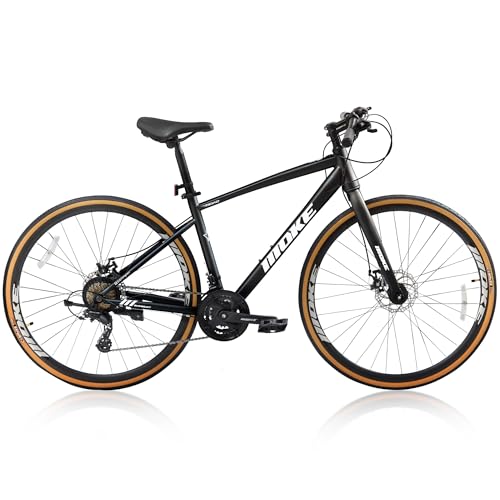
DEYGIA Hybrid Bike 24-Speed 700C Dual Disc Brakes

Max4out 700C Road Commuter Bike 14 Speed Aluminum
Inside Each Recommended Option
Riders near 5’3″ to 5’6″ get a direct match in the 49cm frame, and the lighter aluminum build suits weekday commuting. A derailleur is the gear-changing mechanism, and the front and rear units here give 14 speeds for hills and flat stretches. Caliper brakes, meaning rim brakes that squeeze the wheel rim, keep the setup lighter than disc brakes.
Your height check comes first because three frame sizes cover 5’3″ to 6’4″, with 53cm and 57cm options for taller riders. The 700C wheel diameter, roughly 29 inches, rolls over potholes with less effort than smaller wheels. Assembly reaches 85% before setup, with tools included for the remaining steps.
Useful Touches
- Aluminum frame keeps carrying and lifting simpler
- Three frame sizes match a wider height range
- 14 speeds handle city hills without walking
- 700C wheels reduce rolling resistance on pavement
- Adjustable seat and quick release seat aid storage
Things To Consider
- Caliper brakes need more care on wet descents than disc brakes
- Rigid fork passes road bumps directly to the rider
Unlike the HILAND model with caliper brakes, this Pipleo uses disc brakes at both wheels for stronger stopping in rain. You get a Shimano 21-speed drivetrain, which spreads gears across front chainrings and a rear cassette, the toothed rear gear set. That range suits riders who face a steep block on the way home.
The aluminum frame and 700x28C tires, a width size for the 700C wheel, suit paved roads and urban terrain. Internal cable routing keeps the frame lines cleaner and reduces wind catch. Setup reaches 95% pre-built, leaving handlebar, wheel, seat, and pedals to attach.
Strong Points
- 21 speeds give finer gear steps on climbs
- Dual disc brakes suit wet city streets
- Internal routing keeps cables tucked away
- Tool-free seat adjustment speeds fit changes
Worth Noting
- Two frame sizes cover 5’4″ to 6’1″, so shorter riders should check fit closely
- Disc brake pads and rotors need periodic checks
- Front suspension type listed as Front requires confirmation of travel before rough trail use
Who It Suits Best
Commuters facing hills who want disc braking and a wider gear range.
Where Another Pick Suits Better
DEYGIA Hybrid Bike 24-Speed 700C Dual Disc Brakes suits riders who prefer an upright hybrid position over a drop-bar racing stance.
Drop bars give multiple hand positions for longer rides, and this cream model pairs them with disc brakes. Your fit range starts at 5’6″ and runs to 6’3″, with a stated load limit of 250lb. That makes the sizing narrower than the HILAND range, which adds a 49cm option for shorter riders.
The aluminum frame and 700x28C wheels keep rolling resistance low on paved roads and urban terrain. A gear indicator on the shifter lever helps new riders track the selected gear. Assembly reaches about 85%, with a tool kit included.
What It Does Well
- Disc brakes give dependable control in traffic
- Drop bars support a faster, stretched position
- Adjustable seat helps dial in reach
- Gear indicator aids new riders
- Faux leather seat material suits casual styling
Trade Offs
- Height range excludes riders below 5’6″
- 16 speeds offer fewer steps than a 21-speed setup
High-carbon steel frames weigh more than aluminum, and this LUKSTR trades some lightness for a different ride feel. You can size between 49cm for 5’1″ to 5’8″ and 53cm for 5’6″ to 6’3″, with two-way seat adjustment for reach. The overlap between sizes gives shorter riders more options than the cream 16-speed model.
Shimano A050 shifting, front and rear derailleurs, and a 50/34T crankset, the chainring set at the pedals, support climbs. Dual disc brakes and 700x28C tires with brown sidewalls pair with 4cm wide rims. Assembly follows four steps covering handlebar, seat, front wheel, and pedals.
A Few Highlights
- Shimano drivetrain with front and rear derailleurs
- Dual disc brakes for city traffic stops
- Two-way seat adjustment improves fit
- Kickstand included for parking convenience
Small Caveats
- Steel frame adds weight compared with aluminum picks
- Speed count appears as 14 in listings and 12 in drivetrain details, so gear range should be confirmed on the product page
- Rigid fork offers no suspension for rough paths
Hybrid geometry places the rider more upright than a drop-bar road bike, which helps with visibility in traffic. Your commute length decides whether that position feels relaxed or slower, since the trade-off is comfort against speed. A 3×8 drivetrain, three front chainrings and eight rear gears, gives 24 speeds for climbs and descents.
Carbon steel frame construction and internal wiring keep the look clean, while 700x32C tires offer a slightly wider contact patch than 28C tires on other picks. Dual disc brakes cover front and rear. The bike arrives 90% pre-assembled, with setup estimated at 25 to 30 minutes.
Everyday Advantages
- 24 speeds cover steep climbs and fast descents
- Upright position reduces fatigue on longer rides
- Wider 700x32C tires suit gravel and pavement
- Trigger shifting keeps gear changes simple
- Two sizes and four colors expand choice
Points To Note
- Carbon steel frame is heavier than aluminum frames on other picks
- Size range covers 5’1″ to 6’1″ in 50cm and 52cm frames only
Made For
Casual riders mixing park paths, beach routes, and city commuting.
Consider Something Else When
Max4out 700C Road Commuter Bike 14 Speed Aluminum suits riders who want a lighter aluminum frame and a drop-bar road stance.
Aluminum alloy construction keeps this Max4out lighter than the steel-framed LUKSTR, which matters for stairs and short carries. You can fit riders from 5’3″ to 6’0″, with a stated capacity of 220lb. That range sits between the taller-only cream model and the three-size HILAND.
Dual disc brakes handle wet roads and steep descents, while a 14-speed drivetrain covers gravel paths and city streets. The 700C wheels roll over potholes with less effort. Assembly reaches 85%, with an installation toolkit included.
Points In Its Favor
- Light aluminum frame for daily carrying
- Dual disc brakes for wet weather control
- 14 speeds suit mixed city terrain
- Toolkit included for assembly
Honest Caveats
- Single size range may not suit riders above 6’0″
- 14 speeds provide fewer steps than 21 or 24-speed picks
- Storage space matters because a full-size 700C bike needs wall or floor room
What Matters Most Before Choosing a Cheap Road Bike
Frame Size and Rider Height
Frame size changes reach, comfort, and control more than color or styling. A 49cm frame suits shorter riders, while 53cm and 57cm frames suit taller riders across these picks. Check the stated height range for each model before comparing gears or brakes.
Brake Type for Road Conditions
Disc brakes bite through rain and dust with more consistent force, which helps in traffic and on descents. Caliper brakes save weight and suit dry, flat routes. Commuters facing wet streets gain more from disc setups on the Pipleo, LUKSTR, DEYGIA, and Max4out models.
Gear Range and Riding Position
More speeds help on hills, yet position shapes comfort on longer rides. Drop bars suit faster road riding, while an upright hybrid position suits relaxed park and city routes. Match gear count and posture to the steepest part of a regular route.
Frame Material and Storage Needs
Aluminum frames keep weight lower for carrying, while steel frames change the ride feel and add weight. A full-size 700C bike also needs storage space at home, so measure a wall or corner before delivery. Assembly levels from 85% to 95% affect setup time on arrival.
Key Considerations Across These Picks
Common Shopping Slip Ups
Shoppers often pick a frame by color, then discover the height range does not fit. Check frame size and seat adjustment first, then compare brakes and gears for the actual route.
What The Higher Tier Buys
Higher-tier models often add lighter frames, finer gear steps, and stronger braking hardware. That spending pays off for frequent hills, long distances, or daily wet-weather commuting.
Frequently Asked Questions
What frame size fits a rider near 5’4″?
A 49cm frame suits riders near 5’4″ on the HILAND and Pipleo models. Height ranges overlap across brands, so the stated range matters more than the number alone.
Are disc brakes better than caliper brakes for commuting?
Disc brakes give more consistent stopping in rain and dust. Caliper brakes keep weight lower for dry, flat routes.
How many speeds does a city commuter need?
Fourteen speeds cover most flat and moderate-hill routes. Twenty-one or twenty-four speeds help on steeper climbs.
What does 700C mean on a road bike?
700C describes the wheel diameter, roughly 29 inches. Larger wheels roll over bumps with less effort than smaller wheels.
How long does assembly take on these bikes?
Assembly levels range from 85% to 95% pre-built across these picks. Most setups involve handlebar, seat, front wheel, and pedals.
Final Verdict
The HILAND 700C Road Bike White S Aluminum Racing Bike suits shorter commuters who want three frame sizes and a light aluminum frame. Riders facing hills gain more from the Pipleo 21-speed setup, while relaxed hybrid comfort points to the DEYGIA model. Match height, route, and brake needs first, and the right choice becomes clear.