
A worn fork sends every bump straight to your hands, and a mismatched replacement can change steering in ways you only notice on the first descent. You need travel, axle spacing, and steerer diameter to line up with your frame before anything else matters. The six options below split cleanly between 26-inch trail builds and 20-inch fat-tire builds, so matching wheel size narrows the field fast.
A Closer Look At The Lineup

DONSP1986 Bike Suspension Fork 26 Inch Headset Combo Red

BUCKLOS 26 Inch 120mm MTB Air Suspension Fork QR 9mm

Exceedhub 20 Inch 4.0 Fat Tire Air Suspension Fork 180mm

ZTZ 26 Inch MTB Suspension Fork 100mm Travel Black
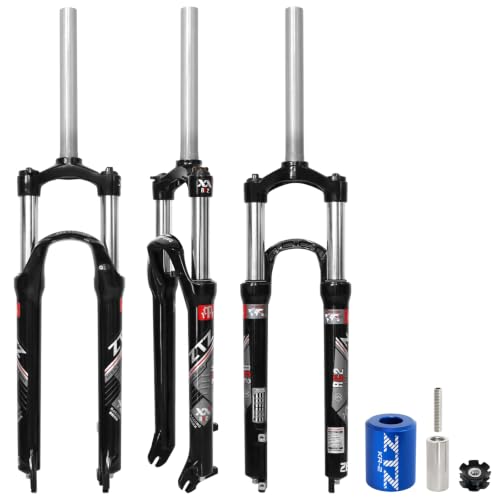
Exceedhub 26 Inch MTB Suspension Fork 120mm Travel

BUCKLOS 20×4.0 Fat Tire Ebike Air Suspension Fork 180mm
Meet The Standout Selections
A red 26-inch fork with a headset bundled in suits a rebuild where the old headset is worn and the frame still has life. Travel sits around 90 to 100mm, which keeps steering geometry close to a typical hardtail rather than slackening it. Disc mounts use a 50mm post pattern, so brake fit is straightforward to check before ordering.
Aluminum double shoulders and a straight steerer define the build, with upper tubes at 29mm and lower legs at 38.1mm. Tire clearance tops out at 26 by 2.325 inches, a limit worth measuring against the current tire. For most riders on mixed pavement and light trail, that clearance covers a standard trail tire without drama.
The Case For It
- Headset included, matching a 44mm head tube and 28.6mm steerer
- Aluminum and steel construction keeps weight manageable for a mechanical fork
- Disc brake bracket aligns with common 50mm post mounts
- Straight steerer suits older 1-1/8 inch frames without adapters
Things To Consider
- Travel near 90 to 100mm feels firm on rough descents compared with 120mm air forks
- Maximum tire width of 2.325 inches rules out wider trail tires
An air spring changes the feel compared with the mechanical fork above, with 120mm of travel and rebound adjustment at the leg. Weight lands near 1800 grams in aluminum alloy and magnesium alloy, which helps front-end handling on climbs. Manual lockout firms the fork for pavement stretches between trails.
Quick release spacing is 9 by 100mm with 38mm offset, and stanchions measure 32mm. That offset and spacing must match the hub and frame, so measurements come first. Depending on rider weight, air pressure tuning gives a wider range than a fixed spring, and that range is the main reason to step up here.
Where It Excels
- 120mm travel handles rougher trail sections with more margin
- Rebound adjustment lets pressure match rider weight and terrain
- Manual lockout reduces bob on smooth roads
- Light alloy build trims front weight compared with steel forks
- Removable sticker allows a cleaner look without residue
Worth Noting
- Air forks need pressure checks and occasional service
- 38mm offset suits specific frame geometries, so fit must be confirmed
Who It Suits Best
Trail riders on 26-inch frames who want tunable air suspension and a lighter front end.
Where Another Pick Suits Better
ZTZ 26 Inch MTB Suspension Fork 100mm Travel Black suits riders who prefer a simpler lockout setup without air tuning.
Fat tires need room, and this double crown fork is built around a 20-inch wheel with 4.0 width tires. Travel reaches 180mm, which gives deep suspension for snow, sand, and rocky sections where a standard trail fork would bottom out. Hub spacing is 9 by 135mm, a fat-bike standard that separates it from every 26-inch option here.
Magnesium and aluminum alloy legs keep weight near 5.8 pounds, with 34mm inner tubes and a 28.6mm straight steerer at 260mm. Manual ABS adjustment changes firmness for different surfaces. In soft snow, that long travel matters more than weight savings, and the double crown adds stiffness for wide tires.
What Helps Most
- 180mm travel matched to 4.0 fat tires for soft terrain
- 135mm hub spacing fits fat-bike frames and hubs
- Double crown design supports wide tire loads
- Air spring with manual firmness adjustment for changing surfaces
Trade Offs
- 135mm spacing will not fit standard 100mm hubs
- 260mm steerer length needs a head tube measurement before ordering
- Double crown adds bulk compared with single crown forks
A black 26-inch fork with 100mm travel and crown lockout targets cross country use where pavement links matter. Aluminum alloy construction and a 28.6mm straight steerer keep the setup familiar for standard frames. Disc brakes only, so rim brake frames are out of scope from the start.
CNC machined bending shapes the legs, and an independent fork bridge helps limit dust entry. Hub spacing is 100mm with 9mm quick release, the most common trail standard on this list. For riders who mostly stay on smooth trail and road, crown lockout gives a firm mode without reaching down to the leg.
Good Reasons To Consider
- Crown lockout reachable from the handlebar area
- 100mm travel suits cross country terrain without slackening geometry
- Aluminum alloy build keeps the front end responsive
- Independent bridge design helps protect internals from dust
Small Caveats
- Disc brake only design excludes rim brake frames
- 100mm travel offers less cushion than 120mm forks on rough descents
A single crown mechanical fork with 120mm travel sits between the 100mm options and the air forks in feel. Aluminum alloy and magnesium alloy construction, plus a 28.6mm straight steerer, keep compatibility broad. Crown lockout handles pavement, while the arch design aims for steadier handling on uneven ground.
Wheel size options include 26, 27.5, and 29 inch in the wider listing, though the 26 inch version is listed here. Hub spacing is 9 by 100mm. That flexibility helps a custom build, yet the exact wheel size must be confirmed at checkout so the fork length matches the frame.
Real-World Strengths
- 120mm travel gives extra cushion over 100mm forks
- Mechanical design avoids air pressure maintenance
- Crown lockout for road sections between trails
Points To Note
- Mechanical spring feel differs from tunable air forks
- Wheel size must be confirmed before ordering for correct fit
- Heavier than the BUCKLOS air fork at similar travel
Made For
Riders who prefer a set-and-forget mechanical fork with longer travel than a basic 100mm model.
Consider Something Else When
BUCKLOS 26 Inch 120mm MTB Air Suspension Fork QR 9mm suits riders who want rebound tuning and lower weight.
Another fat tire option, this BUCKLOS fork pairs 180mm travel with a double shoulder design for 20 by 4.0 tires. Weight is listed near 2645 grams, using magnesium and aluminum alloy legs with air rods. That weight matters on an e-bike, where front mass already affects steering.
Hub spacing is 9 by 135mm with a straight steerer and manual lockout. Manual ABS adjustment changes firmness for snow, sand, or hardpack. Compared with the Exceedhub fat fork above, the lighter listed weight and e-bike focus make this one easier to justify for electric builds.
What Earns Its Place
- 180mm travel for deep ruts and soft surfaces
- Air spring keeps weight lower than oil spring equivalents
- Double shoulder supports fat tire loads
- Manual firmness adjustment for varying terrain
- 135mm spacing matches fat tire hubs
Honest Caveats
- Fat tire spacing excludes standard trail hubs
- Steerer and crown measurements need checking against the frame
What Matters Most Before Choosing a Fork
Wheel Size and Hub Spacing Come First
Wheel diameter decides the shortlist before travel or material enters the picture. A 26-inch fork will not fit a 20-inch fat tire frame, and 100mm spacing will not fit a 135mm fat hub. Measure hub spacing and confirm wheel size before comparing features.
Travel Changes Handling
Travel is the distance the fork compresses, and more travel softens bigger hits while changing head angle. Cross country riders often stay near 100mm, while trail riders may prefer 120mm. Fat tire builds use 180mm to handle soft terrain without harsh bottoming.
Steerer Diameter and Lockout Style
Steerer diameter is the tube that passes through the head tube, and 28.6mm fits 1-1/8 inch headsets on every option here. Lockout firms the suspension for smooth roads, with crown lockout reachable near the bars and manual lockout on the leg. You check steerer length against head tube height, since a short steerer cannot be extended.
Air Versus Mechanical Springs
Air springs allow pressure tuning for rider weight, while mechanical springs offer a fixed feel with less upkeep. Air forks suit riders who adjust settings often. Mechanical forks suit riders who prefer consistent behavior with minimal maintenance.
Key Considerations Across These Picks
Common Shopping Slip Ups
A frequent slip is ordering by travel alone and ignoring hub spacing, which leaves a fork that cannot mount. Another slip is skipping steerer length, then discovering the fork sits too short for the head tube. Measuring both numbers first prevents most returns.
When Paying More Pays Off
Higher cost often reflects air springs, lighter alloys, and tuning controls such as rebound adjustment. That upgrade pays off for riders who ride varied terrain and adjust pressure for weight. A basic mechanical fork remains sensible for light trail and pavement use.
Frequently Asked Questions
How do you know which wheel size a fork fits?
Check the listed wheel size and tire width against the frame, since 26-inch and 20-inch fat tire forks use different spacing.
What does hub spacing mean on a fork?
Hub spacing is the distance between the fork legs where the wheel hub sits, measured in millimeters.
What is a steerer tube?
The steerer tube is the vertical tube that passes through the head tube and connects to the headset.
Why does lockout matter?
Lockout firms the fork for smooth roads, reducing suspension movement during pedaling on pavement.
Air or mechanical, which suits trail riding?
Air suits riders who tune pressure for weight and terrain, while mechanical suits riders who prefer a fixed, low-maintenance feel.
Final Verdict
Match wheel size and hub spacing first, then travel. For 26-inch builds, the BUCKLOS air fork offers tuning that a mechanical fork cannot. For fat tire e-bikes, the lighter BUCKLOS 180mm fork keeps front weight down. Measure carefully, and the right choice becomes clear.