
A saddle is the part of a bike that decides whether a longer ride feels inviting or exhausting. Sit-bone pressure, thigh friction, and vibration build up over time, especially on upright cruisers, e-bikes, and indoor bikes where posture stays consistent. The picks below focus on wider surfaces, padded support, suspension, and ventilation, with clear trade-offs for different riding styles. Your longest rides will feel very different depending on width, nose shape, and how much give sits under the shell.
An Overview Of The Picks
YLG Oversized Comfort Bike Seat – Memory Foam Saddle

Oversized Bike Seat with Backrest for Exercise Bike, Red

SKYJDM Motorcycle Seat Cushion, Shock Absorbing Large

CDYWD Noseless Oversized Bike Seat, Extra Wide Padded

Ascent Bike Seat, Wide Comfort Bicycle Saddle 2.0

RABEEXP Backrest Saddle 11.5 x 9.5 with Back Support
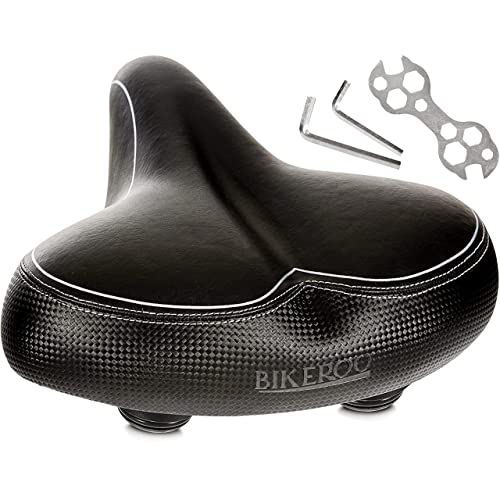
Bikeroo Wide Cruiser Saddle – Steel Spring Suspension

Moocci MTB Gel Seat Mountain Bike Saddle
More On The Choices That Made The List
Long indoor sessions often turn uncomfortable because the stock saddle stays narrow and hard. This YLG saddle spreads support across a 13-inch width, which suits upright posture on stationary and cruiser bikes. Memory foam sits over a curved shell, so pressure spreads instead of concentrating under sit bones.
Dual springs under the base add a second layer of give for uneven paths and rough pavement. A narrowed front section keeps thigh movement clearer than a blunt nose would. Waterproof covering helps with sweat and light rain, and the included adapter plus manual simplify fitting to standard posts.
Bright Spots
- 13-inch width spreads weight across a larger surface
- Memory foam conforms to shape during longer sessions
- Dual springs soften bumps on mixed surfaces
- Waterproof cover resists sweat and light rain
- Adapter and manual included for standard posts
Things To Consider
- Oversized shell needs clearance around frame and rider clothing
- Spring movement feels different from a fixed saddle
Back support changes the whole posture equation on an exercise bike. This red model adds a padded backrest that moves up and down, so riders can lean back during recovery intervals or sit upright for casual pedaling. High-density foam inside the wide saddle gives a softer base than many stock exercise-bike seats.
Ventilation comes from a center opening and a PU surface that resists water and wear. Mounting needs a matching seat-post interface, and bike type alone does not confirm fit. That check matters more here than with a simple saddle swap, because the backrest adds height behind the rider. In our view, the extra support suits relaxed pacing best.
What Earns Its Place
- Adjustable backrest supports different riding positions
- Wide foam saddle adds cushioning for everyday use
- Center opening improves airflow during indoor sessions
- PU surface resists water and routine wear
Worth Noting
- Mounting interface must be confirmed before ordering
- Backrest adds bulk behind the saddle
- Less suited to aggressive forward-leaning posture
Who It Suits Best
Exercise-bike riders who prefer leaning back during longer, relaxed sessions.
Where Another Pick Suits Better
RABEEXP Backrest Saddle suits riders who want a taller adjustable backrest range.
Motorcycle seats present a different problem from bicycle saddles, with vibration traveling straight through a fixed seat. This foldable gel pad sits on top of the existing seat instead of replacing it. A petal-shaped outline gives hips more room to spread weight over a longer stretch.
Inside, a 3D honeycomb structure allows air circulation, while a center groove adds breathability. Gel provides cushioning for hips and tailbone area during sustained riding. Anti-slip particles on the base plus double straps with hooks help keep placement steady, and folding makes storage simpler between trips.
What Helps Most
- Gel core cushions vibration on long motorcycle rides
- Honeycomb interior supports airflow and cooler contact
- Center groove reduces sticky heat buildup
- Anti-slip base and straps hold position during riding
- Foldable design packs away between trips
Trade Offs
- Pad raises seating height slightly on the motorcycle
- Strap fit depends on the underlying seat shape
Thigh rubbing often causes discomfort before sit-bone pain does. This noseless design removes the front nose entirely, so inner thighs avoid contact with a traditional saddle point. A curved backrest section supports the rear while the short front keeps leg movement clear. You get a very different feel from the YLG model, which keeps a narrow nose.
High-density perforating foam fills the shell, and an air guide groove supports ventilation. Rubber spring balls plus a steel bow base add shock absorption. PU leather covering resists water, and a printed pattern adds grip. Dimensions measure 9 by 13 by 5 inches, with adapter and tools included.
Key Advantages
- Noseless shape cuts inner-thigh friction
- Curved backrest spreads pressure across hips
- Air groove improves ventilation during rides
- Spring balls soften impact from rough ground
- Waterproof PU surface wipes clean easily
Minor Gripes
- Noseless balance feels unfamiliar for some riders
- Wide rear section needs frame clearance check
- Less forward support for aggressive riding posture
Made For
Casual riders on cruisers and stationary bikes who notice thigh friction quickly.
Consider Something Else When
Ascent Bike Seat suits riders who want a traditional nose and lighter weight.
Commuters need comfort without extra bulk that slows mounting or storage. This Ascent saddle measures 26 by 21.5 centimeters and weighs about 630 grams, so it stays lighter than oversized spring models. A widened surface still spreads pressure for longer commutes and fitness sessions.
Central cutout and airflow channel reduce heat buildup on warm days and indoor rides. PU leather resists moisture from sweat or light rain and wipes clean. Universal mounting fits cruiser, road, mountain, and indoor bikes, with reinforced rails and a shock-absorbing base for stability.
Everyday Wins
- 630-gram weight keeps daily carrying lighter
- Hollow center improves ventilation on warm rides
- Wide 26-centimeter surface spreads sit-bone pressure
- PU surface resists sweat and light rain
Small Caveats
- No backrest for riders seeking lumbar support
- Padding depth stays moderate compared with spring models
Tricycle and relaxed bike riders often want support beyond the saddle itself. This RABEEXP model pairs an 11 by 9.44 inch seat with a 9.44 by 7.67 inch backrest. Backrest height adjusts from 11 to 15 inches, which covers a wider range of torso lengths than the fixed backrest on the earlier red model.
High-elasticity sponge fills both sections and rebounds after compression. A curved seat follows hip shape, and a narrow front transitions to the wide rear. High carbon steel frame, PU surface, and sponge construction keep the assembly structured. A plum-shaped knob makes height adjustment easier to grip.
Where It Helps
- Backrest height adjusts across 11 to 15 inches
- Large seat wraps hips and spreads weight
- Sponge filling rebounds after sustained pressure
- Steel frame supports the seat and backrest structure
Points To Note
- Backrest adds height that needs rear clearance
- Bulk suits relaxed riding more than sport riding
Right Fit For
Tricycle riders and relaxed cyclists who want waist support on longer outings.
Not Your Match When
CDYWD Noseless Oversized Bike Seat suits riders who prioritize thigh clearance over back support.
Heavy regular use demands a saddle that holds shape over repeated commutes. Bikeroo builds this cruiser saddle around memory foam that molds to shape while staying firm enough for support. Dimensions measure 10.2 by 10.2 inches, with a cutaway version at 10.2 by 9.5 inches.
Suspension choice splits by terrain. Steel springs suit rough, bumpy ground, while elastomer suits smoother roads and stationary riding with less bounce. Elastomer is a rubber-like material that compresses under load and returns to shape. Included tools, adapter, hex keys, and wrench cover installation, and tilt adjustment allows small posture changes.
The Helpful Details
- Memory foam balances molding with firm support
- Steel spring option suits rough terrain
- Elastomer option suits smooth and indoor riding
- Tools and adapter included for installation
- Tilt adjustment fine-tunes seating posture
Honest Caveats
- Suspension choice must match riding surface
- Wide shell feels bulky on smaller frames
Mountain bike riders need padding that works while standing and sitting through technical sections. This Moocci saddle measures 6.69 by 11.02 inches and weighs 1 pound, so it stays more compact than oversized cruiser models. Gel padding sits inside a thickened shell for impact absorption.
Hollow center design improves airflow, and a streamlined shape reduces inner-thigh friction. Dual stainless steel rails support load and shock absorption. Waterproof PVC leather covers the surface, and a reflective stripe helps with low-light visibility. A 7/8-inch seat clamp fits standard rail saddles.
Good Reasons To Consider
- Gel padding cushions repeated trail impacts
- Hollow design improves airflow on long rides
- Streamlined shape reduces thigh friction
- Reflective stripe supports low-light riding
Areas To Watch
- Compact size offers less surface than oversized saddles
- Clamp diameter must match the seat post
What Matters Most Before Choosing a Long-Ride Seat
Width and Nose Shape
Width decides how pressure spreads across sit bones. A wider rear suits upright posture, while nose shape affects thigh movement. Noseless models remove friction entirely, and narrow-nose models suit forward-leaning riders. Your riding posture should drive this choice first.
Padding and Suspension
Memory foam, gel, and sponge each respond differently under sustained load. Springs and elastomer add movement that filters bumps, with steel springs handling rougher ground. Indoor riders often prefer less bounce, while outdoor riders gain more from active suspension.
Ventilation and Cover Material
Heat builds quickly during indoor sessions and warm-weather commutes. Hollow centers, airflow grooves, and honeycomb interiors improve ventilation. PU and PVC covers resist sweat and light rain, and wipe clean after use.
Mounting and Clearance
Standard posts, rail clamps, and exercise-bike interfaces differ across bikes. Backrests and oversized shells also need rear and side clearance. Confirm mounting structure and dimensions before ordering, especially for backrest models.
Key Considerations Across These Picks
Common Shopping Slip Ups
Shoppers often match saddle width to bike type instead of posture and ride length. Another frequent slip involves ignoring clamp size or backrest clearance until installation. Checking post diameter and rear space first prevents most fitting problems.
Where The Extra Money Goes
Higher-tier construction often reflects lighter materials, refined suspension, and broader mounting hardware. Premium covers and ventilation channels also add cost. The upgrade pays off for daily commuters and heavy indoor users, while casual riders gain enough from simpler padded models.
Frequently Asked Questions
Which saddle width suits long rides best?
Wider rear sections suit upright riders because pressure spreads across sit bones. Narrower saddles suit forward-leaning posture on road bikes. Posture matters more than bike category alone.
Does a noseless saddle work for long rides?
Noseless designs reduce thigh friction and suit relaxed, upright riding. Riders who lean forward may miss nose support for balance. Testing posture preference helps decide.
Are springs better than foam alone?
Springs add active give for bumps and uneven roads. Foam alone gives a firmer, more stable feel for smooth surfaces. Terrain decides which approach fits better.
How important is ventilation for indoor cycling?
Ventilation matters greatly during stationary sessions because heat builds without airflow. Hollow centers and grooves reduce sticky discomfort. Warm-weather outdoor riders benefit similarly.
What should be checked before ordering a replacement saddle?
Seat-post diameter, mounting interface, and rear clearance need confirmation. Oversized shells and backrests need extra space around the frame. Dimensions from the listing make that check straightforward.
Final Thoughts
Long rides reward a saddle matched to posture, terrain, and mounting setup. YLG suits wide indoor comfort, Bikeroo suits heavy regular use with suspension choice, and Ascent suits lighter daily commuting. Backrest models serve relaxed riders, while noseless and compact gel options serve specific friction and trail needs.