
A curb ramp is a wedge-shaped bridge that smooths a raised edge between street and driveway, while a jump ramp launches a bike or board into the air. That split shapes this list, since curb wedges solve rolling access and jump ramps solve airtime and practice. Height, length, surface material, and folded size decide fit for a driveway, backyard, or skate spot. Check those numbers against the space and the rider before anything else, and your shortlist gets much clearer.
An Overview Of The Picks

Genubi Industry Curb Ramp Portable Plastic Threshold Ramp

2Pack Curb Ramp Black Portable Heavy Duty Plastic Driveway Ramp
Alloy Steel Motorcycle Ramp 78in Folding Loading Ramp

Greg Lutzka’s 3 in 1 Quarter Pipe by OC Ramps

Jump Practice Ramp for BMX Bike Small Size

Jump Practice Ramp for BMX Bike Red Large Size

MTB Hopper Portable Ramp Street with Airy Geometry

Commercial Inflatable Airbag Lander for MTB BMX 20x13x6ft
Inside Each Recommended Option
At 4.25 inches high, this Genubi wedge tackles taller curbs than the 2.76-inch two-pack later in the list. That extra rise suits low cars, scooters, and hand trucks rolling over a driveway lip. Polypropylene, often shortened to PP, is a tough plastic compound chosen here for strength at low weight.
Dimensions run 19.5 inches long by 10.5 inches wide, so placement needs a clear run-in. A textured surface and angled tracks add grip, and preformed holes near the base allow bolting down in a busy driveway. Depending on driveway slope, the approach angle changes, so measuring the curb first matters. Nothing flashy, but the height does real work.
What Stands Out
- 4.25-inch rise clears taller driveway lips
- 2200 lbs stated capacity for cars and scooters
- Lightweight polypropylene body carries easily
- Textured surface aids traction on approach
- Mounting holes support fixed placement
Things To Consider
- Expansion bolts are not included, M8x100 size suggested
- 10.5-inch width limits wider vehicle paths
This two-pack targets lower curbs at 2.76 inches, a gentler climb than the Genubi wedge. Splicing design lets pieces connect for a wider crossing, which helps on a sloped driveway apron. High-density PVC forms the body, and the stated load figure reaches 22,000 lbs.
Connected width measures 19.7 inches with a 10.6-inch length, so the footprint stays compact. In practice, that splicing matters more than raw capacity for motorcycles and low cars. The trade-off shows up in height, since taller lips need a different wedge. For a standard curb, the pair covers both tire paths nicely.
The Value In It
- Two pieces cover both tire paths
- Splicing connection widens the crossing
- 2.76-inch rise suits lower curbs
- High-density PVC body for heavy loads
Worth Noting
- Height tops out at 2.76 inches
- Fixing needs drilling and expansion screws
- Large hose hook is not included in this height
Who It Suits Best
Households with a low driveway lip and a car, motorcycle, or cart needing daily crossing.
Where Another Pick Suits Better
Genubi Industry Curb Ramp Portable Plastic Threshold Ramp suits taller curbs beyond 2.76 inches.
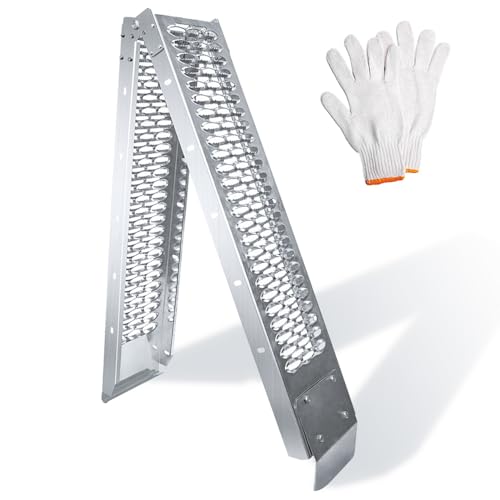
Loading a bike into a pickup or trailer is the job here, not jumping. Alloy steel construction folds in half, shrinking from 73.11 inches long to 37.6 inches for garage or trailer storage. A hollowed-out surface lets water drain and adds friction for tires.
Stated capacity sits at 550 pounds, and recommended use height stays at or below 31 inches off the ground. For taller truck beds, that height limit becomes the deciding check. A plate bracket at the front grips the tailgate edge, and gloves are suggested during folding. It is a straightforward loader, and the fold is the feature that earns its place.
Why It Works Well
- Folds to half length for storage
- Hollowed surface drains water and adds grip
- 550 lbs stated capacity for motorcycles
- Front bracket grips the truck edge
Trade Offs
- Recommended height limit is 31 inches
- 9.05-inch width suits single-track vehicles
- Folding hinge needs care around fingers
Backyard practice without a skatepark queue is the appeal here. This 3-in-1 kit combines a quarter pipe, ledge, and launch ramp in one wood setup. Exterior lumber and plywood form the body, with a galvanized metal rail for grinding.
Footprint measures 4 feet wide by 39 inches long and 12 inches high, at 65 lbs total. Assembly uses a power drill, with pre-cut and pre-drilled parts and a stated 45 to 60 minutes. On tight driveways, that 4-foot width needs a clear plan. You get a fixed obstacle, not a portable kicker, and that permanence suits a dedicated spot.
Bright Spots
- Three obstacles in one kit
- Pre-cut parts simplify assembly
- Exterior lumber suits outdoor placement
- Galvanized rail for grinding
- Works for BMX, scooters, and inline skating
Minor Gripes
- 65 lbs makes repositioning a two-person job
- Skate paint requires 1 quart, sold separately
- Fixed footprint needs a dedicated area
Made For
Riders with a driveway or backyard who want a fixed practice obstacle for boards and bikes.
Consider Something Else When
MTB Hopper Portable Ramp Street with Airy Geometry suits riders who need to carry a ramp to different spots.
Small size here means 26 inches long by 24 inches wide and 8 inches high, a gentle starter slope. Plywood construction splits into parts for assembly and removal, with a strap for carrying. That design fits younger riders learning BMX, skateboard, or roller skating basics in a backyard.
Longer sizes in the same line give a stronger launch, so this small version trades airtime for control. With heavier riders, the modest height keeps early attempts calmer. Multiple ramps can link for a longer line, though space adds up fast. Protective gear is part of the routine, and the honest read is that progression will outgrow this size quickly.
Real Benefits
- 8-inch height suits beginners
- Plywood body handles repeated impacts
- Detachable parts aid carrying
- Works for BMX, boards, and RC cars
Small Caveats
- Small slope limits airtime for older riders
- 24-inch width needs level ground
Large size steps up to 45.7 inches long by 23.3 inches wide and 11.7 inches high, with a black steel plate added. That plate differs from the small plywood version and should handle the lip contact point better during repeated launches. Weight lands at 26 pounds for the large size.
Four components plus a strap make assembly and carrying manageable. In shared backyards, the longer run-in needs extra room behind the ramp for speed. The trade-off is clear against the small size, since height and length bring more air and more landing space. Riders ready to progress get a steeper, longer slope here.
Strong Points
- 11.7-inch height for stronger launches
- Steel plate at the lip
- Four parts with carrying strap
- Longer slope than small size
- Links with additional ramps
Areas To Watch
- 45.7-inch length needs run-in space
- 26 lbs is heavier to carry
- Landing area must stay clear
Right Fit For
Teen and adult riders moving past beginner slopes who have room for a longer run-in.
Not Your Match When
Jump Practice Ramp for BMX Bike Small Size suits younger beginners who need a gentler first slope.
Urban riders get a very different tool here, built for BMX, dirt, street, and MTB use. Working surface measures 57.1 inches long by 16.9 inches wide, with a bent surface radius of 3000 mm for a smooth roll. Legs adjust from 20.9 to 24.4 inches, so height can match stairs or other obstacles.
Setup takes about 30 seconds, and the ramp folds into a briefcase shape at 43.3 x 23.6 x 11.8 inches. Weight is 18.5 lbs with a stated 286 lbs capacity, which makes transport far easier than the 65 lb quarter pipe. On uneven ground, adjustable legs help, though surface type still matters for stability. That portability is the whole point.
The Good Stuff
- Adjustable legs from 20.9 to 24.4 inches
- Folds into briefcase shape
- 18.5 lbs for carrying
- 57.1-inch working surface
- 286 lbs stated capacity
Honest Caveats
- 16.9-inch width is narrow for wide bars
- Adjustable legs need level checks on rough ground
This is a landing surface, not a launch ramp, and that distinction matters. Size measures 20 x 13 x 6 feet, built from 0.55mm commercial-grade PVC. A cushioned surface spreads impact across a large area for MTB and BMX training.
Package includes an air blower for inflation and a repair kit for minor damage. At larger venues, the footprint and blower setup need planning, plus power access for the blower. It deflates for storage and transport, which helps, though the inflated size is substantial. For high-intensity practice, the landing area is the feature that counts.
What Works In Its Favor
- 20 x 13 x 6 feet landing area
- 0.55mm commercial-grade PVC
- Air blower included for inflation
- Repair kit included in package
- Indoor and outdoor use
Points To Note
- Large inflated footprint needs open space
- Blower needs power access during setup
- Intended for riders aged 17 and up
Matching Ramp Type To Space And Skill
Height And Footprint First
Curb height decides wedge choice, since a 2.76-inch rise and a 4.25-inch rise solve different lips. Length and width then decide whether a driveway or backyard can hold the run-in. Measure the lip and the clear area before comparing materials.
Material And Portability Trade-Offs
Plastic wedges stay light and move easily, while plywood and steel add weight and a fixed feel. Folding steel suits truck loading, and briefcase-fold designs suit riders moving between spots. Pick the carry method that matches the routine, since storage space often decides more than strength.
Surface And Landing Needs
Textured plastic, hollowed steel, plywood, and inflatable PVC each change grip and impact in different ways. Beginners benefit from lower slopes and larger landing areas, while progressing riders need longer run-ins. Surface choice should follow the landing zone, not just the launch.
Assembly And Setup Time
Pre-drilled wood kits need drill time and a fixed spot, while portable ramps set up in seconds. Curb wedges may need drilling for fixed placement, and inflatable landings need blower power. Setup effort is a real ownership cost worth weighing early.
Key Considerations Across These Picks
Common Shopping Slip Ups
Mixing up curb wedges with jump ramps causes most mismatches. Height numbers also get overlooked, leading to a wedge that is too short or a loader that exceeds its height limit. Measure first, then compare.
What The Higher Tier Buys
Higher-tier options add steel plates, adjustable legs, larger landing surfaces, and included blowers or repair kits. Those additions pay off for frequent training, urban travel, or shared venues. For a single backyard, a simpler plywood or plastic option often covers the need.
Frequently Asked Questions
Can a curb ramp be used for a bike jump?
No, curb wedges are built for rolling over raised edges, not for launching. Jump ramps have a shaped lip and a landing zone designed for airtime.
What height should a beginner jump ramp be?
Lower heights around 8 inches suit first attempts and younger riders. Longer, taller ramps add airtime and need more landing space.
How much run-in space does a jump ramp need?
Run-in depends on ramp length, with the large plywood model at 45.7 inches needing extra room behind it. Clear ground behind the landing area matters just as much.
What is the difference between plywood and steel ramps?
Plywood ramps are lighter to assemble and replace, while steel and alloy designs focus on loading strength or lip durability. Material choice follows the job, loading, practice, or travel.
Does an inflatable airbag replace a jump ramp?
No, an airbag is a landing surface and needs a separate launch ramp. The 20-foot model here provides cushioning, while the ramp provides the takeoff angle.
Closing Thoughts
Match the ramp type to the actual job, curb crossing, truck loading, backyard practice, or airbag training. Height, footprint, and portability will narrow the choice faster than any feature list. Pick the one that fits the space and the rider, and practice starts in the right place.