
A first ride often starts as a wobble across a driveway or living room floor. Push tricycles suit children who need steering help, balance bikes suit children ready to glide with feet, and pedal models suit children ready for a step up. You can narrow the choice by matching age range, seat adjustment, and how much control an adult needs to keep. Your shortlist below separates those stages so each option lands in the right age window.
A Snapshot Of The Selections

newyoo TR007 5-in-1 Tricycle for Toddlers 1-3 Khaki

Umatoll Toddler Tricycle 18 Months to 4 Years Glow Wheels
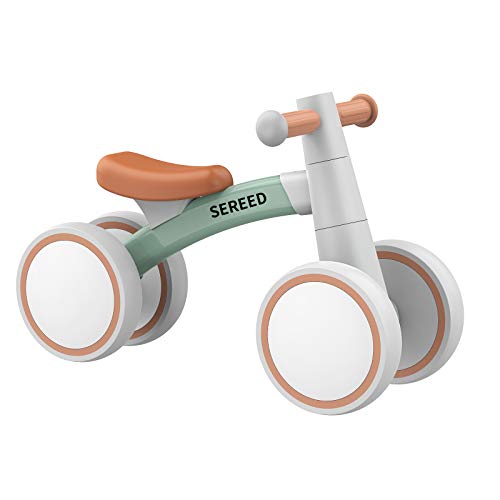
SEREED Baby Balance Bike for 1 Year Old

Gamfeiny Colorful Lighting Baby Balance Bike 10-36 Month

SEREED Toddler Balance Bike 2 Year Old Adjustable

JMMD 6 in 1 Toddler Bike with Push Handle 18-60 Months

Umatoll Tricycle for Toddlers 2-5 Year Old Light up Wheels
The Details Behind The Selections
Long walks with a one-year-old need a steady seat and adult steering, and the newyoo TR007 5-in-1 Tricycle for Toddlers 1-3 Khaki covers that stage first. You get a push handle that rotates 135 degrees for speed and direction control, plus a carbon steel frame for a firm structure. The design then converts through push balance, tricycle, balance, and bike modes across ages 1 to 3.
EVA refers to ethylene-vinyl acetate foam, here used as solid wheels that absorb bumps without inflation. A red-button adjustment changes handlebar and seat position, and pedals have three placement positions for mode changes. On uneven pavement, the push handle may feel heavier to steer, so smooth paths suit early outings best.
Where It Helps
- Five modes extend use from guided push rides to independent balance practice
- 135-degree rotating push handle gives adults control over direction and pace
- Adjustable handlebar height suits different adult heights during walks
- Carbon steel frame supports repeated daily use on paved paths
- Solid EVA wheels remove air pressure checks from routine ownership
Things To Consider
- Mode changes require pedal repositioning, so storage space for loose parts matters
- Height limit of 110 cm makes a size check worthwhile before purchase
Park trips with snacks, toys, and small treasures need storage that a plain balance bike lacks. The Umatoll Toddler Tricycle 18 Months to 4 Years Glow Wheels adds two baskets, one at the front and one at the rear, for shared playdates. A wide wheelbase and carbon steel frame give a stable base for beginner pedaling on pavement.
Rear wheels light up through motion without batteries, so darkening paths get a small visual boost. The seat adjusts forward or backward across three positions as legs grow. For most driveways, grip from non-slip pedals feels reassuring on smooth concrete, while loose gravel remains a less suitable surface.
What Helps Most
- Two baskets carry snacks and toys without an extra bag
- Battery-free light-up rear wheels add motion-based fun
- Three-position seat moves forward or backward with growth
- Wide wheelbase supports balance practice for beginners
Worth Noting
- Fixed tricycle format suits pedaling practice rather than glide-only learning
- Basket capacity suits small items, so bulky toys need a separate check
Who It Suits Best
Children aged 18 months to 4 years who pedal short park routes and carry small items along.
Where Another Pick Suits Better
The newyoo TR007 5-in-1 Tricycle for Toddlers 1-3 Khaki suits younger children who need adult steering first.
Indoor scooting for a child just learning to walk calls for a low, light frame with no pedals. The SEREED Baby Balance Bike for 1 Year Old weighs 1.6 kg, so lifting it over a threshold or into a car stays manageable. You can use it across 12 to 24 months as walking turns into gliding steps.
An aluminum alloy frame keeps weight down while closed, widened wheels reduce foot-catching risk. Steering is limited to 135 degrees, which can keep turns from becoming abrupt. The soft seat and non-slip TPU handle, where TPU means a flexible plastic used for grip, suit short indoor sessions.
A Few Highlights
- 1.6 kg weight makes carrying between rooms straightforward
- No pedals let feet reach the floor for early balance practice
- Closed widened wheels reduce pinching risk around feet
- 135-degree steering limit steadies sharp turns
Trade Offs
- Age window ends at 24 months, so taller toddlers may outgrow it quickly
Evening hallway rides benefit from visual interest that holds a toddler’s attention. The Gamfeiny Colorful Lighting Baby Balance Bike 10-36 Month uses a rear wheel that glows when spun, with no batteries required. Ages 10 to 36 months give a wider window than the SEREED Baby Balance Bike for 1 Year Old.
Four silent wheels, a soft PU seat, and a non-slip EVA handle create a gentle indoor setup. Assembly uses a buckle design without tools, and weight sits at 4.6 pounds for carrying. In our view, the lighting is a playful extra rather than a core riding feature, so frame fit matters more for daily use.
Where It Excels
- Colorful lighting rear wheel glows through spinning motion alone
- Tool-free buckle assembly suits quick setup at home
- Soft PU seat and EVA handle improve grip and seating comfort
Minor Gripes
- Carbon steel frame adds weight compared with aluminum options
- 135-degree steering limit may feel restrictive on wider open paths
Made For
Children aged 10 to 36 months who enjoy light effects during short indoor rides.
Consider Something Else When
The SEREED Toddler Balance Bike 2 Year Old Adjustable suits older toddlers who need taller seat and handlebar settings.
Growth spurts can make a fixed seat feel short within months. The SEREED Toddler Balance Bike 2 Year Old Adjustable moves seat height from 12.6 to 17.1 inches and handlebar height from 19.6 to 22.5 inches without tools. You can adjust both points as a two-year-old gains leg length.
A wide carbon steel frame supports up to 110 pounds, and EVA foam airless tires, meaning tires that never need inflation, suit indoor floors and outdoor paths. Weight at 7.8 pounds keeps trunk packing realistic. Depending on storage space, the taller handlebar range may need a quick clearance check in a small closet.
A Strong Showing
- Quick-release seat and handlebar adjustment grows with the child
- Airless EVA tires avoid flat tires and reduce floor noise
- 110-pound support rating suits a sturdy frame for daily glides
- Bonus plate and stickers allow personalization during rides
- 7.8-pound weight supports car trips to parks
Room For Improvement
- Heavier than baby balance bikes, so lifting into a trunk takes more effort
- Pedal-free design suits balance practice rather than pedaling skills
Families who travel often need one ride that folds for a trunk and changes as skills grow. The JMMD 6 in 1 Toddler Bike with Push Handle 18-60 Months folds with one press of a red button under the frame. You can shift from parent-push trike through tricycle, balance, and toddler bike stages across 18 to 60 months.
An aluminum alloy frame, 12-inch all-terrain puncture-proof rubber wheels, hand brake, and kickstand cover mixed surfaces and stopping practice. A 60-degree steering limiter prevents sudden turns, and a chain-free gear system keeps moving parts covered. Training wheels support the later pedal stage.
What Pays Off
- Six convertible stages reduce the need for separate rides
- One-button folding suits trunk storage during family trips
- Hand brake adds stopping practice beyond glide-only models
- 12-inch puncture-proof wheels suit varied outdoor surfaces
- Adjustable push handle and seat extension rod fit different heights
- Chain-free system keeps the drivetrain area cleaner for small riders
Points To Note
- Multiple parts for handlebar, seat, push rod, and pedals need organized storage
- Training wheel stage adds setup steps compared with a simple balance bike
- Folded size still requires trunk space, so measure before travel
Yard loops and sidewalk rides need a tricycle that stays stable while a child pedals and steers. The Umatoll Tricycle for Toddlers 2-5 Year Old Light up Wheels uses extended rear wheels and a wide wheelbase to resist tipping. Carbon steel construction with spring buckles and reinforced screws supports a firm frame.
A two-position adjustable seat adapts across ages 2 to 5 as pedaling skills develop. Removable front and rear baskets carry toys for outdoor adventures, and rear wheels light up without batteries. Unlike the Umatoll Toddler Tricycle 18 Months to 4 Years Glow Wheels, this version targets a longer age span with a simpler pedal-focused layout.
Notable Gains
- Extended rear wheels and wide wheelbase improve stability during pedaling
- Two-position seat supports growth across ages 2 to 5
- Removable dual baskets make loading and cleaning simpler
- Battery-free light-up rear wheels add fun on every turn
Softer Spots
- Pedal tricycle format does not teach glide balance like a balance bike
- Carbon steel frame may feel heavier to carry than aluminum frames
Character-themed rides can turn practice into a daily request rather than a chore. The Huffy Paw Patrol uses bold graphics and LED spoke lights on the wheels for a glowing effect during rides. You can adjust the seat as height changes, which helps a growing rider keep feet positioned for pedaling.
A coaster brake, meaning pedals turn backward to stop, pairs with a full chainguard that covers moving parts. Training wheels are included for early pedal learning. For most neighborhoods, the themed styling may matter as much as frame details during the first weeks of riding.
The Practical Payoff
- LED spoke lights add visibility and playful motion effects
- Adjustable seat supports fit changes as height grows
- Coaster brake offers a simple stopping method for beginners
Small Caveats
- Pedal bike format suits older toddlers ready for pedaling, not first walkers
- Character graphics appeal depends on interest in the theme

Right Fit For
Older toddlers ready for pedal practice who respond well to character themes and lights.
Not Your Match When
The JMMD 6 in 1 Toddler Bike with Push Handle 18-60 Months suits younger children who need push steering and folding storage.
Choosing A Toddler Ride That Fits The Stage
Age And Stage First
Push tricycles fit children who need adult steering, balance bikes fit children who can push with feet, and pedal bikes fit children ready for coordinated pedaling. Age ranges in the listings show the intended stage, so matching that range prevents a ride that feels too advanced or too small.
Seat And Handlebar Adjustment
Adjustable seats and handlebars extend use as legs and arms grow. Tool-free adjustment, meaning changes without extra tools, makes height changes quicker between rides. You should check the adjustment range against current height before settling on a model.
Weight And Storage
Weight affects carrying up stairs, loading a trunk, and moving a ride across a room. Foldable frames help with car storage, while fixed frames need clear garage or closet space. Your storage spot can decide between a convertible model and a simpler single-stage ride.
Surface And Control
Indoor floors favor quiet, non-marking wheels, while driveways and sidewalks favor larger or puncture-proof wheels. Steering limiters and wide wheelbases add stability during early turns. Adult push handles add control for the youngest riders on longer walks.
Key Considerations Across These Picks
Common Shopping Slip Ups
A common slip is choosing a pedal bike for a child still learning to walk, which skips balance practice. Another slip is ignoring seat height range, leading to a short-lived ride. Checking age, height, and adjustment range first avoids both problems.
What The Higher Tier Buys
Higher-tier models often add conversion stages, folding frames, brakes, and larger wheels in one package. That extra hardware pays off for families who travel or want one ride across several stages. Simpler models remain a sound choice for a single stage and a fixed storage spot.
Frequently Asked Questions
What age suits a balance bike for toddlers?
Balance bikes suit children from about 12 months through age 3, depending on leg length and confidence. Seat adjustment range helps confirm whether a specific model fits current height.
What age suits a push tricycle?
Push tricycles suit children from about 12 to 18 months who need adult steering and support. Convertible models extend that start toward balance and pedal stages.
Are light-up wheels powered by batteries?
Several models in this list use motion-powered lighting without batteries. Spinning the wheels activates the glow during rides.
What should be checked before buying a toddler bike?
Age range, seat height, handlebar height, and weight should be checked first. Storage space and riding surface also shape the right choice.
When does a toddler move from a balance bike to pedals?
A move to pedals fits children who can glide, steer, and stop with feet consistently. Training wheels or a chainguard can support that transition.
Wrap Up
Match the ride to the current stage, and the choice becomes clearer. You can start with push steering for the youngest riders, then move toward balance practice and pedaling as skills grow. Each option above covers a different window, so age and adjustment range remain the deciding details.